

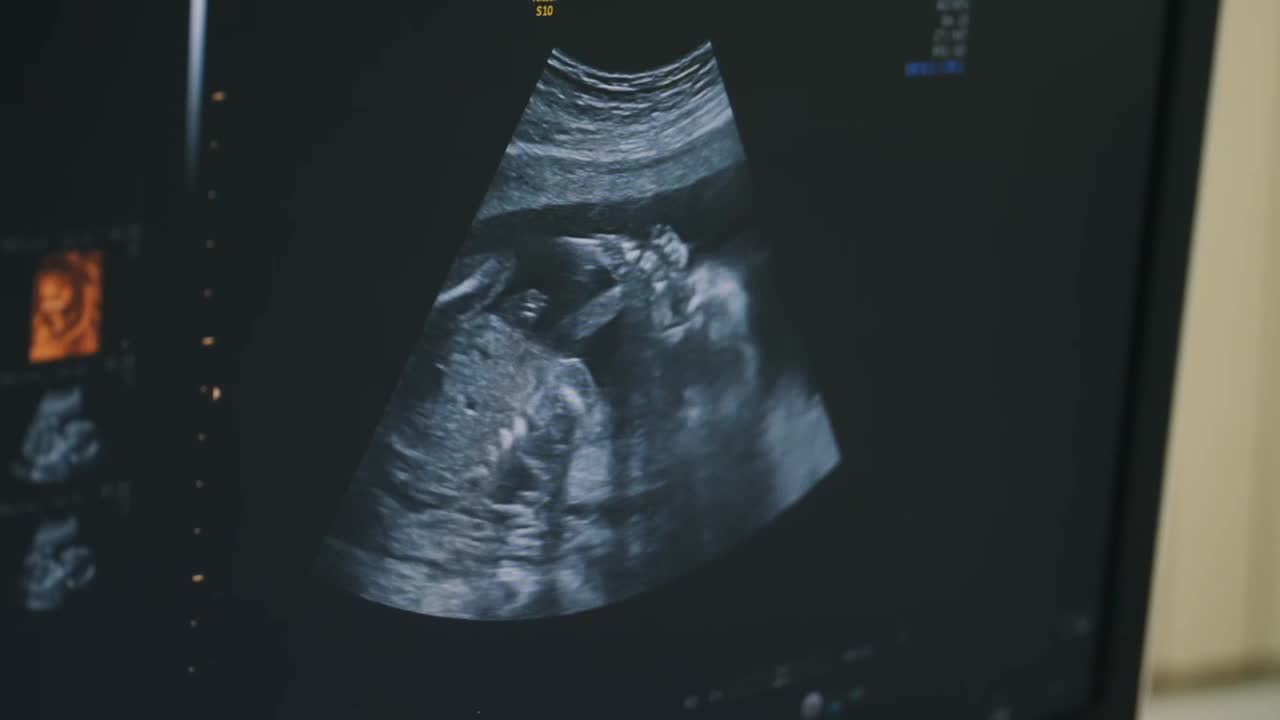


When a Utah mom learned at her 20-week ultrasound that her baby had spina bifida, it was hard to take in. Months later, the child is doing well thanks to a relatively new procedure performed at Primary Children's Hospital, where mom and baby had surgery together before birth.
"We call it fetoscopic because we're putting these tiny cameras and ports into the uterus. This is a cutting-edge procedure available in only a handful of centers west of the Mississippi," explained Dr. Martha Monson.
Monson is a maternal fetal medicine specialist and director of fetal surgery at the University of Utah Health and Intermountain Primary Children's Hospital.
"There is no cure for spina bifida," the doctor shared, "but with appropriately counseled families and with good surgical candidates, we know that we can make a problem that's usually this big, hopefully [smaller]."
After conception, we don't have a brain and a spine for a few weeks. The early form of a nervous system exists in a neural tube, which helps form the brain and the central nervous system. When you think of the spine, you probably picture the vertebrae that exist to protect and support the spinal cord. The cord itself is hidden except in cases of spina bifida.
"Because the back is open, the spinal cord's not protected, so that really dramatically increases the risk of paralysis and a child not being able to independently ambulate or walk, potentially requiring a wheelchair after birth," explained Dr. Monson. "It can also lead to secondary changes in the brain that can be life-threatening. We call that hydrocephalus."
About 1,300 babies are born with spina bifida in the US every year. Some are only slightly affected. Some suffer severe impacts. Dr. Monson mentioned hydrocephalus, often requiring a kind of pressure relief valve in the skull called a shunt.
"We can reduce the need for one of those emergency brain surgeries, the shunt procedures, by 50%," Monson said, "and we can double the chances of these kiddos being able to walk independently without assistance.
Like the vertebrae around the spinal cord, there's a battalion of doctors and nurses surrounding mom and child during the surgery, ready if they need to intervene for either or both. It's like the ambulance at the football game that you really hope doesn't have to get powered up at all.
"Our families are able to meet the team of doctors and specialists who will actually be caring for their baby lifelong, or at least until adulthood, after the fact," said the doctor.
The team at Primary Children's Hospital has performed 10 of these procedures in less than a year, and soon, some of those babies will be taking steps that might not have been possible. Others will still live with fewer complications as they grow older.