

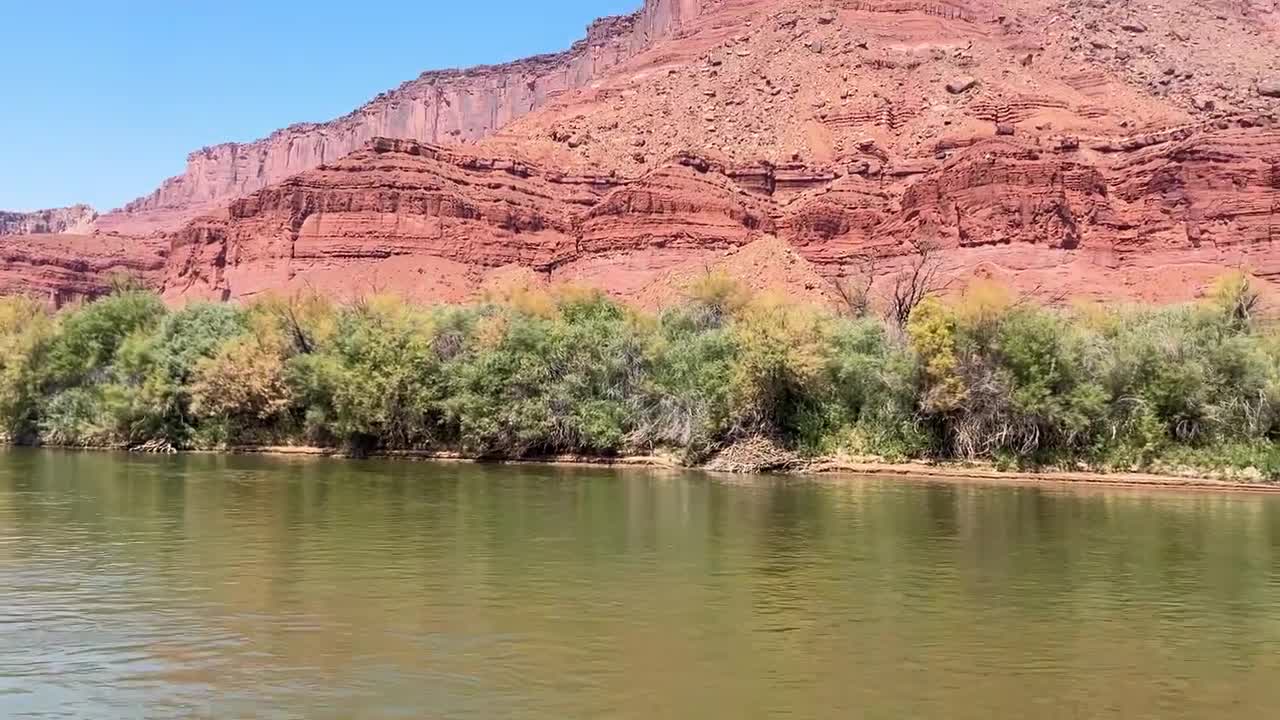


SALT LAKE CITY — They may be the only ones in agreement on something involving the Colorado River.
As states buckle down in negotiations over the future of the river, the Farm Bureaus for Utah, Arizona, California, Colorado, New Mexico, Wyoming and Nevada sent a joint letter to Interior Secretary Doug Burgum with a common viewpoint:
"The Colorado River is not only the lifeblood of the West; it is the foundation upon which our nation’s food and fiber production depends," the letter, shared with FOX 13 News, said.
Utah Farm Bureau CEO Spencer Gibbons said the letter is meant to remind the states of what's important.
"As they’re trying to figure out what those cuts will be and how that water will be allocated in the future, we want to make sure they understand that a large portion of that water — we understand it’s drinking water — it also grows food," he told FOX 13 News.
The seven states along the Colorado River will be meeting this week when they gather for the Colorado River Water Users Association conference in Las Vegas. It is a gathering of stakeholders and power brokers. With agreements between the states over the river that supplies water to more than 40 million people set to expire next year, there is an increased urgency to hammer out a deal or else the federal government and the courts may be involved.
"I think we’re feeling pretty optimistic, frankly," said Amy Haas, the executive director of the Colorado River Authority of Utah, which negotiates for the state's interests. "I think we’re looking forward to sitting down with our sister states and trying to discern if we can come up with a deal."
Last month, a tentative deadline set by the Trump administration yielded no new deal. However, all sides agreed to keep talking.
"I would say that what has changed in recent weeks is a renewed commitment to stay at the table," said Haas.
Specifics are still not public, but each state has said it is offering concessions as impacts from drought, climate change and diversions mean everyone has to do with less water. Utah, for example, has touted its "Demand Management Pilot Program" that pays agriculture producers to not grow some crops and send the saved water down to Lake Powell. That program has been propped up with state money (Governor Spencer Cox proposed $5 million more for it in his latest budget request to the legislature).
Environmental groups have demanded deeper cuts, while tribal groups and Mexico are also giving input. House Speaker Mike Schultz, R-Hooper, said in a recent interview with FOX 13 News he wants to keep "Utah's water in Utah."
"We’ve already had to make concessions. I don’t think we should be asked to give more concessions," he said. "The Lower Basin states need to make the same concessions that Upper Basin states have had to make."
In Utah, the Colorado River supplies a significant part of drinking water to the heavily-populated Wasatch Front. It's pumped in through the Central Utah Project and any curtailment of water could impact that.
Haas said she expected there would be ongoing dialogue between the seven states and their appointed commissioners throughout the week. But a deal may not emerge this week, though she said she expected they would continue to make progress.
"We may look at kind of a staggered agreement where we’ve got some initial actions to respond to, fairly frightening projections in terms of the hydrology," Haas told FOX 13 News. "And then a longer-term operation that would span the balance of the agreement."
This article is published through the Colorado River Collaborative, a solutions journalism initiative supported by the Janet Quinney Lawson Institute for Land, Water, and Air at Utah State University. See all of our stories about how Utahns are impacted by the Colorado River at greatsaltlakenews.org/coloradoriver