

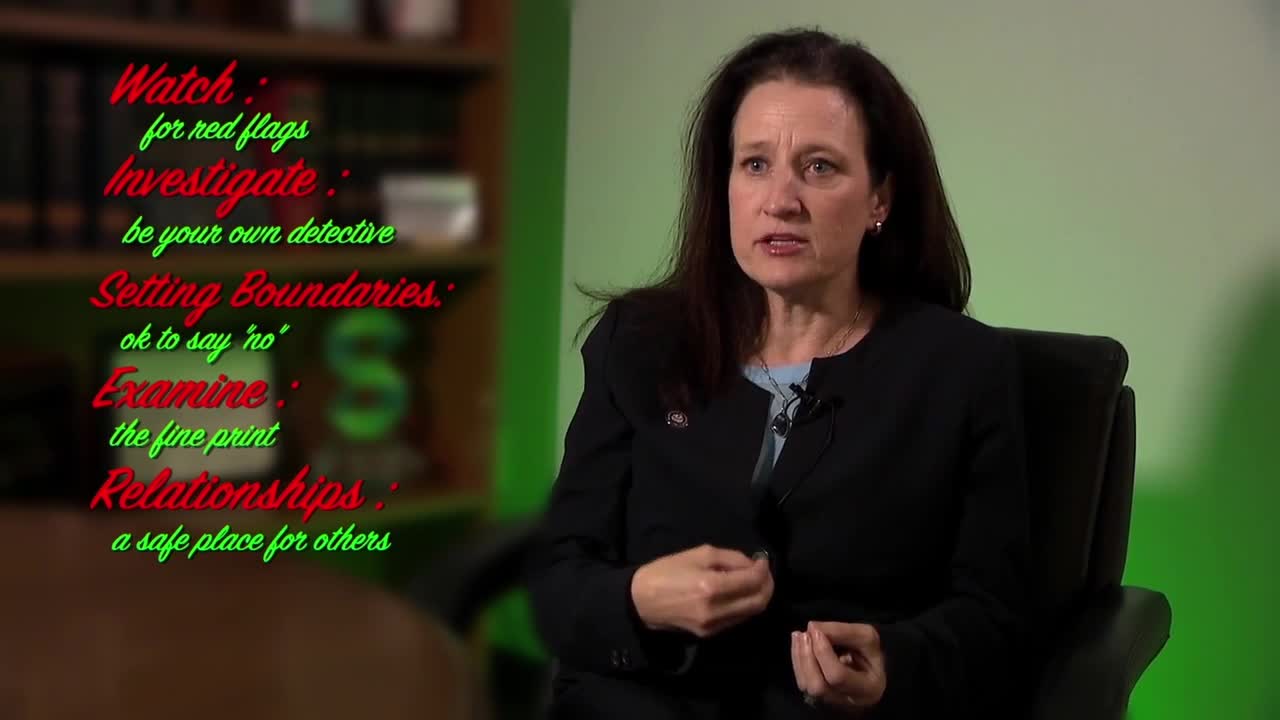


The Utah Department of Commerce has its own way of reminding us how to be “wiser” consumers.
“WISER” implies more than the definition of the word; it’s an acronym.
Let’s start with the "W" — watch for red flags.
“You got a phone call and you don’t recognize the number and it says it’s your bank and it’s incredibly urgent, that’s a red flag,” said Katie Hass, director for the Utah Division of Consumer Protection. “Or the person at your doorstep is making you feel a sense of urgency. If they only give you a limited amount of time to make this decision and there’s a lot of pressure, that would be another type of red flag.”
“Watching” also includes being cautious of payment methods. Be skeptical if someone requests a wire transfer, gift card or cryptocurrency as payment. And be suspicious of details that make you uneasy about a purchase.
What makes the "I" in wiser? Investigate and research.
“People in Utah are so nice and they really don’t like to say no to people, but you need to be able to set that boundary,” said Hass. “Set the boundary. Say, ‘Hey, I need some time to investigate and research.’ Be your own fraud detective.”
You don’t have to rush to make any purchase. It’s always a good idea to check websites that rate businesses and publish customer feedback.
Read reviews and look at user ratings for buyers or sellers in online marketplaces like Amazon or eBay.
The "S" in wiser:
“Setting boundaries ahead of time allows you to not make a rash decision. For example, I have a hard policy that I will not purchase or sign up for anything when someone comes to my door,” said Hass. “I will say no, I will get their contact information, I will step back from that transaction and I will think about it.”
Setting boundaries can mean setting a budget and limiting your business interactions only to places you trust.
Conducting business on your own terms can help with the letter "E" — examine the fine print.
“So many of our contracts today have terms and conditions at the end. Two things you really want to look for in that policy is: One: How do you cancel? And two: Am I auto-renewing for something I didn’t think I was auto-renewing for?” said Hass.
After taking the time to carefully read the fine print of an agreement, make sure you understand what’s expected of you and the other party. Keep a copy of any contract for your own records.
Which leads us to "R" — reach out to a trusted person.
Maybe at this year’s holiday gathering, think about designating a family member or close friend as your trusted person, someone to help talk you through what seems like a shady transaction.
“’R’ stands for relationship, both making sure that we have these people, but also making sure that we can be that person for other people and be a safe place where you’re not going to react in a negative way or shame and be that kind soul that helps somebody through what could be a very scary situation," Hass said.
The Department of Commerce has many resources for consumers wanting to be proactive. They can all be found here on the Division of Consumer Protection’s home page.