



SALT LAKE CITY — You may call it a sign of the times, but these days you can gamble on just about anything.
Traditionally, it’s as simple as whether your favorite team beat their storied rival.
But the developing online prediction markets world now allows people to put money on things you might not expect, even wildfires
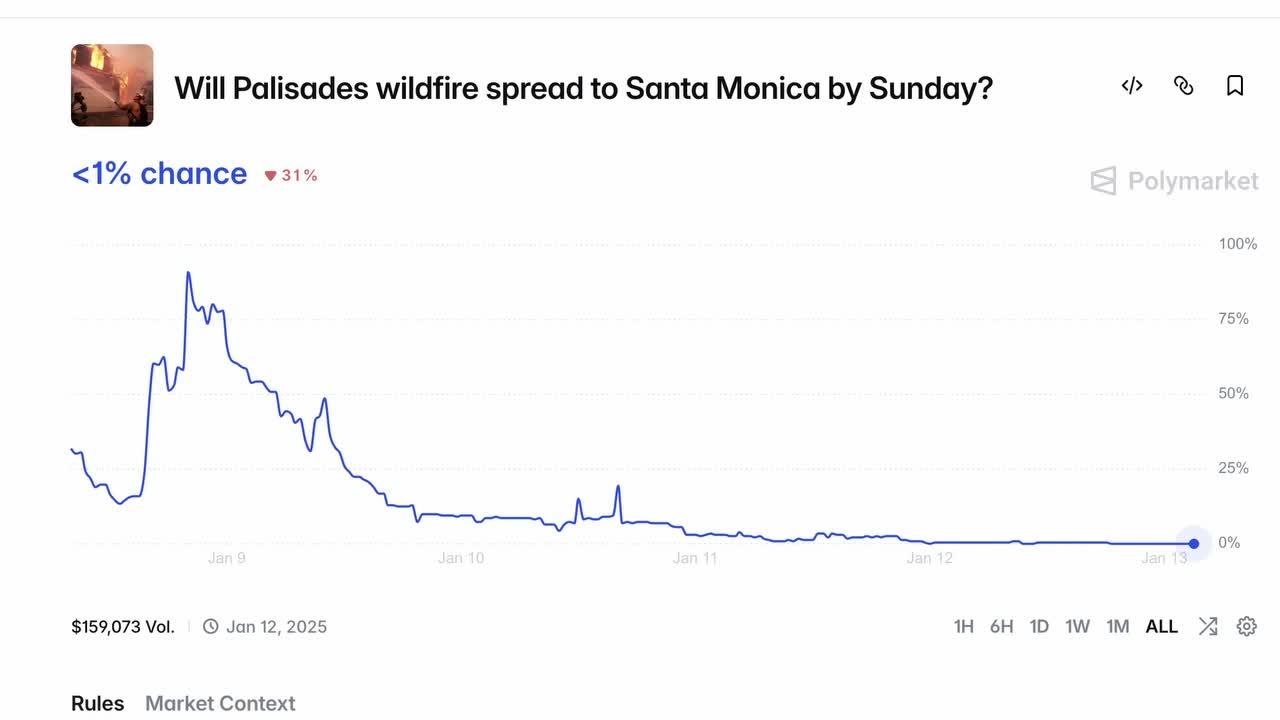
For example, people put money on the prediction market “Polymarket” last year while wildfires raged in California.
They were based on everything from how many acres would burn, how far the flames would reach, and when it would be contained.
Corey Frayer with the Consumer Federation of America explains the concept isn’t new - in the early 2000s, the Defense Advanced Research Projects Agency, or “DARPA,” tried.
“They were for the express purpose of betting on potential terrorism events because they thought it would help them gather intelligence and as soon as the Senate found out about it back in the 2000s, there was such a strong response to how terrible an idea it was," said Frayer.
Now more than two decades later, Utah is fighting against prediction markets.
This year, lawmakers passed a bill that defined “proposition bets” as gambling, which is illegal in the state.
But market operators argue that the contracts they offer are legal and governed by a separate set of federal laws.
Prediction market operator Kalshi has sued the state of Utah to prevent it from taking any enforcement action.
Earlier this year, U.S. Sen. John Curtis of Utah introduced the “Prediction Markets are Gambling Act” to prohibit the registered entities of the “Commodity Futures Trading Commission” from listing any prediction contract that resembles a sports bet or casino-style game.
Curtis said at the time: “Too many young people in Utah are getting exposed to addictive sports betting and casino-style gaming contracts that belong under state control, not under federal regulators”.
We asked the Consumer Federation of America if they could predict that outcome.
“Federal regulators have no interest in regulating this space; they have given it its blessing and basically said they’re going to make even weaker rules than those that should already govern them,” said Frayer.
For people who do use the markets, Utah's Division of Securities advises caution.
“Only put money at a risk that you’re willing to lose, and that your standard of living won’t change,” said Robert Cummings, the director of the Division of Securities.