



OGDEN, Utah — A new scam is making waves as hackers from across the globe gain access to personal information, potentially costing victims who are caught unaware.
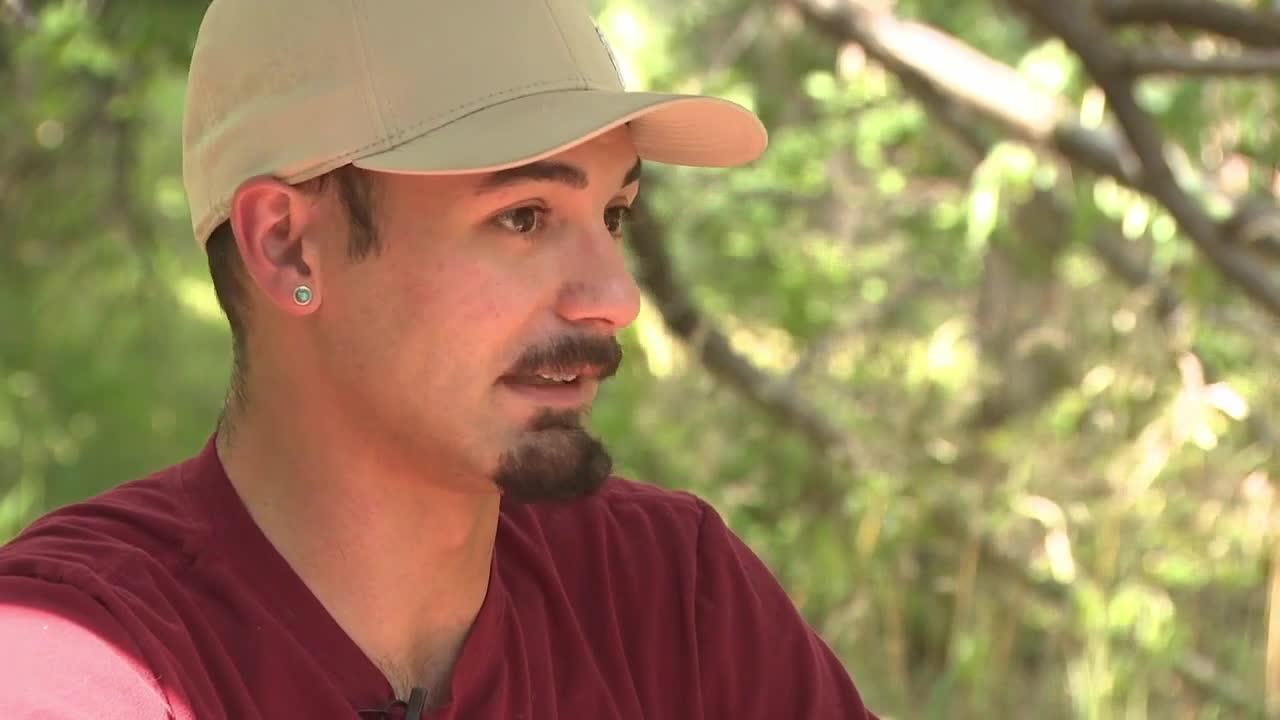
Veteran Riley Hansen has two main email accounts, and in one he received a note congratulating him on changing his password.
"Obviously, I did not change the password myself… some random email that isn’t mine was changed for the recovery password, so I immediately went to that email and noticed that there was another email there that I had missed completely," Hansen explained.
It's a classic, but worrisome case of an online whodunit as Hansen goes after reclaiming his information for him and only him.
“It was saying successful login in Bangladesh with the IP and everything, which, of course, people with VPN's now, they can be anywhere and pretty much everywhere at this point," said Hansen.
Hansen's main email is associated with Microsoft OneDrive, which stored everything, including his Social Security card, birth certificate, and all of his medical records, both before and during his military service.
Soon after he got a whiff of what was happening, Riley noticed his Navy Federal account, along with his Cash App, had been compromised, and he had been locked out of both. Cash App was able to recover his account, but Hansen had to close his bank account and open a new one. His paycheck was also returned to corporate, and he had to wait days to receive a paper check.
How did it all happen? It could be related to a recent warning from the FBI about a new phishing scheme utilizing a platform called KALI365. It’s being used to specifically target Microsoft 365 accounts by bypassing multi-factor authentication.
The KALI365 platform subscription lowers the barrier of entry, so there’s no need for hackers to have a password.
“I had two-factor authentication set up for both of those," said Hansen of his accounts. "I mean, recovery email, everything that you can think of that I could do to prevent something like this from happening.”
Katie Hass, Director for the Utah Division of Consumer Protection, said these types of hackers are more sophisticated, and being proactive to lower their barrier of entry is key. For instance, even if you think you know who you’re communicating with, don’t immediately trust links received via email or texts.
"Go directly to the known website that you always engage with before you do anything else," warned Hass. "Don’t use the links that are sent; go through them. Your password can get hacked easily in a low security environment, but if you’re using that same password and your IRS account, well now, they’ve got it, so you really want to make sure that the high risk ones are infrequently used. Maybe it’s very unique to that site so that it cannot be breached someplace else.”
Riley acted swiftly and minimized the damage, but it still cost him time and money. His reporting the issue to the FBI and Microsoft may not have benefited him directly, but it’s what the Division of Consumer Protection suggests.
“I’m not the first person to have something like this happen," said Hansen, "and I’m definitely not going to be the last, especially now if a hacker or scammer is able to bypass two-factor authentication, whose information is safe?”