

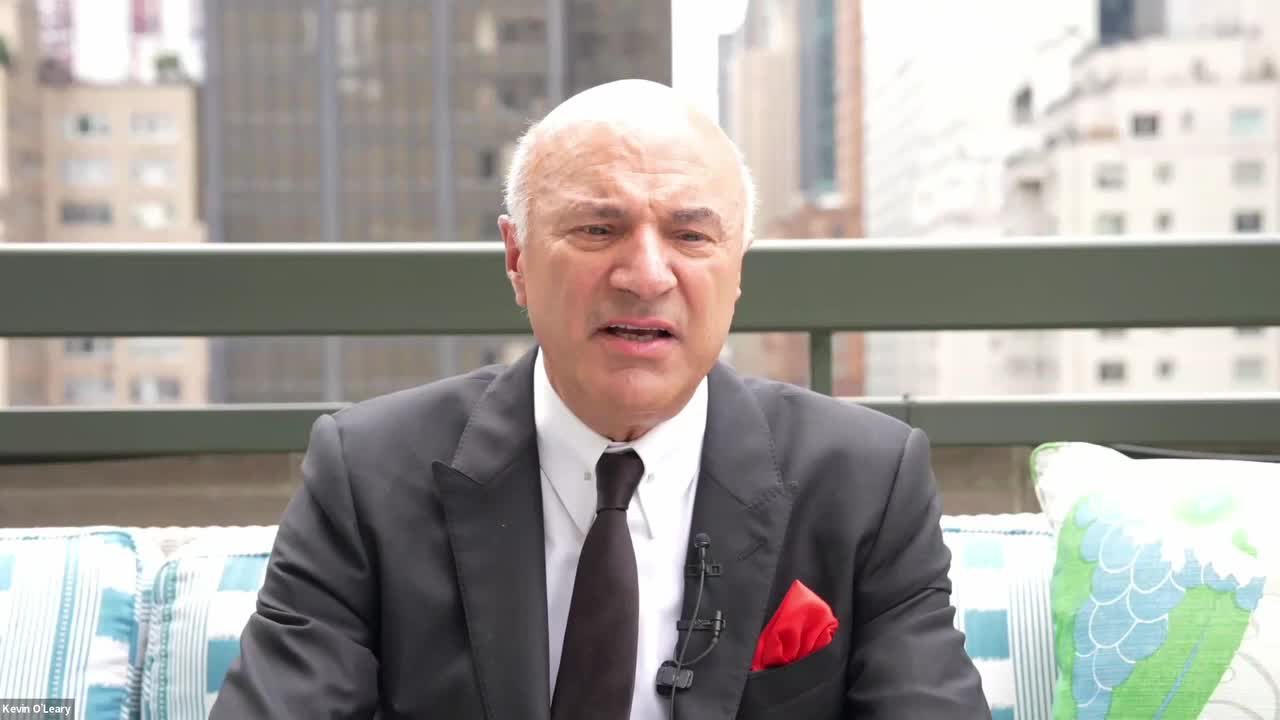

BOX ELDER COUNTY, Utah — Kevin O’Leary wants to build a “Field of Dreams” by the gigawatt.
“This is a classic case,” O’Leary said, “and everybody's seen the movie – you build it and they will come.”
O’Leary is the investor behind the proposed Stratos Project in Utah’s Box Elder County. In an interview on Wednesday with FOX 13, he spoke in more detail than ever about the finances behind that.
Though there are some details he’s not divulging.
Who will be the data center’s tenants – the companies or government agencies that need massive server banks for cloud computing or artificial intelligence?
“We’re in a negotiation,” O’Leary answered.
He has said the U.S. military and other government agencies could be tenants. So, will the federal government provide financing?”
“Don't know if that'll happen,” O’Leary replied. “But I know that multiple agencies in the government that provide security to the country and defense, they like Utah.”
Filling vacancies
He agreed the tenants will be important to finding financing and keeping the data center viable. O’Leary plans to finance the first phase – 1.4 gigawatts for $15 billion – with a mix of borrowing and equity, selling shares in the data center company.
The full Stratos project could consume 7.5 gigawatts – as much power as the state of Utah consumes.
Industry estimates say the cost of building a data center is between $35 and $50 billion. O’Leary insisted Wednesday that the big hyperscalers – companies that utilize cloud computing like Amazon, Meta and Microsoft – prefer to lease space in data centers they don’t own.
Doesn’t that mean those companies also have less skin in the game if an AI bubble bursts?
“They have a lot of skin in the game,” O’Leary countered. “They're basically funding with a long-term lease, and 20 years from now, you and I are going to be dead, so we're not going to be worrying about it.”
There is a risk that new technologies, such as quantum computing, reduces the need for data centers, said Stijn Van Nieuwerburgh, a finance professor at Columbia University.
“And we have an economic catastrophe,” Van Nieuwerburgh described in a scenario. “Because we have essentially bet the U.S. economy on this large AI investment boom.”
“Is Meta still going to be around 20 years from now?” Van Nieuwerburgh said. “I think that is just a hard question to predict, and so that is the main risk that one of these large hyperscalers goes belly up over life of this long-term lease.”
Votes against
Stewardship Utah and Box Elder Accountability Referendum (BEAR), two nonpartisan organizations that oppose Stratos, released results of a poll on Tuesday saying seven in 10 registered voters in the county oppose the project.
“I don't think we've got all the real information out yet,” O’Leary said, reacting to the poll. “I'd like to have this as a rolling poll as we disseminate what the truth is versus fiction and propaganda and everything else.”
“Who would want to stop us from having more power in America?” O’Leary asked.
Does that mean he still thinks the Chinese government is influencing public opinion?
“I don’t know who’s doing this,” O’Leary replied. “But this is not normal, and I’m going to find out.”
O’Leary has never taken on a project like Stratos. So why is he the man for the job?
“Well, I've got news for you,” he quipped. “No one's ever done it.”