

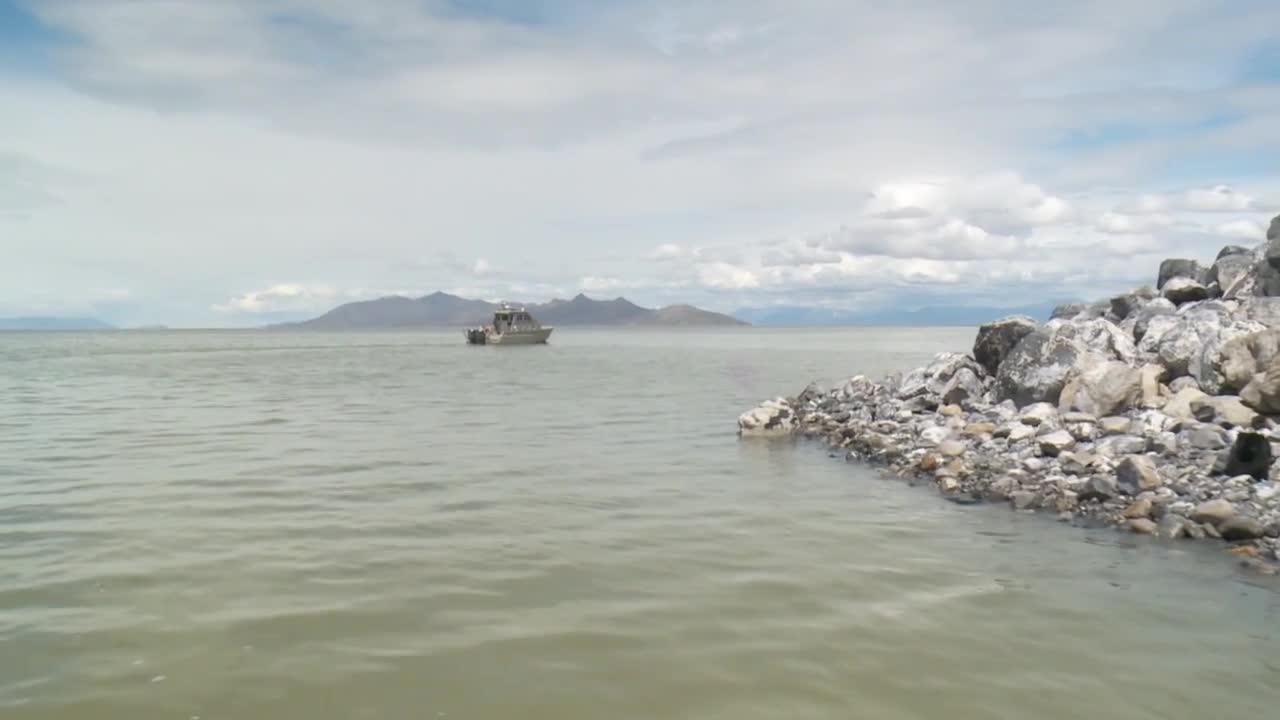


SALT LAKE CITY — More water is headed to the Great Salt Lake as a direct result of people's conservation efforts.
On Monday, the Great Salt Lake Watershed Enhancement Trust announced it would spend about $1 million to lease about 2,500-acre feet of water from the Metropolitan Water District of Salt Lake City & Sandy. It's new water that is a direct result of people's conservation efforts on the east side of Salt Lake County.
"It's 2,500-acre feet annually on average for the next five to ten years, and it’s been made possible largely as a result of water conservation," said Marcelle Shoop, who heads the Trust, which was created by the Utah State Legislature and run by the Audubon Society and The Nature Conservancy with the goal of buying or leasing water for the lake.
The water is made possibly by residents making changes, whether it's replacing turf for water-wise landscaping or using less indoors. Many people took advantage of incentives to install water-wise landscaping or smarter watering systems.
You can find out what incentives and rebates you qualify for here.
"Every single person can make a difference. The daily decisions we make on our landscape or our indoor water use? They do add up," Annalee Munsey, the water district's general manager, told FOX 13 News.
Sandy Mayor Monica Zoltanski said it is not a giveaway. The money will be pumped back into paying for infrastructure needs, but that also saves residents money. But she said her community is pushing conservation. Recently, the city demanded new developments use water wise landscaping and adopted tiered water rates.
"It’s actually more affordable today than it was five years ago for the average Sandy homeowner to use their household water and water their lawns," Mayor Zoltanski told FOX 13 News. "But as you step up in that usage and or if you’re reckless in your usage, you step into that surcharge territory."
Sandy City also offers a water tracking service that can notify you if there's a leak in your system or warn you about excessive use, saving you money.
As more of Utah moves into extreme drought conditions, state natural resources leaders said everyone will need to use less water.
"All of us have to use less water. On a year like this? We just have to," said Joel Ferry, the executive director of Utah's Department of Natural Resources. "We’re going to have have to tighten our belt and use less water and conserve. The more we can do now to conserve, the more it’s going to help us in August and September when its really hot and dry."
Agriculture, the state's top water user, is already seeing cuts to how much water they can take this year. Irrigation companies are already warning them they could see only 30-40% of the water they would normally get.
"There will be some farmers, they're evaluating right now, do I put seed in the ground," said Spencer Gibbons, the CEO of the Utah Farm Bureau.
But he said many farmers and ranchers are actually leaning into new efforts to grow crops with less water and leasing their water to go downstream and help the Great Salt Lake.
"A lot of our farmers are looking at these programs with maybe a new perspective," he said. "Initially, as this conversation was rolled out, farmers were on the defense. They felt like, 'Oh no, someone's coming after my water.' Generally speaking, farmers understand they have an important part to play in this, coming up with a solution for the Great Salt Lake. They understand that lake is valuable to them."
Cindy Wasek, who lives in Millcreek, recently had her yard changed to water-wise landscaping. She told FOX 13 News she already does not miss a $600-700 a month water bill and she spends more time outside than she did when it was just a turf lawn.
"Saving money and helping the environment and all of that is why we do this," Wasek said, adding that some of her neighbors have expressed interest in doing the same.
When told her conservation efforts were helping the Great Salt Lake? Wasek smiled.
"That’s good," she told FOX 13 News. "It feels good to do something."
This article is published through the Great Salt Lake Collaborative, a solutions journalism initiative that partners news, education and media organizations to help inform people about the plight of the Great Salt Lake—and what can be done to make a difference before it is too late. Read all of our stories at greatsaltlakenews.org.