

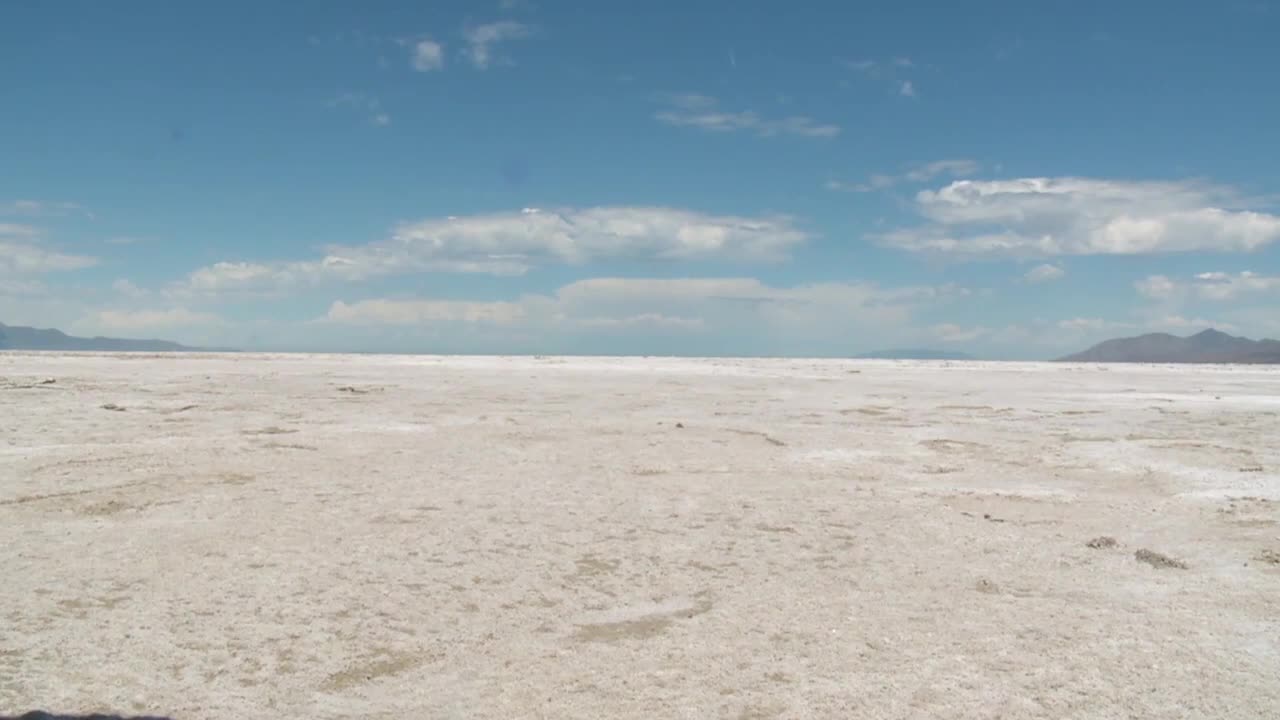


SALT LAKE CITY — Scientists are learning more about dust blowing off the exposed lake bed from the Great Salt Lake.
"As conditions get drier and drier while we're in this drought, we can be more exposed to dust emissions if this, the surface moisture is being reduced," said Dr. Molly Blakowski with the Great Basin Unified Air Pollution Control District.
Dr. Blakowski published research on the impact of Great Salt Lake dust on local crops and food supplies while at Utah State University.
"As dust is deposited downwind from Great Salt Lake over time, that can be changing the composition of plants and natural ecosystems or food crops that we're growing," she told FOX 13 News. "It can be changing the composition of soils. So the impacts extend beyond the dust events exposing us indirectly to metals and Great Salt Lake dust."
But Dr. Blakowski was quick to point out we do not have evidence that our local food supplies are tainted.
"Our study did not find that food might be exceeding safety limits due to exposure to Great Salt Lake dust, but something to keep in mind is that we're exposed to Great Salt Lake dust potentially in a lot of different pathways," she said.
WATCH: The Great Salt Lake has peaked — a month early
Dust can be harmful, regardless of where it comes from, blowing PM 2.5 or PM10 into communities. But the Great Salt Lake has a number of harmful chemicals that are naturally-occurring and normally covered by water. Among them? Arsenic. As the lake shrinks, winds pick up dust from the exposed playa and blows it into nearby communities. Many scientists have been studying it and looking for ways to keep the public informed of potential risks.
"We have many communities, especially those north of Farmington Bay — Layton, Syracuse, Kaysville, even Ogden — where we have very few monitors, and we don't really know what the lake exposure is to dust from Great Salt Lake," said Dr. Kevin Perry, an atmospheric sciences professor at the University of Utah who has mapped dust "hot spots" on the exposed lake bed.
So far, more than 70 miles of exposed dust "hot spots" have been identified. Speaking at the Friends of Great Salt Lake Issues Forum last week, Dr. Perry said Utah's Department of Environmental Quality is still rolling out dust monitors in communities to help people know what's happening. Research is also still being conducted on what chemicals — and in what quantities — coming off the exposed lake bed could cause lasting harm.
"I've been studying metals in the dust and we know that there are 13 contaminants of potential concern," he told FOX 13 News. "If you're exposed to them at high enough concentrations for long enough, but until now we don't really have the data to show what the concentrations are in the surrounding communities."
Dr. Derek Mallia, who also works in atmospheric sciences at the University of Utah, has created a modeling tool that can help people look at potential dust exposure. You can access it here.
The research can cause a lot of alarm, especially as people worry about the toxins blowing off the Great Salt Lake.
"When I tell people about this research, a lot of times they think, 'Oh no, this means I can't have my garden or I shouldn't shop at the local farmer's market,' and, and that's certainly not what we're trying to say," Dr. Blakowski said. "We, we really value growing our own food here in Utah and we want to be sustainable. Gardening provides so many different benefits and, and so that's really important to us and it's another reason to fight for Great Salt Lake."
Dr. Perry told the Friends of Great Salt Lake Issues Forum that his projections are it could cost billions of dollars to mitigate dust if the lake continues to shrink. The most cost-effective way to reverse things? Conserve.
"Conservation is absolutely the cheapest way to deliver water to the lake. As we start to try and acquire or lease water rights, it gets progressively more expensive. Water acquisition from other places would be orders of magnitude even more beyond that," he told FOX 13 News. "So the best thing we can all do is pull in the same direction and reduce the water footprints that we all have, both at the municipal level, the industrial level and the agricultural level, because we have to do this."
This article is published through the Great Salt Lake Collaborative, a solutions journalism initiative that partners news, education and media organizations to help inform people about the plight of the Great Salt Lake—and what can be done to make a difference before it is too late. Read all of our stories at greatsaltlakenews.org.