

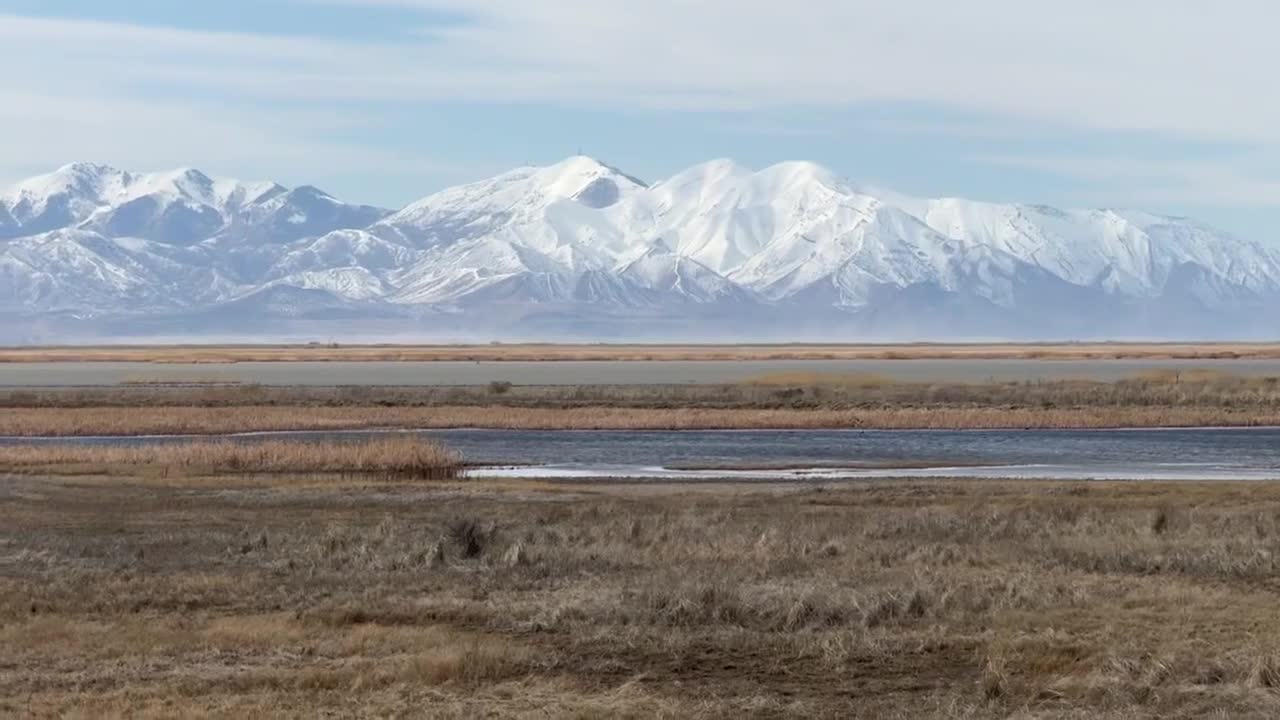


FARMINGTON BAY, Utah — A recent scientific find by University of Utah researchers could help combat the problem of toxic dust blowing off the exposed Great Salt Lake bed.
They have found a freshwater reservoir underneath the lake's salty playa, in an area between Antelope Island and Farmington Bay. It started when scientists observed "islands" of the invasive plant phragmites in the exposed lake bed.
"They require a lot of fresh water and the question was that Great Salt Lake has salty water, so how [does] this phragmites grow on the salt water because they require a lot of fresh water?" University of Utah geology and geophysics professor Michael Zhdanov told FOX 13 News.
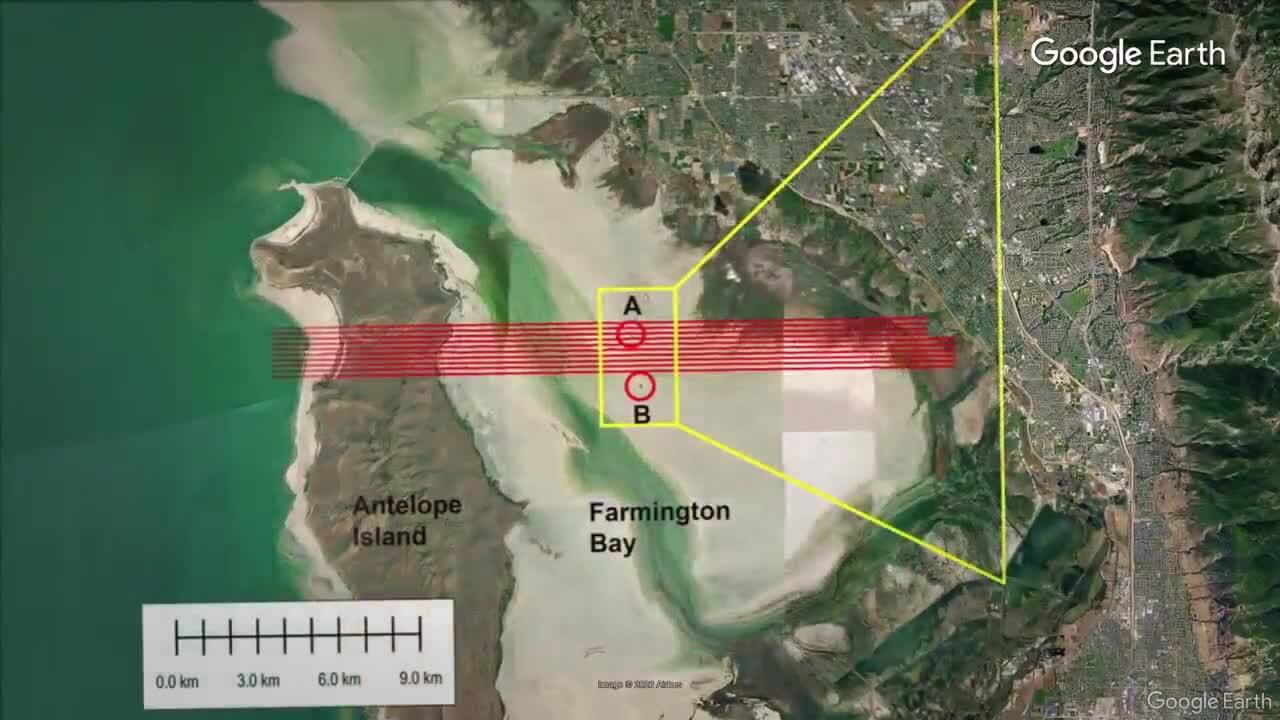
Using helicopters and specialized equipment to send electromagnetic pulses into the ground, they were able to confirm the existence of a freshwater reservoir. The research, recently published in Scientific Reports, offers promise for a threat to surrounding communities. As the Great Salt Lake declines due to water diversions, drought and impacts from a changing climate, strong winds pick up dust and blow it into nearby communities.
The lake bed has naturally-occurring toxins, like arsenic, that are typically covered by water. The University of Utah is conducting other research on the impacts of the dust on the environment and human health. But Professor Zhdanov said this could help provide a new water source to help reduce the impact of the dust.
"This, we believe, is one of the most important and firsthand applications of this, but this requires more work because we need to cover the entire Great Salt Lake. We need to find exactly how much, where it's located, and then make some educated decision where to drill and how to use it," he said.
It remains unknown the extent of the reservoir. But more broadly, the techniques used to find the freshwater reservoir could be used in other parts of the world to help discover new sources of water.
The Utah Department of Natural Resources funded some of the research as part of its efforts to reverse the Great Salt Lake's declines. The U. will seek additional funding to expand the research to other parts of the lake.
For Dave Foerber, a Kaysville-area birder who came out on Monday to look at the migratory birds on the Great Salt Lake, it was interesting research. But he believed there was a broader work that must be done.
"It’d be better if we could get some more water in the lake," he told FOX 13 News. "That’d be the best thing."
This article is published through the Great Salt Lake Collaborative, a solutions journalism initiative that partners news, education and media organizations to help inform people about the plight of the Great Salt Lake—and what can be done to make a difference before it is too late. Read all of our stories at greatsaltlakenews.org.