

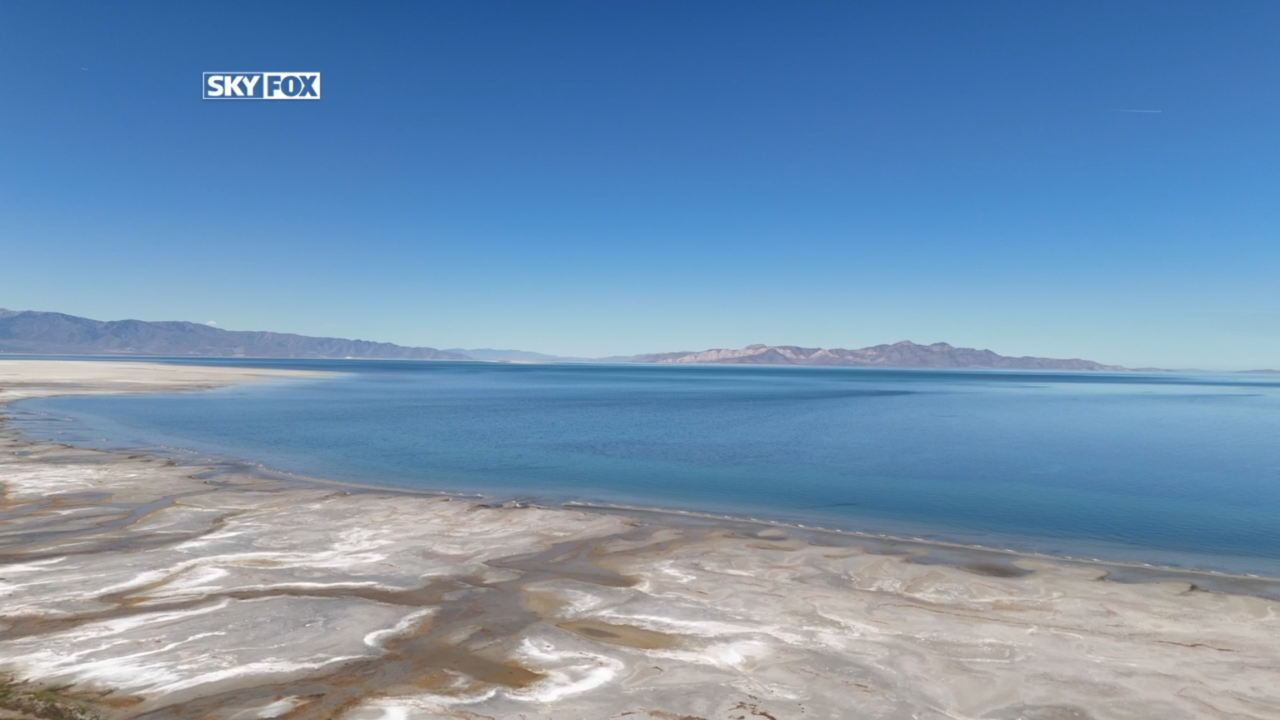


SALT LAKE CITY — At Great Salt Lake State Park, tourists dip their toes in the water.
"It’s really magnificent!" said Easton Hall, who was visiting from Kansas.
Kurt and Susie McCunniff, who were visiting from Arizona, walked along the shoreline.
"It’s nice out here," said Kurt. "It’s a great day but there’s not enough water."
Susie said she had heard of the environmental problems facing the lake.
"It's a little scary for our future, right?" she said.
The lake has peaked at around 4,192 feet in elevation and roughly a month earlier than expected, said Brian Steed, the Great Salt Lake Commissioner, who is tasked by Utah political leaders with saving the lake. Temperatures were warmer than usual over the winter. Snowpack has been called "no-pack" by state water officials.
"We’ve had warmer than normal temperatures," Steed told FOX 13 News on Friday. "That’s one. Number two, we rely on a big inflow of water into the lake and that hasn’t materialized this year based on the so-called no-pack. We haven’t had that snow up high."
The Great Salt Lake presents an ecological crisis for northern Utah, with reduced snowpack that fuels the water supply; toxic dust storms from an exposed lake bed (arsenic is among the naturally-occurring minerals in it); impacts to the state's economy, public health and wildlife.
This year, Steed does not believe the lake will hit a new historic low like it did several years ago. That's because more water has been secured for the lake through donations and leases. While the entire state is in drought and agriculture producers have already seen some water shut off to them, some have turned around and chose to lease their water to the Great Salt Lake as a form of income, Steed told FOX 13 News.
But Steed urged Utahns across the board to conserve to help the lake. He said outdoor water use in municipal areas takes 400,000 acre-feet of water. People can let their lawns go brown this year.
"With the exception of Washington County, we should all not be watering this week. We’ve received enough rainfall this week, there should be no water applied," Steed said.
But the Great Salt Lake Commissioner is preparing for worst-case scenarios. Under the laws that created the job, the Utah State Legislature gave the commissioner the power to override some decisions when it comes to water if it means protecting the lake from ecological collapse. Asked by FOX 13 News if he may have to make those decisions?
"In all candor, we’re going to keep every tool available on the table this year," he said. "Honestly, this is something we really haven’t had to be forced to consider."
This article is published through the Great Salt Lake Collaborative, a solutions journalism initiative that partners news, education and media organizations to help inform people about the plight of the Great Salt Lake—and what can be done to make a difference before it is too late. Read all of our stories at greatsaltlakenews.org.
