

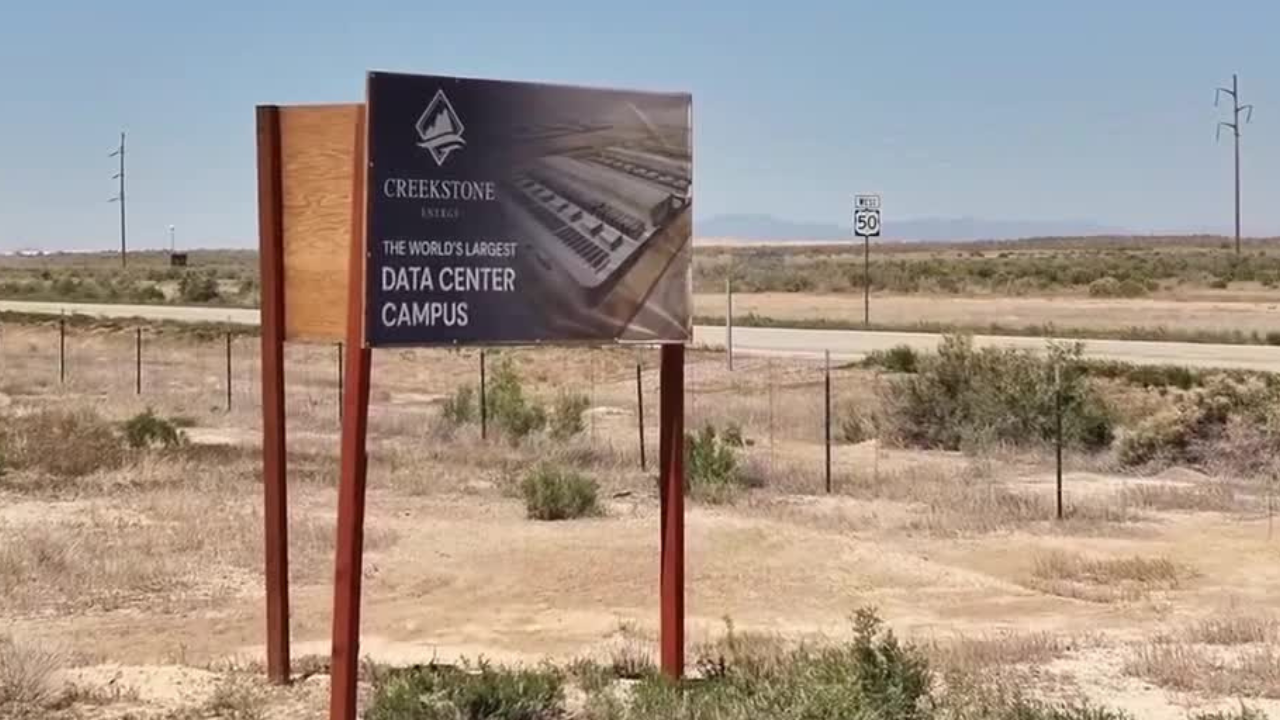


DELTA, Utah — A massive data center project taking shape just outside Delta in Millard County is testing a new approach to water use, with an executive claiming it may create thousands of acre-feet of water each year.
Creekstone Energy is developing what it describes as the world's largest data center campus, with plans for up to 10 gigawatts of power. The project is being built with its own energy resources, including natural gas, solar, and planned geothermal development.
But water remains a major concern for residents in one of Utah's most arid regions.
Creekstone CEO Ray Conley says the company is working with the University of Utah to study technology that could capture water produced during the natural-gas combustion process.
Conley compared the concept to the water droplets that can sometimes come from a car's tailpipe on a cold day. When natural gas is burned, the hydrogen in the gas combines with oxygen and creates water.
Cox pushes MIDA reforms after data center blowup:
Instead of allowing that water to escape with the hot exhaust gases, Conley explained how the company's concept would run those gases underground through a specially configured set of rocks, allowing the water to condense so it can be captured and reused.
The company estimates the process could create about 4,000 acre-feet of water per year if two gigawatts of electricity were generated using natural gas.
Conley said that is not water being “saved,” but water being created as part of the process. He compared the amount to filling a football field with water to a height of 4,000 feet.
Where that water could ultimately go has not yet been determined.
According to Conley, the answer will depend on the chemistry of the water, including how acidic it is. Agriculture would likely be the first potential use, with other industrial uses or even potable water possible if the water can be made sufficiently pure.
There is an important caveat: the technology has not yet been proven.
Trump wants communities to embrace data centers, but opposition is growing:
Creekstone is working with the University of Utah for an independent assessment and validation, and the company wants researchers to identify any potential flaws before it invests heavily in building the system.
The university is expected to publish its results, whether they are positive or negative, according to Conley.
For some Delta residents, water remains one of the biggest questions surrounding the data center. Resident Mack Barnhardt worries about the impact of the project on the area's water resources, agriculture, and the aquifer.
“Losing the water, I think it's our number one concern," Barnhardt said, pointing to the area's established farmland and rich soil.
Protecting the aquifer is especially important to Barnhardt because of his 44 years working in filtration. He also questions what happens to water once it is used or treated and says residents need to understand exactly what will go in and come out of the system.
For Barnhardt, the issue isn't simply whether the community supports growth or artificial intelligence.
“I like AI. I use AI. I have no issues with it,” he said. “But we have to be careful of what we're doing to our environment and to the people.”
Conley understands why people in rural communities can be concerned when a major new development changes the landscape they are accustomed to. He said communication and collaboration with residents are essential when deciding where data centers should be built.
Construction is already underway, including work connected to the project's gas infrastructure and roads. Creekstone expects its first computers to come online toward the end of next year.
The proposed water-capture technology, however, remains in the research and testing stage.
Creekstone explained how the goal is to determine whether water produced during power generation can be captured, treated, and ultimately put to use, potentially creating a new water source for an already water-stressed region.
It's an idea that could have significant implications for Delta and other communities, but researchers still have to determine whether the technology works as proposed and what that captured water can safely be used for.