

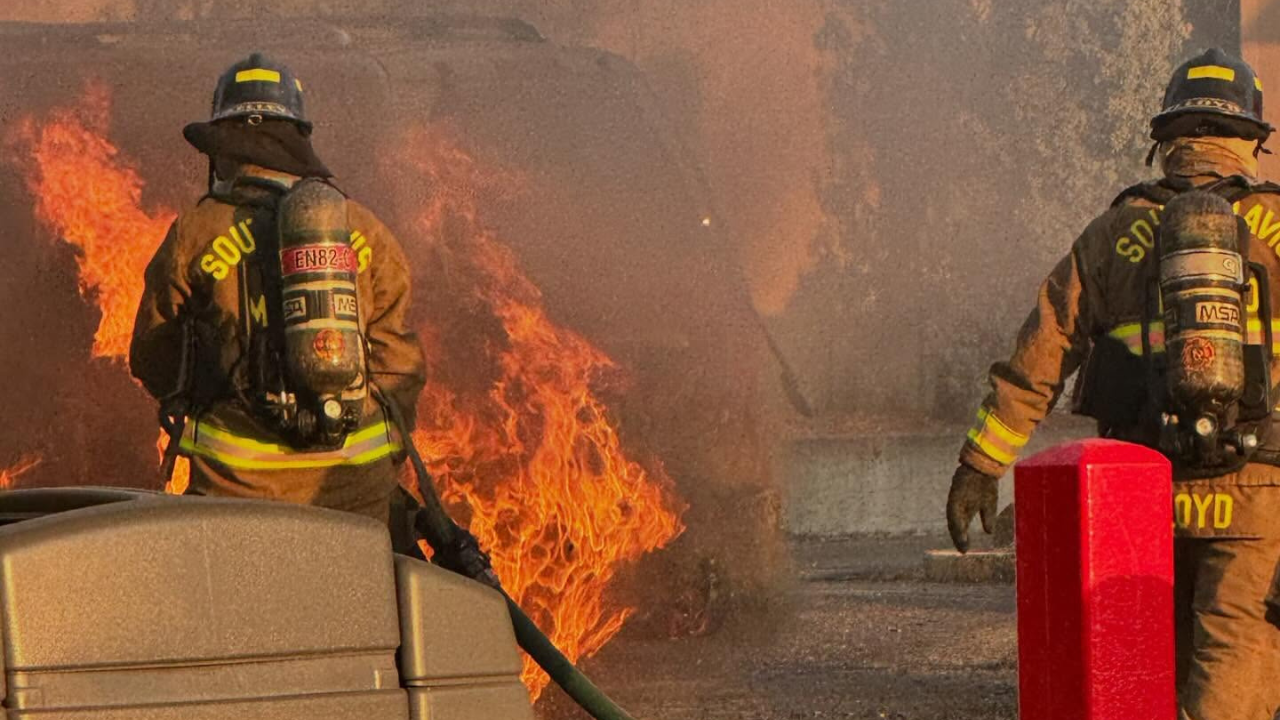


BOUNTIFUL, Utah — A change of seasons typically doesn’t impact someone’s job, but for fire departments and search and rescue crews, the heat can make a big difference. No matter the conditions, however, South Davis Metro Fire Chief Jeff Larsen said his team is always prepared to take a call.
“They love the job. They love to go and help people and serve the community,” Larsen said.
Of course, those calls come with risks.
“It’s super rewarding, but at the same time it’s concerning for me as well, especially in the conditions, you worry about the well-being, the health, and the overall safety of our staff,” he added.
The temperatures are already high when fighting fires, and adding up to 55 pounds in gear in heat exceeding 90 degrees makes the job even more difficult.
“It’s extreme with that additional weight. So, we encourage our crews to stay hydrated…” Larsen said. “They prepare through the wintertime for the summertime."
City lawnmower sparks Spanish Fork wildfire that threatened homes:
Fire crews respond to residential fires, brush and wildland fires, and other medical calls. They’re not the only crews that must work through the heat. Search and rescue crews work to help people in need, too.
“The heat affects the people that we're going after. We have to deal with those same circumstances, so we pre-hydrate. As soon as we get a notification for the rescue mission,” explained Steve Petty, with Davis County Search and Rescue.
Petty estimates that over the past six weeks, the department has had about 8 to 10 rescues. He shared how a rescue on one of Davis County’s trails could take anywhere from an hour and a half to more than 12 hours to finish.
When you add in the heat, plus an additional 35-pound pack filled with rescue tools and gear, even an easy trail can become difficult.
“Real rocky trails, it makes it more difficult to go down," he said. "When we’re carrying someone who has a broken leg, we can navigate, but it takes time and a bunch of hands to manage."
Petty said people should go hiking in the morning, when temperatures are cooler and conditions are better, and reminds everyone to carry extra water and be prepared for the terrain.
Search and rescue crews work closely with the local fire departments, so they’re all prepared to handle the heat that comes their way.
"We help our neighbors out," Larsen said. "We’re one big system that works well together to serve the communities the best we can."