


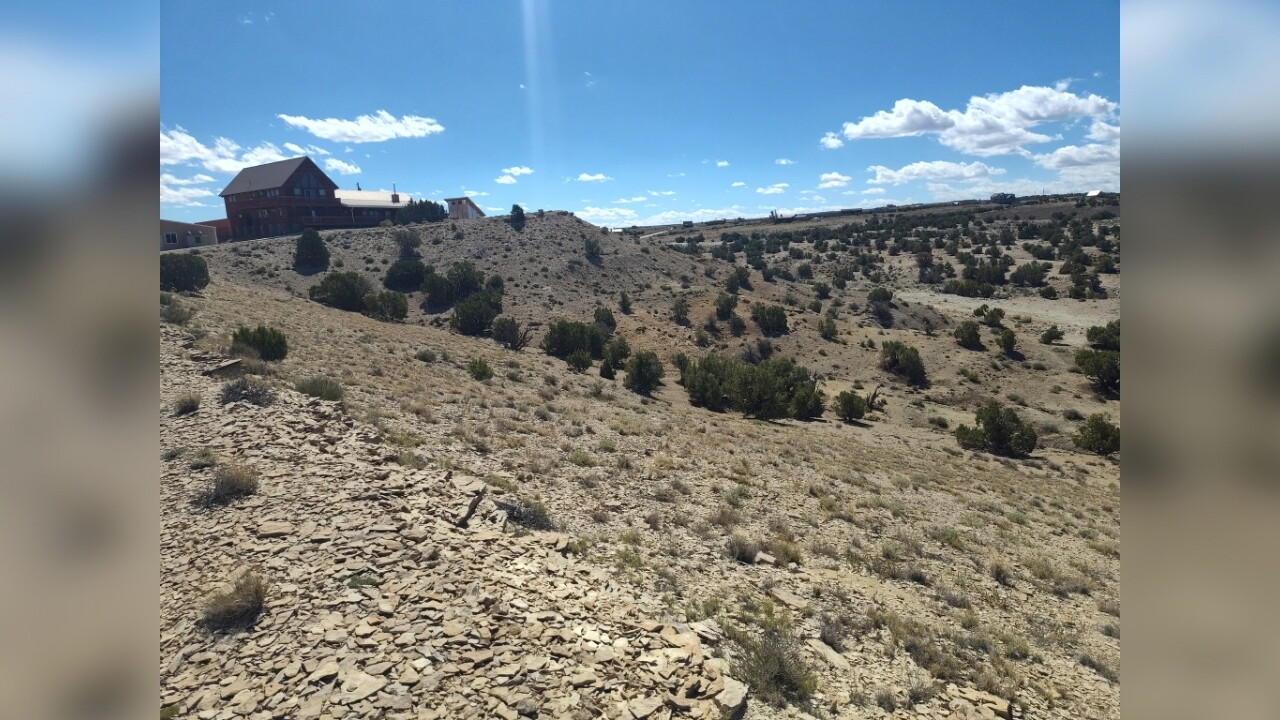
DUCHESNE COUNTY, Utah — Joe Skeen left the Salt Lake Valley looking for what he found in Utah Mini Ranches: clean air, open land and quiet nights beneath dark skies.
He and his wife have lived there for just over four years. Wildlife crosses their property, their family has room to gather and, when they arrived, Skeen said there were no oil wells close to their home.
Then, in mid-July, a letter arrived from Duchesne County.
Skeen learned that WEM Operating was seeking county approval for the Horse 2 oil pad near his property. The county’s findings place his house approximately 840 feet from the proposed wellheads.
“We were horrified,” Skeen said. “It felt like our neighborhood was under attack.”
Horse 2 would contain three horizontal wells. A separate project, Horse 1, would add four more wells near other homes in the same community.
Skeen and property owner Adam Merritt contacted FOX 13 after they began trying to determine how seven wells could advance next to an established residential neighborhood — and whether residents still had a meaningful way to influence the projects.
Merritt owns eight lots in Utah Mini Ranches. He purchased the property years ago intending to build a vacation cabin and eventually give the remaining lots to his children and other relatives.
Residents are not calling for an end to oil production. They want WEM to move the pads farther from homes — and for Duchesne County to explain how it determined the projects would not harm public health, safety or nearby property.
But while residents challenge the projects, they are continuing to move forward.
Horse 1 has been approved by the county and is under appeal. Residents say land clearing and site preparation have continued during that appeal. The county says it cannot stop the work without a court injunction.
Horse 2 has received state and federal drilling approvals. Duchesne County said Thursday that the project met the same local criteria as Horse 1 and that its final county decision was being issued and mailed.
That leaves residents challenging one project while work continues and watching a second project move through the approval process.
Horse 1 work continues during appeal
Horse 1 is planned for four wells. Duchesne County said its assistant community development administrator approved the project through an administrative conditional-use permit.
The county initially told FOX 13 the Planning Commission had approved the permit, but later corrected that information.
Jared and Jennifer Millington, who live near Horse 1, filed a 127-page appeal on Aug. 21.
Their filing challenges the county’s findings and alleges the permit lacks adequate, enforceable protections addressing noise, lighting, dust, traffic, air emissions, emergency response, wildfire danger, spills and drainage.
The appeal says the nearest home is approximately 721 feet from the proposed wellheads.
It also includes privately commissioned baseline measurements of existing conditions around the Millingtons’ home.
According to the filing, outdoor sound measurements ranged from 38 to 50.4 decibels, while nighttime lighting measurements ranged from zero to 0.01 foot-candles.
The residents want the county to require WEM to estimate those effects, establish enforceable limits and monitor conditions once operations begin.
The assertions in the appeal are the residents’ allegations and have not been decided by the body hearing the challenge.
Residents say they have seen bulldozers and trucks removing vegetation and leveling the Horse 1 site while the appeal remains pending.
Duchesne County confirmed that filing an appeal does not automatically pause the work.
“Absent a court injunction, the County has no authority to order a work stoppage,” county commissioners said in a written response to FOX 13.
Under the county’s oil-and-gas ordinance, an administrative decision may be appealed to the planning commission within 10 days after the decision is mailed. A subsequent appeal may be made to the county commission.
Horse 2 receives state and federal approvals
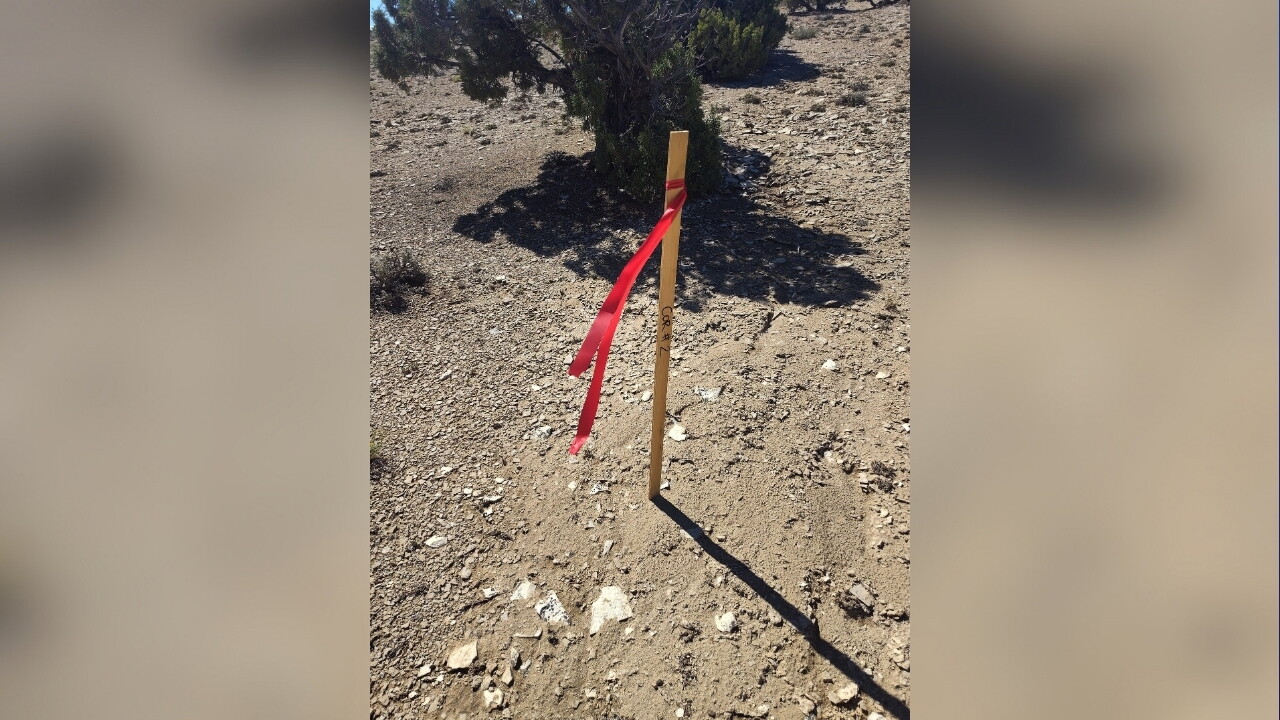
Horse 2 would contain three horizontal wells drilled from a pad on privately-owned surface land to access Indian Trust minerals underground.
The Bureau of Land Management told FOX 13 it received three applications for permits to drill from WEM Operating on July 8.
The Utah Division of Oil, Gas and Mining approved the drilling applications on Aug. 6. BLM’s approving official signed an environmental-review decision Aug. 11, and the agency approved the three applications on Aug. 12.
BLM said WEM has the federal and state approvals necessary to construct the pad and drill the wells. The federal administrative appeal period ended 20 days after the agency’s decision was signed.
The federal agency does not track county approvals.
When Duchesne County responded to FOX 13 on Thursday, it said Horse 2 had met the same county criteria as Horse 1 and that its final decision was expected to be issued and mailed that day.
WEM subsequently said the projects had been approved by all pertinent governing bodies.
Skeen said the Horse 2 pad itself had not been constructed when he answered questions from FOX 13. However, he said he had observed bulldozers and excavators working on pipelines near the proposed site.
How close would Horse 2 be to Skeen’s home?
The county’s findings report places Skeen’s home approximately 840 feet from the Horse 2 wellheads.
Skeen said his son separately used GPS coordinates to estimate the distance and reached a similar result. Neither measurement was produced through an independent property survey, and the county report describes its figure as approximate.
Skeen estimates the edge of his property is considerably closer to the proposed development.
He also disputes how his house was described during the county process. Skeen said county documents placed the home south of the proposed wellheads, while he maintains it is directly east and downwind of the site.
The county has not provided FOX 13 with an independently surveyed measurement between the house and wellheads.
Residents question notice and consultation
Skeen said he received a county notice in mid-July but never received a letter, email or other correspondence initiated by WEM.
After learning about the project, he contacted WEM representative Jake Woodland and invited him to the property. Skeen said Woodland visited his home July 27 to discuss the family’s concerns.
According to Skeen, Woodland discussed the possibility of a sound wall, but said the home’s uphill position could limit its effectiveness.
Skeen also said Woodland acknowledged that fugitive gas emissions can occur but maintained that the emissions would not travel beyond the pad at levels that would endanger the family.
FOX 13 asked WEM about its notice, consultation and proposed mitigation. The company did not address Skeen’s account of that meeting specifically, but provided a written statement.
“WEM Operating understands and acknowledges the concerns of our neighbors near the Horse project,” company representative Brad Gunnell said. “The oil and gas development process can be disruptive with regard to traffic, noise, and other factors in the early phase of a project.”
WEM said it adjusted its timeline to shorten the duration of the disruption, implemented mitigation measures in response to specific concerns and maintains open communication with area residents.
The company did not identify the particular timeline changes or mitigation measures in its response to FOX 13.
“These projects have been reviewed, vetted, and approved by all of the pertinent governing bodies, the details of which are a matter of public record,” Gunnell said.
What Duchesne County’s ordinance requires
Duchesne County’s oil-and-gas ordinance contains different distance requirements for different purposes.
A wellhead generally must be at least 300 feet from the exterior wall of an existing home or public building, unless the requirement is waived.
The frequently cited 660-foot measurement is not the county’s minimum well setback. Instead, it triggers separate notice and consultation provisions in certain circumstances.
When an operator does not own all homes or public buildings within 660 feet of a wellhead — or within 660 feet of the nearest edge of a compressor station or water-handling facility — the company must provide certified notice at least 45 days before applying for a state drilling permit.
The operator must also offer to discuss the project and consult in good faith with responsive property owners.
The ordinance lists noise, lighting, dust, site security, emergency notification and the location of roads, pipelines and production equipment as potential impacts requiring mitigation.
Because the provision also measures the distance from certain production facilities, not only the wellheads, the reported 840-foot distance between Skeen’s house and the wellheads does not by itself establish whether he should have received the operator’s certified notice.
FOX 13 asked the county for the notice dates, mailing list and documentation showing WEM’s consultation with affected property owners. Those records were not included in the county’s written response.
The county said WEM held multiple meetings with the Mini Ranches homeowners association and individual property owners.
It also said WEM provided maps based on surveyed property boundaries showing no encroachment on property that was not accounted for in the applications.
According to the county, WEM reported conducting surveys only on properties included in the applications and covered by surface-use agreements.
Skeen said WEM did not initiate a meeting with him and that he contacted Woodland himself after receiving the county’s notice.
Skeen says county did not answer his emails
Skeen said he emailed the county twice and did not receive a response to either message.
The first email requested an administrative hearing so he could raise concerns about Horse 2. When he did not receive an answer, Skeen said he and his wife visited the county offices the following day to make sure the hearing was scheduled.
The second email asked how he could participate in the appeal being pursued by other residents.
Skeen said residents who attended the county’s administrative hearing were instructed to focus on the findings in the conditional-use documents rather than present broader objections to oil development.
He said he raised concerns about the location of his home, prevailing winds and discrepancies involving property boundaries.
The county delayed its final Horse 2 decision while the survey and notification questions were examined.
County officials now say WEM’s maps resolved those concerns.
County says the applications met its code
Duchesne County said WEM submitted complete applications and addressed every requirement imposed by the county’s ordinance.
“The land use at issue here meets requirements for public health, safety, and general welfare since the Duchesne County Commission adopted code with all required conditions,” commissioners said in their response.
The county added that conclusion depends on WEM complying with the conditions contained in its applications and approval letters.
According to the county, those documents address noise, lighting, dust, truck traffic, emergency access and other potential impacts.
The county’s general conditional-use standard requires officials to find that a project will not be unduly detrimental or injurious to nearby property and will not harm public health, safety or the general welfare.
FOX 13 asked what evidence officials relied upon to make that finding for the Horse projects.
The county did not identify separate, site-specific health or environmental studies in its written response. It said the applications met the standards established in county code and directed FOX 13 to the application materials and approval letters posted online.
Residents argue that complying with the county’s existing distances and permitting requirements does not necessarily demonstrate that a particular development will avoid harm to neighboring homes.
Residents seek relocation — not a drilling ban
Skeen said his primary concerns are air emissions, industrial noise, nighttime lighting, heavy truck traffic and the potential effect on property values.
Residents have also cited health research involving people living near oil-and-gas development. Their concerns do not establish that emissions from Horse 1 or Horse 2 have caused — or will cause — specific health problems.
Skeen supplied a year of information from a weather station at his home to show the directions from which wind commonly reaches his property. FOX 13 has not independently analyzed whether those readings accurately predict emissions or exposure from the proposed project.
Skeen wants the county and WEM to evaluate prevailing winds, terrain and nearby residences when selecting pad locations rather than relying primarily on minimum distances.
He said moving the surface pads would not necessarily prevent WEM from reaching the underground resources using horizontal drilling.
“I am not asking the oil company to not drill at all,” Skeen said. “I am asking them to be responsible in how they drill, consciously avoiding drilling too close to residential areas.”
Merritt and other property owners share that request. They want Horse 1 and Horse 2 relocated farther from the neighborhood.
Horse 1 is under appeal, but the county says the appeal does not stop the work. Horse 2 has received state and federal drilling approvals, and its federal appeal period has ended.
WEM says it has listened to residents and made changes. Residents say they still do not know precisely what those changes are — or whether they will address the concerns of the homes already there.
After leaving the Salt Lake Valley for open land, quiet nights and dark skies, Skeen said he does not want to leave again. He wants the oil development moved farther away from the homes already there.