

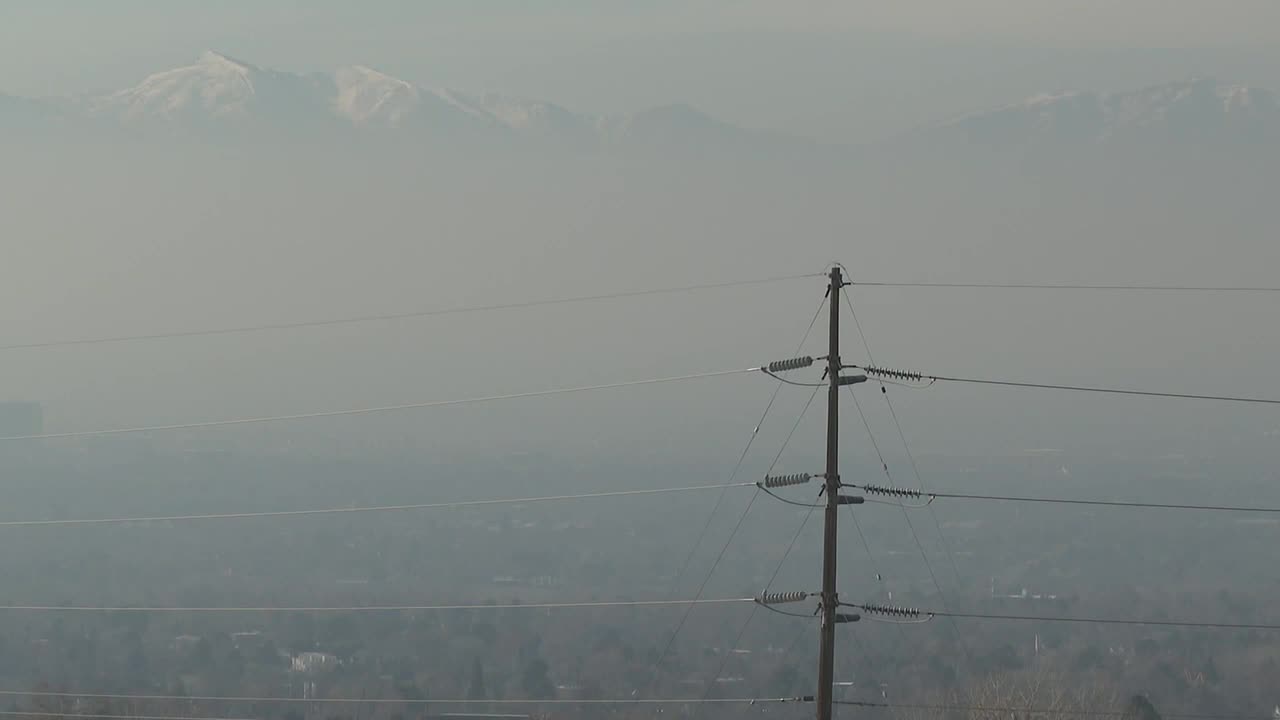

SALT LAKE CITY — A thick winter inversion has once again settled over northern Utah. As it continues to linger, some have started to notice some pains from the pollution, raising health concerns for people — and their pets.
“It’s a beautiful place, and it’s so sad that on days like today, you can’t see it,” said Dr. Brian Moench with Utah Physicians for a Healthy Environment.
Moench, who has studied the dangers of inversion pollution, said the murky skies are obscuring what should be sweeping views of the Oquirrh Mountains. On a clear day, he said, “you can see the entirety” of the range.
But the pollutants trapped in the valley’s cold air aren’t just an eyesore.
“It’s the same kind of pollution that we’re experiencing in the valley, as if you were smoking cigarettes,” said Moench. He added that the pollution will cause both long-term and short-term health effects.
“If you were to open your water tap and your water came out brown and murky, you wouldn’t drink it. Yet we’re stuck here with air that we have to breathe that is brown and murky,” said Moench.
The health effects can be felt in a matter of days, Moench said, including headaches, sinus pain, and nasal irritation. During flu season, these symptoms can sometimes be confused with a viral infection, but he said residents should take any respiratory changes seriously.
“It should be taken seriously, everyone,” he added.

Weather
U of U professor launches new air quality app to keep residents informed
He said the flu symptoms that differ from those caused by bad air quality include fatigue, fever, and muscle aches.
The inversion's reach extends beyond human health. Kimberly Claus, a veterinarian with Mountain West Veterinary Specialists, said animals are also vulnerable to poor air quality.
“Just like people, our pets are going to have some potential issues when the air quality gets worse,” Claus said. “The main thing I worry about is chronic respiratory disease.”
Pets with pre-existing respiratory problems are especially at risk. Warning signs include increased breathing rate or effort, more frequent coughing, or unusual lethargy.
“If you can’t calm them down, they need to come into the ER,” said Claus.
Both Moench and Claus advised residents to limit outdoor activities for themselves and their pets until air quality improves.