

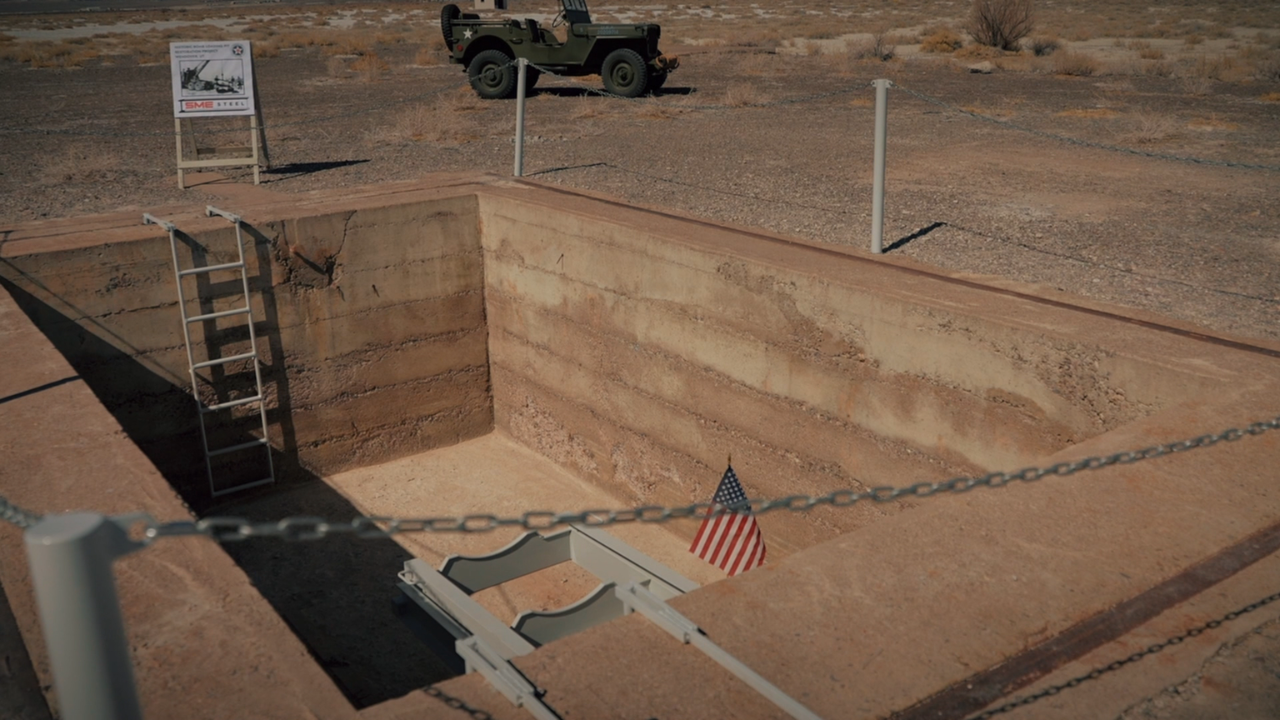


WENDOVER, Utah — A crucial piece of World War II history, once buried in secrecy, has been restored and opened to the public at the Wendover Historic Airfield in Utah.
The newly completed project brings back to life a bomb loading pit where crews trained to load replica atomic bombs into B-29 bombers in the final months of the war.
Tom Petersen with the Wendover Historic Airfield says the base operated under near total secrecy in its beginnings.
Soldiers were told in no uncertain terms to keep quiet about everything they saw and heard on the grounds. Their orders were simple: do your job and ask no questions.
Up until two days before the first atomic bomb was dropped on Japan, crews were here in the Utah desert, drilling the same process over and over again, loading replicas of Fat Man and Little Boy from this very pit.
Petersen calls it what he believes is the most important hole in the ground in American history, and one of only two or three like it left in the world.
What makes it even more remarkable is how many of the men who built and used it had no idea what they were really a part of.
"Most of the guys that helped build this knew that they were building something for a big bomb. A lot of them probably didn't even know anything about nuclear," Petersen said.
After the war, the pit was forgotten. For years, visitors had to use their imagination just standing over an empty hole in the ground. That changed when a local steel company came knocking.
SME Steel, a Utah based company, approached the museum and offered to volunteer their time and resources to restore the pit.
I went down into it with Tyler Groves, an aerial superintendent with South West Steel, who walked me through what they built.
The cradle you see inside was designed to hold the Little Boy bomb, with a hydraulic cylinder that would push the weapon up into the belly of the plane.
B-29s would pull directly over the pit as crews worked below.
And here is the thing: nobody handed them a manual.
There were no detailed drawings from Los Alamos explaining how to load an atomic bomb into a plane.
It was pure American ingenuity, a whole lot of trial and error, and the weight of the world on their shoulders.
Groves said the same spirit carried into the restoration.
"I mean, it's amazing to be a part of American history," he said.
The project was a complete donation from SME Steel, no drawings, no blueprints, just skilled workers reverse engineering history.
Petersen says the restored pit is about more than nostalgia. It is a reminder of what is possible when people work together, and a warning about what happens when history is forgotten.
"If you forget your history, you're doomed to repeat it, which is something that I think desperately everyone hopes will never be repeated," he said.
The restored bomb pit is now part of the daily 1:30 tour at the Wendover Historic Airfield.
This story was reported on-air by a journalist and has been converted to this platform with the assistance of AI. Our editorial team verifies all reporting on all platforms for fairness and accuracy.
