

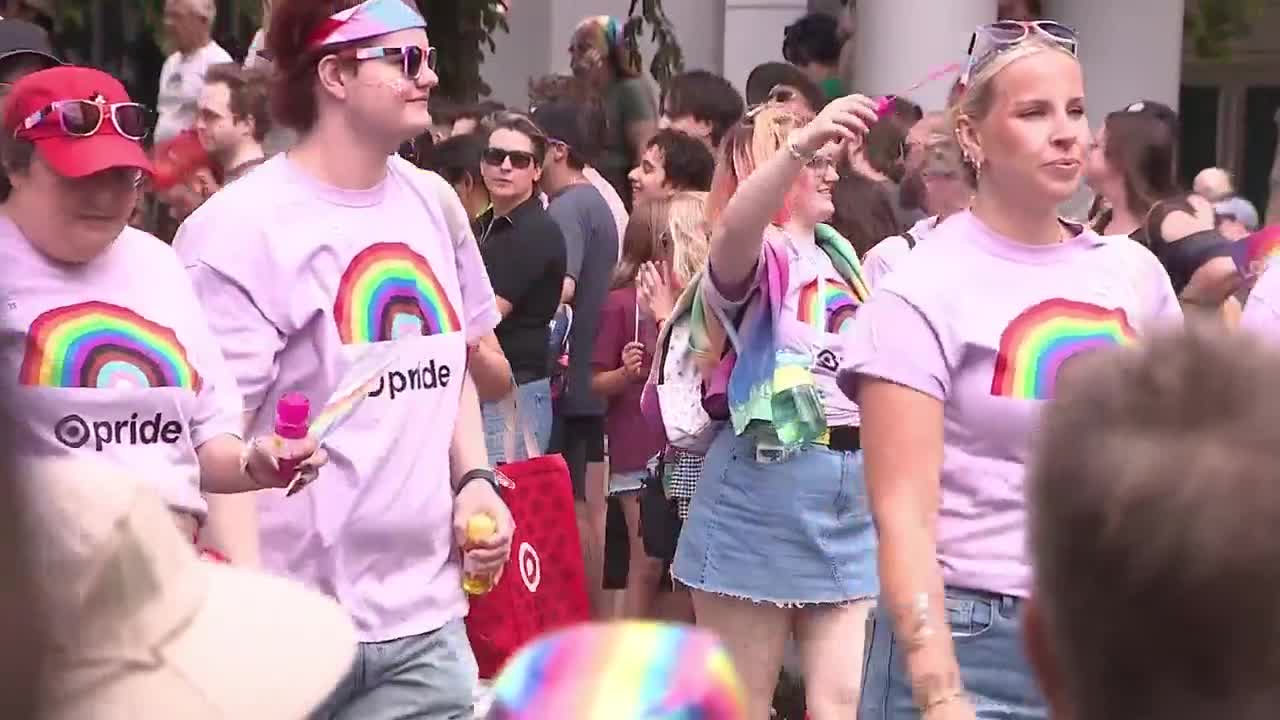


SALT LAKE CITY — Utah Pride Festival kicked off over weekend, with love and acceptance being the center of what it represents.
“Sometimes in my world, I feel very lonely, and it's been really cool to show up and see... there's actually a big community out here,” said Livia, who was attended the festival on Sunday.
"I go anywhere else, and I'll get a lot of looks, and here I can just walk around and not have someone I don't know question my existence,” added Luna Campbell.
It’s no secret that religion is a strong part of the Utah's identity, which makes some feel like true acceptance is hard to come by.
“I did grow up in a Mormon household, I know what it is like personally to receive conflicting information about who I am,” said Utah Pride's Esera.
Many of those attending Utah Pride festivities admitted to being shocked earlier in the week when Governor Spencer issued a surprise declaration that felt like a snub to their community.
Cox declared June as Fidelity Month, pointing to a recent opinion poll claiming that Americans' support for traditional values has declined, and wants Utahns to prioritize things like faith, family, and country.
“Fidelity Month, I want to say, is not at odds with Pride month. They are all about celebrating community and celebrating togetherness,” said Jackson Carter with Utah Pride. "The idea that we would need to rebrand it and change the name seems a little silly to me.”
The Presbytery of Utah joined the conversation, releasing a statement in support of the LGBTQ community.
“Our denomination embraces them,” said Rev. Dr. Mirjam Haas-Melchior. "Churches should have open and safe spaces for communities, especially who are feeling hurt and who do not feel safe, because as Presbyterians we believe in a God that is inclusive and loves all people.”
Reverend Mirjam believes pride and fidelity should go hand in hand, depending on the definition.
“If this is an inclusive understanding that is affirmative of everybody who's faithful into the entity they believe in, faithful to and loyal to their friends and families, then yes,” she said. "But if this is an exclusive term that is narrowed down, that family is only the nuclear between man and woman, and they only should have children, then I would say it should not go hand in hand.”
Those FOX 13 News spoke to at the Pride festival are encouraged that some religious leaders are getting involved in the conversation.
“Religion is queer. Queer people are everywhere. Queer people intersect every single identity you can imagine, so when people are saying that queerness is at odds with faith, it's like those two things exist together all the time,” Carter said.
“I love, love, love that churches are doing that. I don't think that pride and church should be separated. Why is it one or the other? It doesn't have to be. You can do both,” Livia said.