

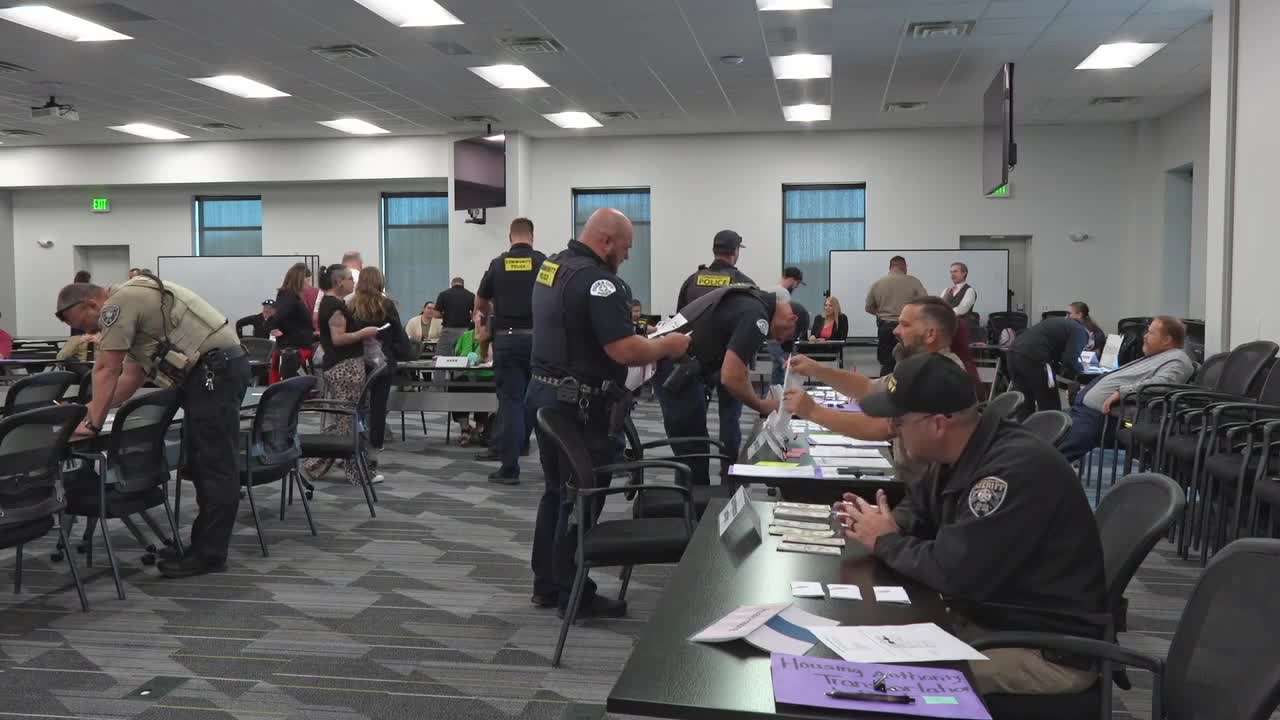


OGDEN, Utah — The Weber County Sheriff’s Office hosted a simulation exercise to help people understand for those who have been recently released from jail or prison.
"The simulation is the closest we can get to offering someone the ability to see the barriers that exist when getting out of incarceration,” said Lt. Cameron McCarty, with the Weber County Sheriff's Office.
The goal is to help people understand the barriers that those who are justice-involved face, and work toward finding ways to help them move forward.
"Re-entry is a fundamental part of incarceration, if we don’t have a plan for people to get out, then putting them in doesn’t do any good,” said Lt. McCarty.
Participants included police officers, local community partners, elected officials, judges, local leaders and even me, a reporter. Everyone was assigned an identity, story, and a life card with tasks we had to complete. The simulation for in four rounds of 15 minutes each, each representing one week.
WATCH | Weber County re-entry simulation sheds light on barriers for those who have been incarcerated
"There is no one solution and the solutions really need to be as complex as the people we are working with and as complex as the systems within which we're working in,” said Laura Andelin, justice program supervisor at the Weber County Sheriff's Office. She said through a state funded pilot program, they reduced recidivism rates by 45 percent.
Some of the tasks in the simulation included getting identification cards, paying for housing, buying groceries, finding transportation, taking drug tests, and dealing with unexpected emergencies like losing childcare or a big earthquake shutting services down.
"Understand that people need a second chance,” said Lt. McCarty. “That small trip to incarceration doesn’t mean that that's the end of their ability to serve or to be part of our community,” he added.
The tasks got a little easier when case managers and peer supporters went around to help. Another goal of the exercise was seeing how important peer support and case managers are, and how so many organizations have a part to play in helping people succeed.
Andelin said they work with multiple community partners and focus on individualizing re-entry paths, so they people get the right resources to find a new way forward.
"Our job on the re-entry team is look at the individuals as the unique humans they are, and to be able to identify factors that have not only contributed to where they are today, but also the factors that need to be considered in their re-entry and whether or not they will be able to successful,” she added.