

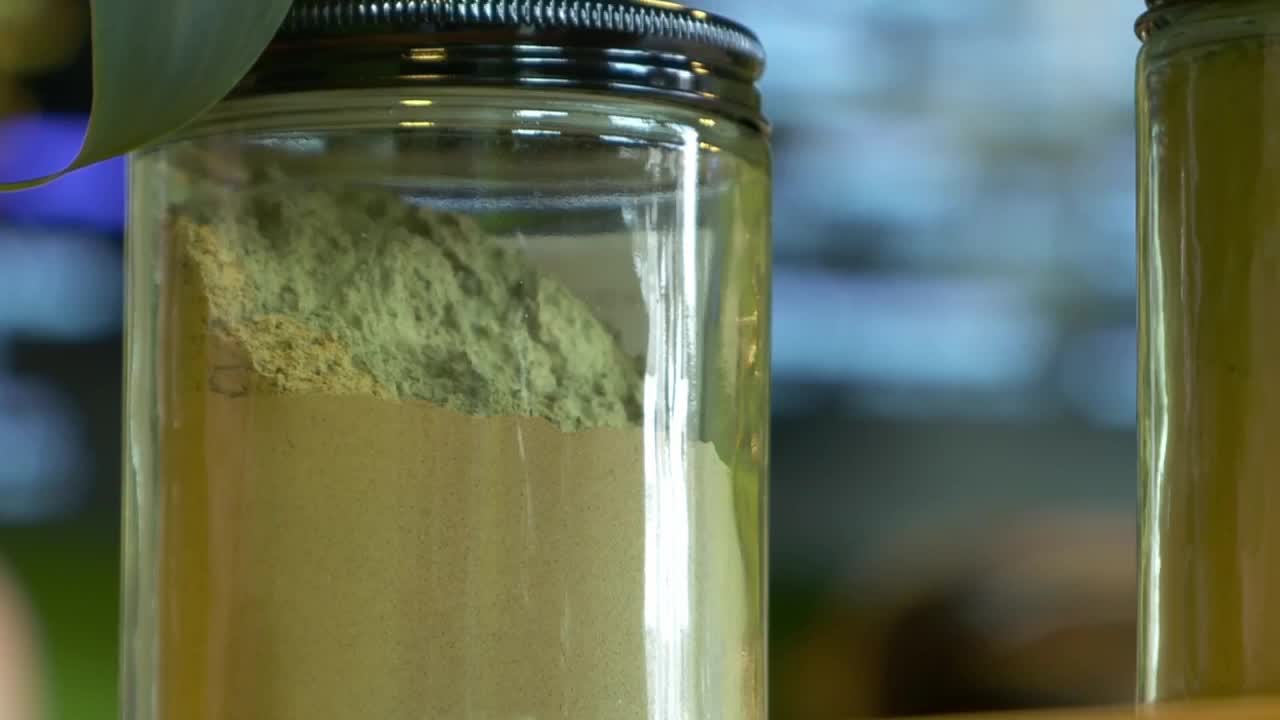


SALT LAKE CITY, Utah — The state Department of Health, Department of Agriculture and Food and the University of Utah’s Poison Control Center have confirmed that four people died in Utah due to highly potent chemicals found in products like synthetic kratom and cat’s claw.
While items containing chemicals like these were banned by the state in May, authorities say you could still find them in some retail stores.
"They got them in premade capsules. You can buy them in little bottles. They look like Vitamins. You can just (say), 'I want that one.' I think I spent $40 bucks on it,” said Scott Flanick, who lives at Odyssey House, a nonprofit that provides addiction resources.
Flanick has been dealing with addiction for 25 years. During that time, he'd sometimes run out of drugs and was told kratom was a cheap replacement.
"I didn't get a high off of it," Flanick said. "It made me feel kind of more sick than anything, like a poison sick."
Flanick bought synthetic kratom three years ago back when it was still legal and unregulated. Then in May, the state banned it, and months later, the federal Drug Enforcement Agency reclassified those synthetic compounds as Schedule 1 drugs.
However, state health officials recently found products containing those same chemical compounds and discovered they were to blame for the deaths of four Utahns in the last four months.
"We had testing of the product and also testing on toxicology from blood and urine samples from patients,” said Dr. Michael Moss, the medical director of the Utah Poison Control Center. We've confirmed that there are deaths caused by these products."
These chemical compounds aren't just found in products labeled as kratom. They're also found in non-psychoactive products like cat's claw, buzzers and several products that don't accurately list what exactly is included.
"What we're really concerned about at the Department of Health and Human Services is these new semi-synthetic kratom alkaloids and then of course that we're finding those in products that don't accurately label what's included,” said Megan Broekemeier, a forensic epidemiologist at the state Department of Health and Human Services.
Because the list of products like these continues to grow, health authorities urge people to avoid certain products.
"If you see a product that says something about 'warning may be addictive,' if something is claiming to not contain drugs like kratom or 7-OH, that should be a big red flag for you,” said Moss. “Some of these will say, 'only for adults,’ or 'must be 21 or older to buy.' That should be a red flag."
The products themselves are addictive, and in Flanick’s case, his withdrawal symptoms from kratom were worse than symptoms from other drugs.
"I would never go back to it," he said. "Best advice I got is get help the right way, the professional way."
Authorities say you can report products like these to the state Department of Agriculture and Food and to seek professional help if you are experiencing addiction symptoms.