

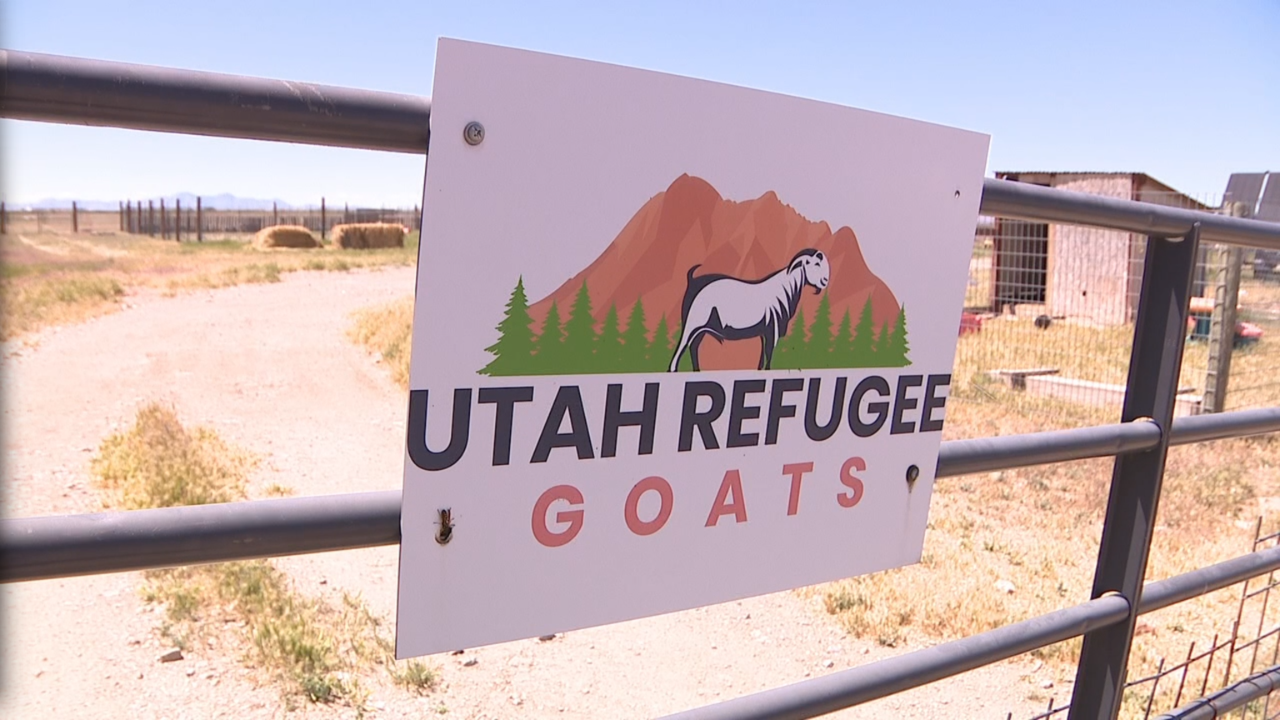


SALT LAKE CITY — What does affordability look like when you’re a stranger in a strange land? A refugee?
Members of one refugee community in Salt Lake City are working with Utah State University to try to make affordability easier by providing items like eggs and meat at discounted prices.
Those new residents to Utah say they are extremely grateful to be here and realize how much the government is spending to make their transition successful.
But they also want to take control and ownership of their own destiny.
And thanks to USU, a new goat and chicken farm is a big step in the right direction.
Abdikadir Hussein said it makes him emotional just thinking about it.
“It makes you want to cry!”
Hussein is talking about being part of the Utah refugee goat operation.
It’s an 87-acre farm west of Salt Lake City, where Hussein is now helping to raise goats and chickens.
He said it will ultimately provide affordable protein for Utah refugee families, many of whom are from Africa.
“Until now we don’t believe that this is actually realistic, realistically happening. So it makes you very emotional.”
For a variety of reasons, religious, cultural and financial, getting healthy, protein-rich food can be a struggle for refugee families.
Utah State is lending a big hand to help out.
Chad Page is in the Utah State University Animal Science Department.
He said USU is hoping the goat operation will help refugee families acclimate more quickly.
“And goats is a main part of a lot of their diets. So having both food that is affordable to them, but then also just accessible is a big aspect of what this farm and community is starting here.”
Utah State professor Joseph Okoh is from Nigeria.
He’s not a refugee, but said he understands what many go through in assimilating to the U.S.
Okoh said the goat operation will be a working, co-op type farm where people will not only have access to affordable protein, but learn skills along the way.
“This is a privilege for us and an opportunity for us to have them contribute to the society like I said, and have affordable food in terms of protein, meat, eggs, and will be having chicken products as we go along.”
And for Somalian immigrant Abdikadir Hussein, he said one of the biggest byproducts of all of this is giving people hope.
“For them, their resiliency. And hoping to continue to be so resilient until their hope becomes a reality.”