

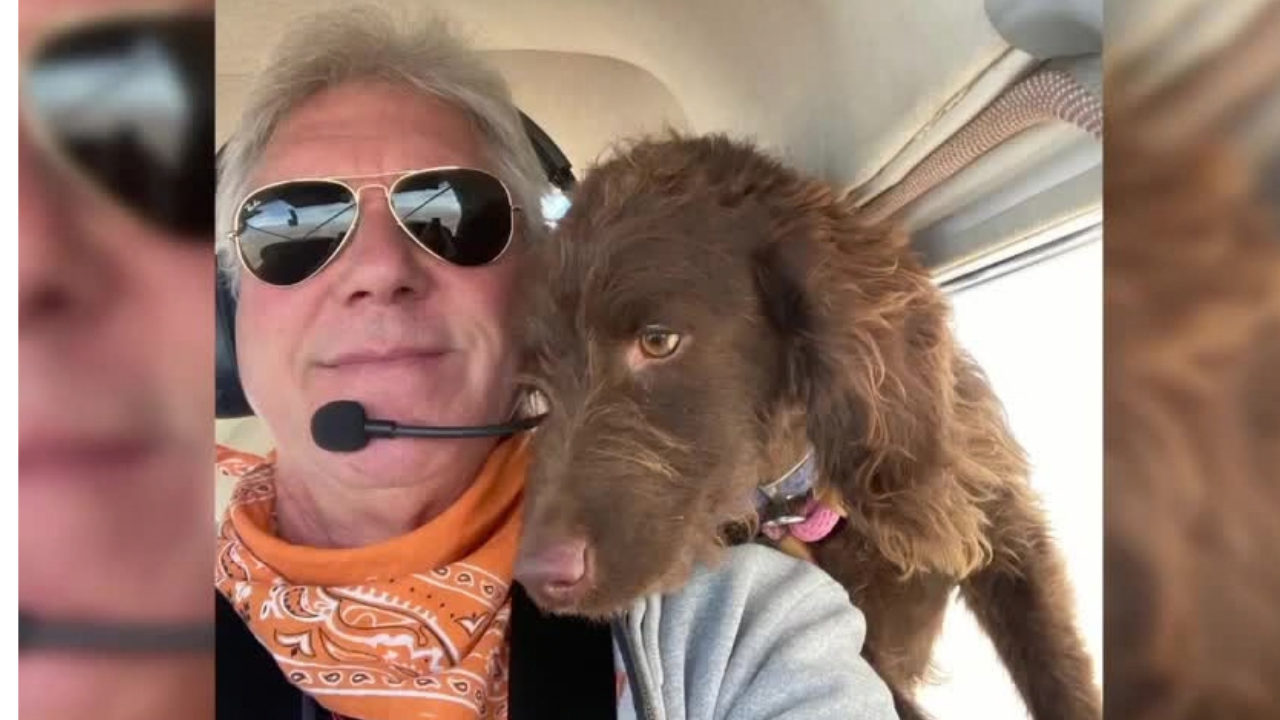


SALT LAKE CITY — An increase in hangar rental rates at Salt Lake City International Airport is raising concerns among some general aviation pilots, including one who uses his plane to transport rescue dogs across the West.
Pilot Lance Weekley has spent his retirement helping animals in need through Desert Dog Aviation LLC, a volunteer operation that flies rescue dogs to new homes, fosters, and rescue organizations.
But now, Weekley says soaring hangar costs could force him to ground those efforts.
"I've been on the airport here in three different hangars since the early '90s," Weekley said.
Weekley has occupied his current hangar since 2018. On Friday, he received a letter from the Salt Lake City Department of Airports informing him that his rental rate will increase from about $455 per month to $837 beginning January 1. A second increase scheduled for July 2027 would bring the monthly cost to $1,219.
"The letter said by July it's going to be $1,219 a month, so that's quite a bit more than double the price," Weekley said.
Salt Lake City International Airport handles 95% of Utah's passenger traffic despite 46 airports statewide:
According to the city's letter he shared, a market analysis determined the current rental rates for general aviation hangars were well below market value. It said the city said the increases are necessary to support ongoing maintenance and future improvements at the airport.
Public Information Officer for the Salt Lake City International Airport Nancy Volmer said that they recognize that this is a huge change, but rates at SLCIA have been historically low for decades.
Volmer said these new rates are lower than similar international hub airports in surroundings states. In an independent study in 2019, she said it suggested a rate of $1,200 for a standard single hangar.
Volmer provided the pricing of surrounding Utah airport hangars as well. She said Provo currently charges $185 for a shade hangar and $405 for a single engine plane hangar. St. George charges $275 for a shade hangar and between $875 and $1,100 for a single engine plane hangar.
For Weekley, however, he said the higher cost coming next year could jeopardize a service he provides at no charge.
"This is all volunteer," he said. "We just try to preserve a community service for rescues, therapy dogs, cadaver dogs for the fire department. We don't charge, it's all volunteer. $1,219 is probably going to shut us down."
The impact could be felt far beyond the airport.
Ronnie Riner, a coordinator with English Springer Rescue America, said organizations like hers rely heavily on volunteer pilots to transport dogs across long distances in the Mountain West.
"I couldn't do rescue on this side of the country with the long distances that we have in the Mountain West without Lance," Riner said. "I call him my angel with wings."
Riner said her nonprofit takes in hundreds of dogs each year and has seen firsthand how rising expenses have pushed some volunteer pilots out of the skies.
"Several other pilots that I know over the last few years have sold their planes and are not flying anymore," Riner said. "It started with fuel costs, but finally the thing that drove them away and had them stop doing what they do was the hangar costs."
Weekley said he receives occasional fuel donations, but much of the cost of operating his aircraft comes from his own savings.
With the first rent increase set to take effect in just a few months, he plans to continue flying for as long as possible.
"I'm not giving up, so I'm going to try," Weekley said.
For Weekley, the opportunity to help people and animals in need remains worth the sacrifice, even as the financial burden grows.