

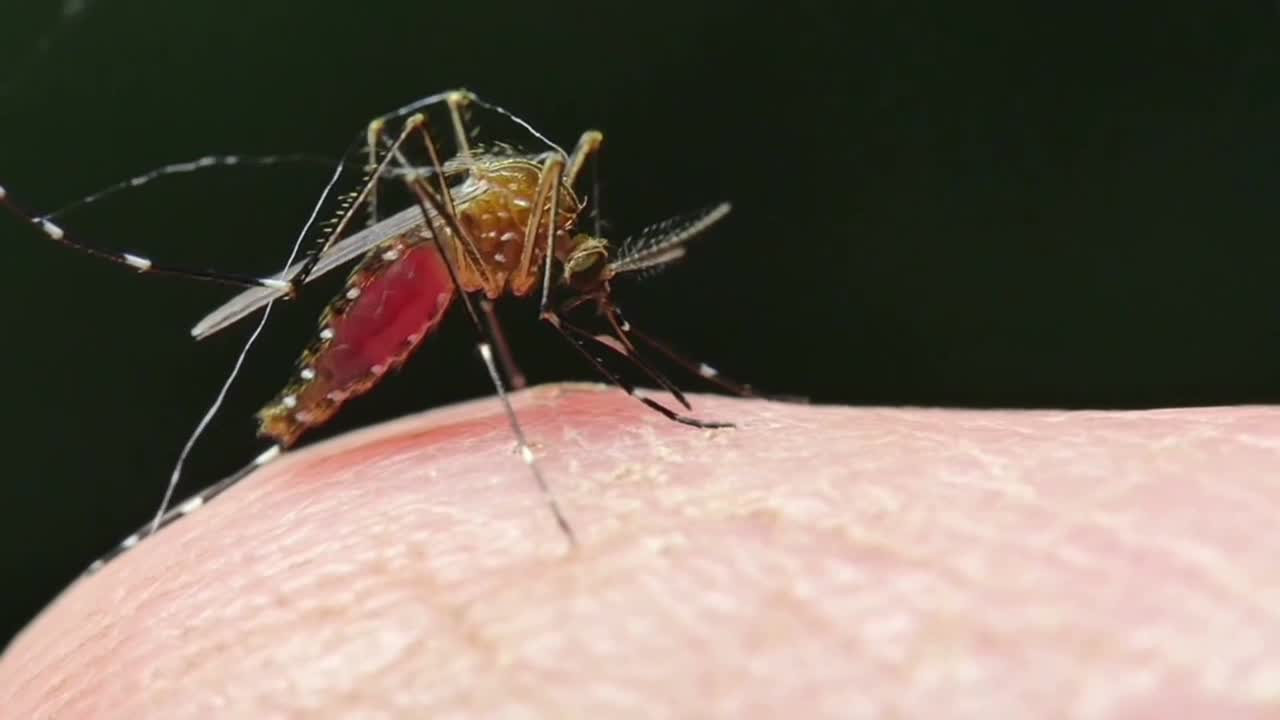


SALT LAKE CITY — Residents and visitors in Salt Lake City now face what is being called a "significantly higher-than-normal risk" of West Nile virus as positive tests return at 7x above normal levels.
The Salt Lake County Health Department confirmed Wednesday that there are currently two human cases of the virus.
This week, 35% of Salt Lake City Mosquito Abatement District samples tested positive for West Nile. According to the department, typical returns this time of year are just 5 percent or less.
Two other districts, South Salt Lake Valley and Magna, are showing similar levels.
There have been 709 positive samples collected in Utah this year, compared to 108 at the same time in 2025 and 92 in 2024.
Nicholas Rupp, the communications director for the health department, said there was now a "significantly higher-than-normal risk of West Nile among local mosquitoes."
Weather plays part in West Nile virus cases exploding in Utah mosquitoes:
The Centers for Disease Control and Prevention said the West Nile virus commonly causes fever, headache, body aches, joint pain, vomiting, diarrhea or rash. Less than 1% of infected people develop severe neurologic disease, which can lead to long-term disability or death.
To protect yourself from contracting West Nile through mosquitoes, people should take the following actions:
- Use an EPA-registered mosquito repellent with DEET, picaridin, IR3535 or oil of lemon eucalyptus; follow package directions about application.
- After dusk, wear long sleeves and pants.
- Drain standing water in yards (old tires, potted plant trays, pet dishes, toys, buckets, etc.).
- Keep roof gutters clear of debris.
- Clean and stock garden ponds with mosquito-eating fish or mosquito dunks.
- Ensure door and window screens are in good condition so mosquitoes cannot get inside.
- Keep weeds and tall grass cut short; adult mosquitoes look for these shady places to rest during the hot daylight hours.
Kailey Jones was fishing at Willow Pond in Murray on Wednesday evening. She said she is worried hearing that so many mosquitoes in the Salt Lake County area tested positive for West Nile.
"I think that's really concerning, I think that's a really high number," she said. "I need to definitely invest in more bug spray because after getting bit once, that was enough, we got eaten alive and once was enough."
Nicholas Rupp with the Salt Lake County Health Department said most people won't even know they are sick with West Nile, but it can be a devastating illness.
"About 80 percent don't have any symptoms at all, so it's not something that you want to panic about, but because it is very preventable by avoiding mosquito bites, you do want to prevent it whenever possible," Rupp said.