



WEST JORDAN, Utah — As Utah continues to grow, choosing the right landscaping can make a difference in how much water homeowners use outdoors.
A new residential community in West Jordan is showing how native plants, efficient irrigation and thoughtful landscape design can help conserve water without sacrificing beauty.
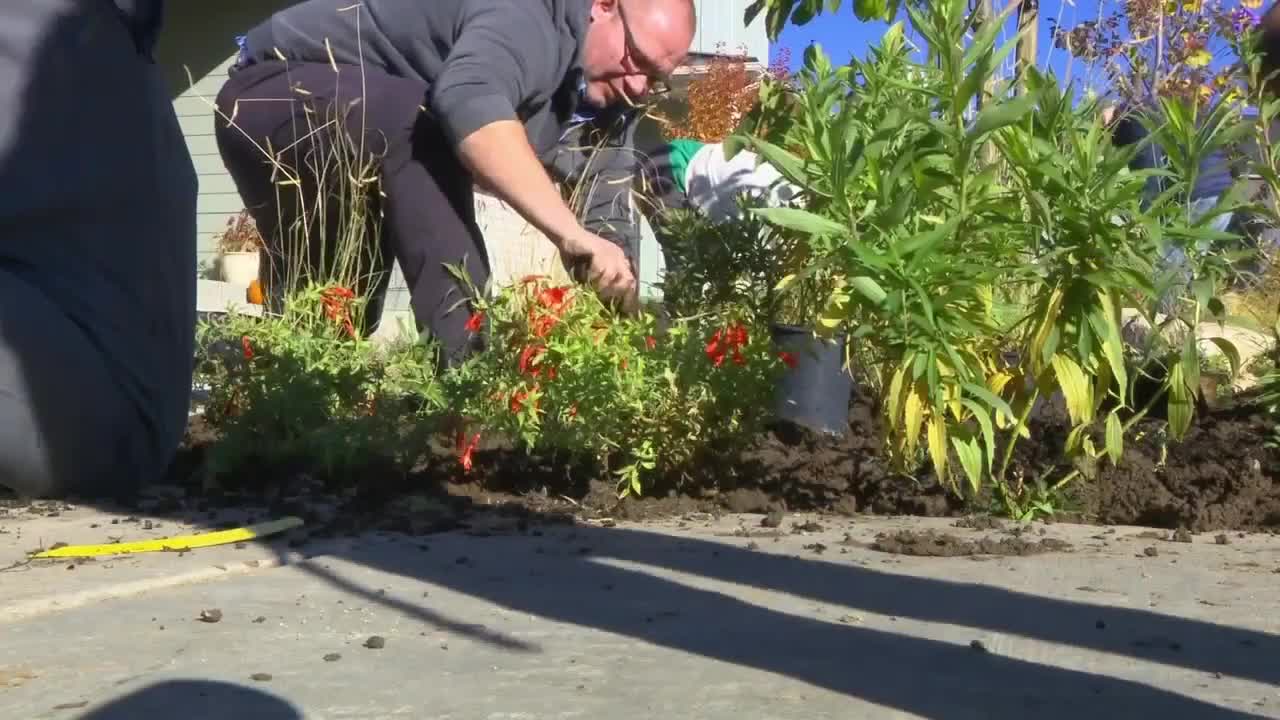
During a community planting event Saturday at a new area called Terraîne, volunteers helped plant native vegetation as part of an effort to create a landscape that supports bees, butterflies and other pollinators while using water more efficiently.
Cynthia Bee with Slow the Flow said outdoor watering accounts for a significant portion of household water use.
About 65% of the water used by a typical household with a traditional lawn and yard goes toward outdoor use over the course of a year, she said.
Marcus Pulsipher, a landscape architect, said homeowners don't have to cover their yards in rocks or artificial turf to save water.
Instead, selecting plants suited to Utah's climate can help create attractive landscapes that require less water.
The landscaping includes an underground drip irrigation system that delivers water directly to plant roots, reducing water loss from spray and evaporation.
Native plants can also be a practical choice because they are naturally adapted to Utah's climate and generally require less supplemental water and maintenance once established, according to Liz Hamilton, Utah Pollinator Habitat Program manager with the Utah Department of Agriculture and Food.
Homeowners don't have to live in a new development to make changes. Slow the Flow offers resources and potential incentives for qualifying projects that replace lawn with water-wise landscaping.
Utah's native plant grant program also provides an opportunity for residents to incorporate native vegetation into their own yards. Applications are expected to open March 1, 2027. Residents selected for the grant may receive free native plants for their landscaping projects.
The goal isn't to eliminate every patch of grass. It's to make thoughtful choices about where grass is needed, which plants are best suited to the area and how water is used.
For more information about water-wise landscaping and potential lawn-replacement incentives, visit SlowTheFlow.org.