

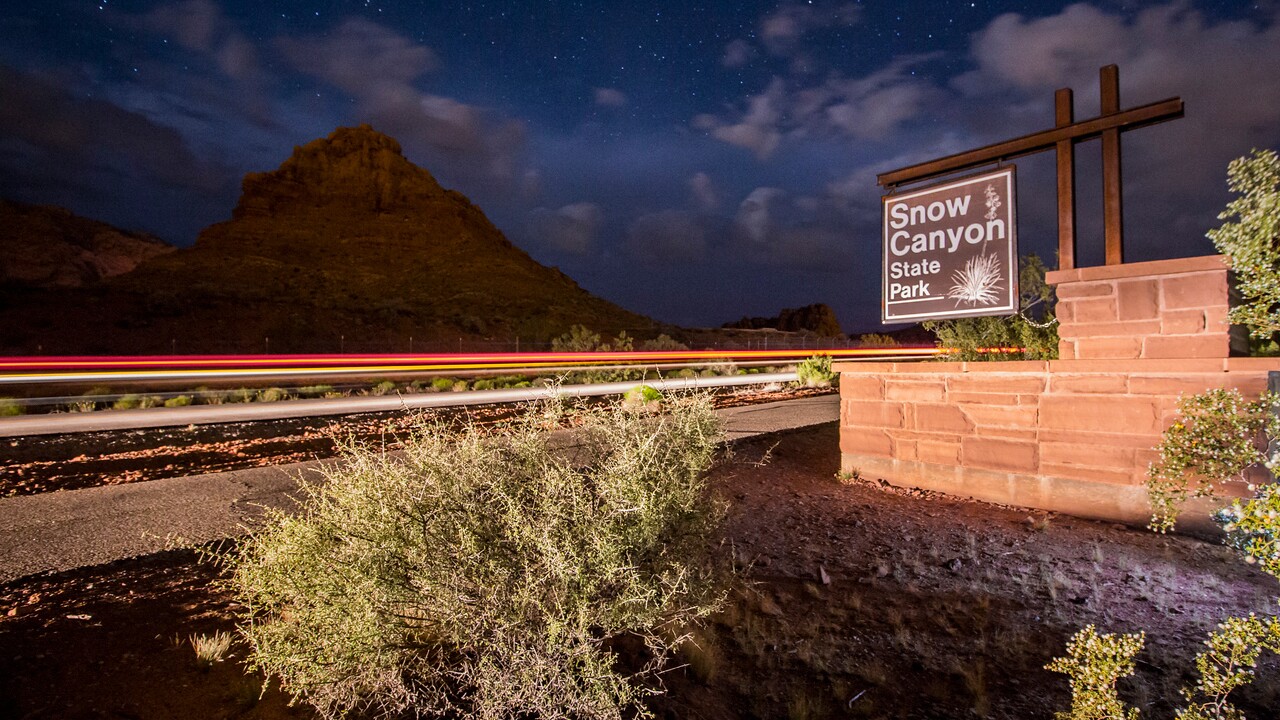

IVINS, Utah — Snow Canyon State Park is now officially an International Dark Sky Destination, the Division of State Parks announced Sunday morning.
The park was designated as an Urban Night Sky Place by DarkSky International, an organization aimed at creating accessible places for people to view the night sky. This includes taking necessary steps to minimize light pollution in natural environments.
"We adjusted all of our lights in our park, so we're 100% compliant with Dark Sky International's principles for responsible lighting," says Cheyenne Winchester, Park Naturalist at Snow Canyon State Park.
The announcement comes as Utah experiences the Winter Solstice, the shortest day of the year. Winchester says many come to parks like Snow Canyon, as the shorter days allow visitor to enjoy star-gazing earlier in the night.

"A lot of people star gaze in our park during the fall and winter time just because there are more hours in which you can star gaze," says Winchester. "We do a lot of dark sky programming here in Snow Canyon State Park, so we're able to start those programs earlier in the evening around 6:30... instead of around 8:00 p.m."
Not only does this allow a good view of the night sky, but it's also important for a great deal of Utah's wildlife, which tends to be more active at night. That includes 16 species of bat.
"Being in the desert, there's a lot of animals that are adapted to come out at nighttime," says Winchester. "Lighting in an urban setting... really has an effect on our animals because some of them won't be able to come out if it's too light or even if the moon is full."
If you plan on going star-gazing, Winchester says it's important to plan ahead. Check weather reports to make sure the skies are clear enough to see the stars, and check to see when in the month will be the best time to go.
"You want to look at the moon phase," says Winchester. "It's easier to star gaze when the moon is closer to a new moon, or if the moon is below the horizon."

It also helps to make sure you're taking the right equipment, while preserving the low light environment that makes star gazing possible.
"It takes about 30 minutes for our eyes to adjust to darkness, so we recommend taking red lights with you" says Winchester. "That will let you be able to see where you're walking and different things like that, but also protect your night vision."
There are now 27 designated Dark Sky Destinations in Utah. You can find a full list here.
