

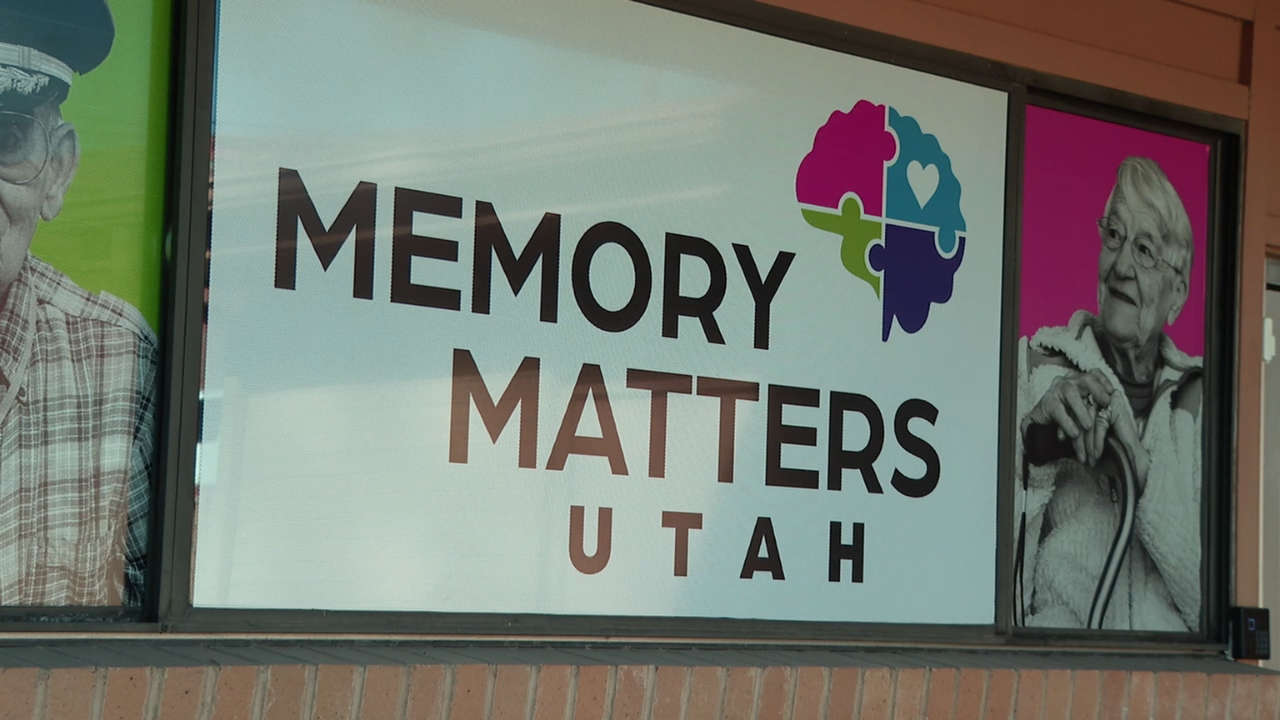


ST. GEORGE, Utah — St. George's Memory Matters serves thousands of patients and families at little to no cost, but the nonprofit said it will shut down March 31 without new funding.
The St. George-based organization has served residents with dementia and their families in five counties by offering activities, cognitive support, consultations, and classes, filling a gap left by the few for-profit dementia care centers in the region.
Memory Matters CEO Brooks Brunson said the need for services is only growing.
"The truth is we're running out of funding and as of right now, Memory Matters as it is currently known will be shutting down March 31st," said Brunson.
"We're growing in the capacity of people that need our services. 7,000 people last year alone in Washington County were diagnosed with Alzheimer's and dementia. So the need is there and it's growing and that's the hard part. It's not like we're selling a product that nobody wants," he said.
Marikrista Oakden knows that need firsthand. Her husband, Rob Oakden, a 6-foot-5 Nevada Highway patrolman, was diagnosed with early-onset Alzheimer's disease at 57.
"It took a whole year to get a diagnosis after a PET scan they gave us the diagnosis of early onset Alzheimer's," she said. "We'd actually only been married three years. And so it was really, it was heartbreaking, but we, just don't even know what I would have done without Memory Matters."
Memory Matters provided the couple with activities, cognitive work, and support services when they could not afford the for-profit alternatives in the area. Rob Oakden even learned to play the Native American flute through the program.
Brunson said he came on after the entire staff, except for the kitchen manager, was let go in 2024, following the retirement of LuAnn Lundquist, who founded the charity in 2012 after the Alzheimer's Foundation withdrew from southern Utah.
Since then, Brunson said Memory Matters has received only $20,000 in grants.
"As you can imagine with the current state of the government, both state and federal, there's no grants going out," said Brunson.
"Our main source of funding to this point have been when people pass away, leave us a portion of their estate, which is not something you want to rely on," said Brunson. "If we found somebody who was donating 15 to 20,000 a month that would save us."
But Lundquist disputes the organization's current trajectory, saying the nonprofit was in strong financial shape when she left.
"I left 23 months ago. And when I left, we had no debt. We had $300,000 in savings. We were saving toward getting our own place and a great reputation and good rapport with the community. And now it sounds like a lot of that's been undone," Lundquist said.
Former program director Janet Labrum, who held the role until 2024, also questioned what happened to those funds.
"When LuAnn was gone, you lost the heart of Memory Matters. And you can't survive without a heart," said Labrum.
Other former staff members accused current leadership of deliberately attempting to shift Memory Matters to a for-profit model. Brunson denied those accusations.
"That would not benefit us at all to do that. The only thing that we're worried about is having a place for our participants to continue to go. It's a fine line. You either charge more to stay open and have a profit and don't get very many participants, charge too little and you're not going to make money anyway, and we're kind of right in the middle there," Brunson said.
Marikrista Oakden said she began noticing a shift in the organization about a year and a half ago, when her husband's experience there changed.
"All of a sudden he started becoming really unhappy. He was like, he'd kind of come home and he'd grumble about something and he wasn't as excited to go," Oakden said.
"And then I kind of started hearing word that there were changes happening," Oakden said. "I didn't get an email, I didn't get a phone call, nothing, that there were all these changes happening."
She said she ultimately pulled her husband from the program after she said he was mistreated by a staff member and nothing came of it. Rob Oakden passed away last June while in a for-profit care home. Marikrista Oakden said she is still paying between $5,000 and $8,000 a month in bills from that care.
Despite her experience, Lundquist said the community cannot afford to lose the organization.
"The charity needs to be saved. We need a whole lot of community support," said Lundquist.