

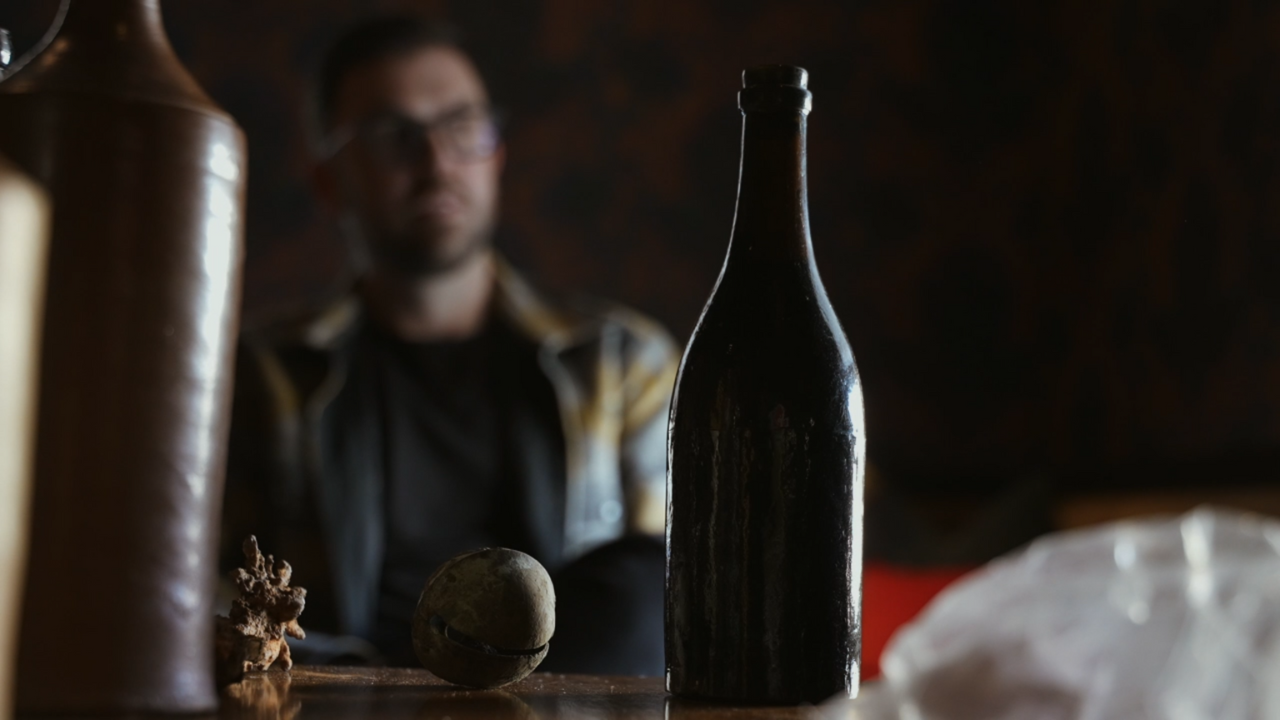


PARK CITY, Utah — An archaeological team in Utah discovered a literal time capsule from the state's Wild West past this summer. A bottle of alcohol that had been buried for over a century at the historic mining town of Alta.
Local distillers at High West Saloon are now working to identify the mysterious liquid and unlock the secrets it might hold from Utah's frontier days.
Utah's state public archaeologist Ian Wright has been leading the excavation.
"We have found a 150-year-old bottle of alcohol. So we thought, hey, let's take it to the experts and see if we can find out what exactly is in it," said Wright.
The discovery is particularly significant because it's the only intact bottle of alcohol from this era ever found in Utah, according to Wright.
High West, Utah's first legal distillery since 1870, seemed like the perfect place to analyze the historic find. According to their director of distilling, Isaac Winter, the company specializes in blending spirits and has deep roots in Utah's distilling history.
"We started off as a blending house," said Winter. "We're always looking for beautiful spirits across the country, across the world sometimes, to create blends that are something more than the sum of their parts.”
When Wright brought the bottle to the distillery, the team was immediately intrigued by its condition.
"It's in reasonably good shape, I would say, after sitting for 150 years," Winter said.
The analysis began with careful examination of the bottle's aroma and color. The team detected a slight vinegar smell from the cork, but they needed to extract some of the liquid to learn more.
"We weren't sure if it was clear spirit, if it was aged spirit, if it was beer, if it was wine, if it was champagne," Winter said.
To preserve the historic bottle, they called in reinforcements from Old Town Cellars, just up the road, who brought a Coravin device that could extract liquid without breaking the cork.
"We're being very careful with that sample," Winter explained as they used the specialized tool.
When the liquid finally emerged, it revealed promising characteristics.
"To see the liquid come out and have a color and have a good smell," Winter said, describing the moment.
Tara Lindley, director of sensory and product development at High West, noted the complex flavors: "First, there was some kind of a, kind of an oxidized fruit note.”
Winter added: "It's fruity, there's a little bit of leather, there's quite a bit of age on it.”
The analysis revealed that yeast was used in the production, leading the team to believe it was likely some type of beer rather than distilled spirits.
Despite some initial hesitation, Winter decided to taste the 150-year-old beverage.
"I had a little bit of trepidation going into it, but you have to try it," Winter said. "It didn't smell like gasoline, didn't smell like tobacco spit.”
The discovery of what appears to be beer opened up an exciting possibility — the potential to recreate the historic beverage.
The team made the decision to fully uncork the bottle, despite concerns about damaging the antique container.
"It's an old bottle, it's a lot of pressure, you don't want to damage the bottle," Wright said.
Once opened, they carefully decanted the liquid and filtered it through a coffee filter to separate any sediment.
"Very exciting to see the liquid as it finally came out," Winter said. "We put it through a coffee filter — very scientific way of separating the bits from the liquid.”
The sediment at the bottom of the bottle could hold the key to recreation.
"The very bottom of the bottle was sort of turbid — it was sort of milky. We're going to take that back and hopefully plate it out and find some usable yeast on it," Winter explained.
If they can successfully cultivate the historic yeast, it could allow them to recreate the exact beer that miners were drinking in Alta over a century ago.
"Science is really at the foundation of creating alcohol. That, and art," Lindley said.
For Wright, the project represents something larger than just analyzing an old bottle.
"This is so cool because it's taking history — it's taking it off of an old dusty shelf," Wright said. "Because history, it belongs to everybody.”
The bottle and other archaeological discoveries from Alta will be displayed Friday at 5 p.m. at the Utah Historical Society building in Millcreek.
The event will feature hundreds of artifacts recovered from the historic ghost town, along with a presentation about the excavation.
To register, click here.