

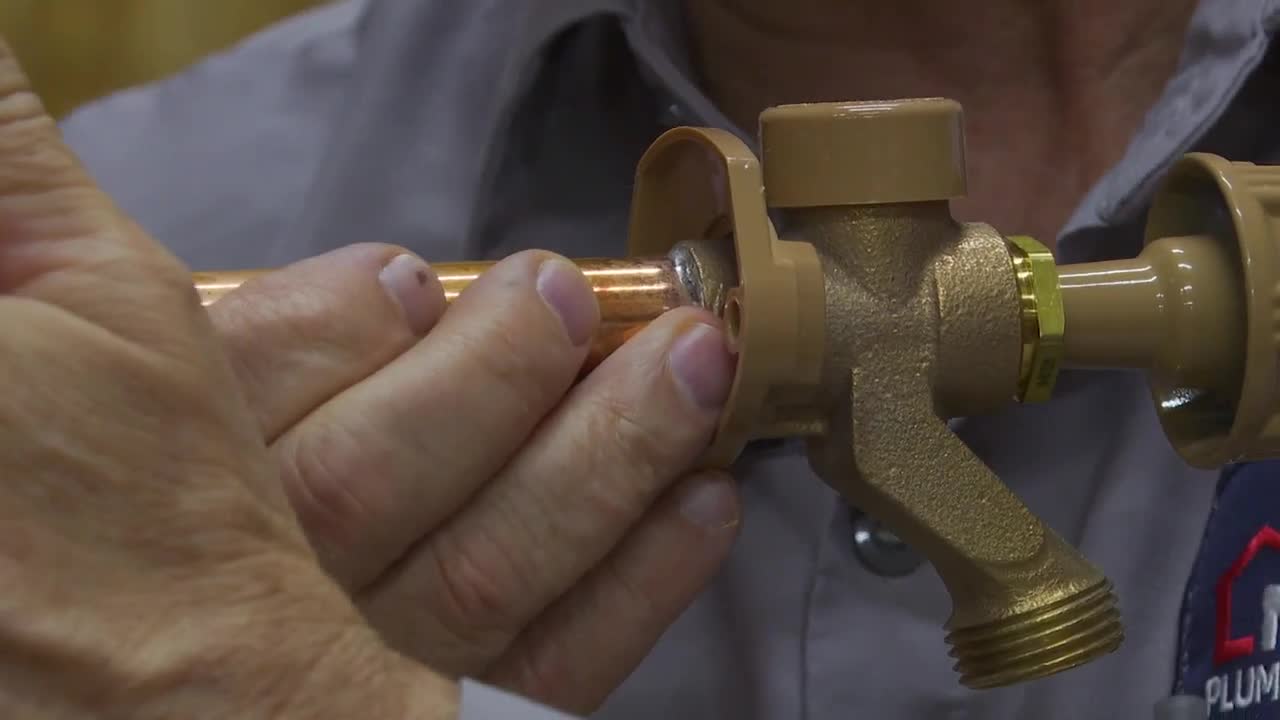


WEST VALLEY CITY, Utah — As the season’s first freeze nears, plumbing experts say a few simple steps now can help protect your pipes from freezing and bursting.
Troy Neerings, owner of Neerings Plumbing Heating Air & Electric, has spent decades working in the industry. His grandfather started the business in 1935, and Neerings is a third-generation plumber.
After decades in the business, he said a little preparation can go a long way before the first freeze rolls in.
Disconnect garden hoses
“It’s real important to take your garden hose off. Make sure to take that hose off so this can properly drain out,” Neerings said.
Nicholas Ball, a plumbing service manager at Whipple Service Champions in West Valley City, explained why.
“If that stays on throughout the winter, what happens is this doesn’t drain, it will freeze in here somewhere, and the metal will actually burst," Ball explained. "Most people aren’t watering their lawns in January and February, but April rolls around, you turn it on and then it’s shooting water into your home."
Protect manufactured homes
Ball said manufactured homes may need extra protection from cold air.
“You want to make sure your skirting is attached all the way around so wind and that cold air isn't blowing underneath your home. If you have exposed pipes on the exterior of your house, put pipe insulation on them as well as heat tape,” he explained.
He also encouraged homeowners to look beyond the pipes themselves. Sealing window wells and closing crawl space vents can help keep cold air away from vulnerable plumbing.
Ball said it is often not the cold alone that causes pipes to freeze — it is wind sneaking into the home.
Know your shutoff valve
“Before the cold season starts, you wanna make sure, you know where your main shutoff is inside of your home and that you do actually have one,” Ball said.
He says knowing the main shutoff valve lets you stop water flow immediately if a pipe freezes or bursts, reducing flooding and water damage. The valve is often in a basement, garage, crawl space or near where the water line enters the home.
“It’s not at the forefront of people’s minds; they think everything is working just fine, until it’s not," Ball said.