

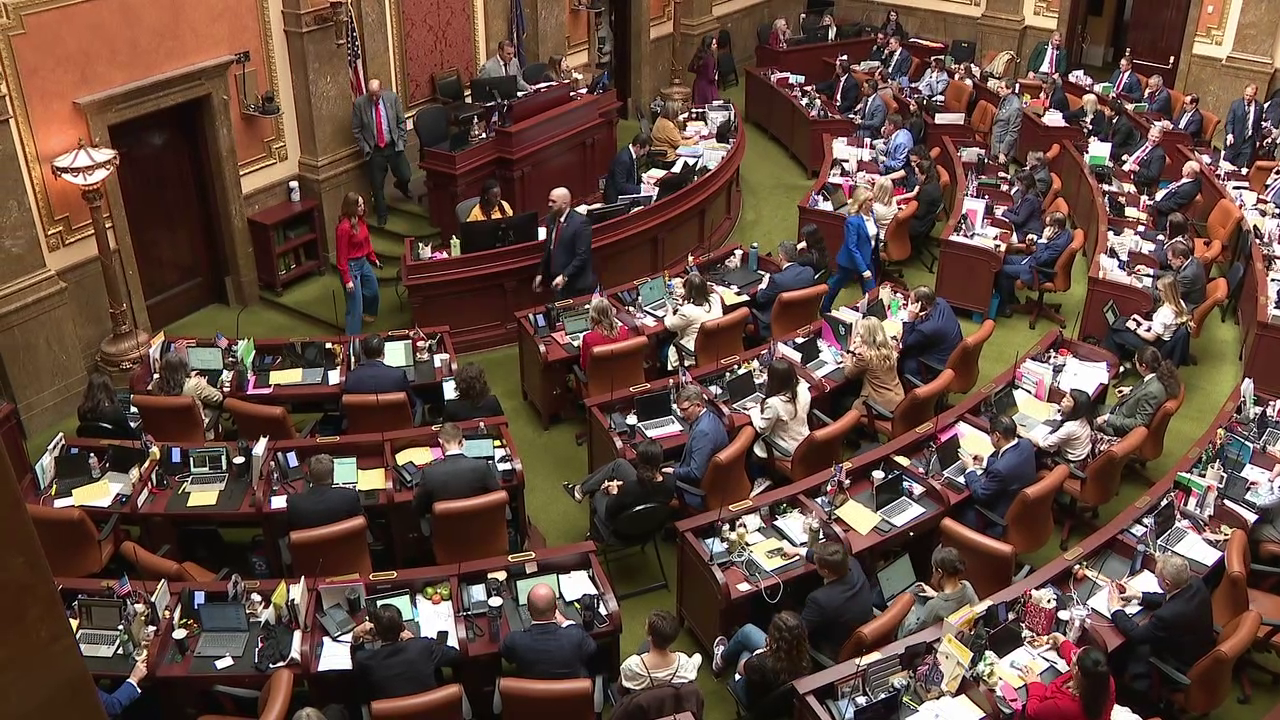


The courts were a frequent target of GOP leaders on Capitol Hill, angry about rulings against them by the Utah Supreme Court on redistricting, abortion rights and other hot topics. Chief Justice Matthew Durrant urged civil discourse in his “State of the Judiciary” address to the legislature, but the bills kept coming.
A major bill from Senate Majority Whip Chris Wilson passed, expanding the Utah Supreme Court to seven members (and adding more judges at the Court of Appeals and district court level, as requested by the judiciary) and was signed by Gov. Cox. So did a bill that would create a special “constitutional court” allowing the state to seek a three-judge panel to hear legal challenges to laws the legislature passed. So far, the Utah Attorney General’s Office has pushed redistricting, abortion, Great Salt Lake and climate change lawsuits to the new panel of judges. Some of the plaintiffs in those cases are challenging the law.
A bill passed that overrules a controversial Utah Supreme Court decision on first-responder liability. The Court’s ruling allowed for some paramedics and officers to be sued by someone they treated in an emergency. The bill reinstating that immunity from lawsuits passed with unanimous support from the House and Senate. It has already been signed by Gov. Cox.
Rep. Matt MacPherson introduced a bill to make some Utah Supreme Court opinions subject to a citizen referendum. It never received a hearing.
A bill to change the threshold for a judge to be retained in an election was introduced, but never got a hearing. Rep. Mike Kohler introduced a bill to demand court proceedings be livestreamed. It buffered and didn’t connect with his colleagues.
Rep. Logan Monson’s bill to allow for some audio recordings of court proceedings to be published and more court documents be publicly accessible passed. A provision imposing a “non-compete” agreement for judges who leave the bench and work for law firms involved in lawsuits against the state was stripped out.
Ralph Leroy Menzies died of natural causes before he could be executed. In response, House Majority Whip Candice Pierucci passed a bill that sped up some of the appeals process in death penalty cases, arguing that it is taking entirely too long to evaluate and consider appeals. Sen. Jen Plumb passed a bill that allows physicians to refuse to participate in an execution without getting in trouble for “unprofessional conduct.”
The House passed a resolution criticizing Moab-area Judge Don Torgerson for comments he made that some lawmakers felt minimized a defendant’s possesion of child sexual abuse material.
That incident prompted House Speaker Mike Schultz to personally run a bill changing the makeup of the Utah Sentencing Commission after he complained that some punishments they were recommending to judges were “too light.”
The Utah State Prison will expand at Gunnison after a funding request was approved.
House Minority Leader Angela Romero’s bill to limit the use of polygraph exams on victims of sexual assault passed.
Sen. Todd Weiler passed a bill cracking down on already-banned law enforcement quotas “by any other name,” following a FOX 13 Investigation into the practice. It made it to the House but wasn’t voted on before Sine die.
Sen. Stephanie Pitcher passed a bill restricting law enforcement from tampering with doorbell cameras and other surveillance cameras on private property.
Sen. Don Ipson passed a bill cracking down on threats against police officers, military service members and their families.
A bill to crack down on hoax calls and other abuses of 911 passed the legislature.
Sen. Kathleen Riebe introduced a bill that appeared to be a response to the “No Kings” shooting about liability when a bystander is shot. The bill failed to pass the Senate.
A bill passed allowing for minors convicted of aggravated murder to be moved from a “secure facility” to prison.
A bill that offers some breaks for a defendant who, after being convicted, cooperates with police on an investigation passed.
A bill to create a special “Purple Alert,” similar to an AMBER or Silver Alert, for vulnerable individuals, passed.
A bill proposed by Rep. Jake Fitisemanu to crack down on imitation firearms was held in a House committee. Rep. Jordan Teuscher passed a bill that expands protections for gun manufacturers from lawsuits if their product is used in a crime.
Sen. Nate Blouin proposed a bill to unmask ICE agents in Utah. The bill got a hearing, but didn’t go anywhere after that.
House Majority Whip Candice Pierucci proposed a bill allowing firearms inside arenas (like the Delta Center). After pushback, she amended the bill to require gun storage lockers on site. The bill still didn’t advance.
Sen. Ann Millner passed a bill allowing chemical tests (or warrants for them) if impairment is suspected in a fatal motor vehicle accident.
“Biscuit’s bill,” which would allow animals caught up in court proceedings as evidence to be adopted out instead of spending years in a shelter passed the House, died in the Senate, was resurrected and passed again.
Sen. Jen Plumb ran a bill to classify animal control officers as first-responders. It didn’t make it in time for the end of the session.
Sen. Evan Vickers passed a bill creating a new crime of “obscene animal abuse material” aimed at graphic depictions posted online.
Rep. Grant Amjad Miller’s bill to automatically presume someone is indigent if they are incarcerated was introduced, but never got a hearing. A bill he passed to allow for some community service as restitution passed.
A bill to remove victim names from some police reports and refer to them by initials only passed.
Rep. Cheryl Acton passed a bill requiring people on a sex offender registry in another state who move to Utah to register here.
Rep. Tyler Clancy proposed grants for law enforcement to help solve more violent crimes, including unsolved crimes. The bill passed.
A bill to allow for a child abuse homicide charge if a child dies by suicide (and a link can be proven) was introduced, but did not ultimately pass.
A bill that would have created a new crime of carrying a firearm “at a large public gathering” was introduced by Rep. Verona Mauga, but never got a hearing. Rep. Andrew Stoddard proposed a bill to crack down on carrying a weapon at a day care that was held in committee.
Rep. Ryan Wilcox passed a bill making it a crime to coerce someone into suicide.
Lawmakers passed a bill to add metal theft to the list of things that law enforcement strike forces can investigate.
A bill passed that says you don’t necessarily need intent to kill when murder is committed with depraved indifference to human life.
A bill that cracks down on impromptu protests that take over a street, blocking emergency vehicle access (and demanding protesters unmask) passed.
House Minority Leader Angela Romero introduced a bill to offer police officers more training on investigating cases involving missing, murdered Indigenous people. The bill won tentative support but ultimately ran out of time in the legislative session.
A bill to restrict drones around prisons passed.