

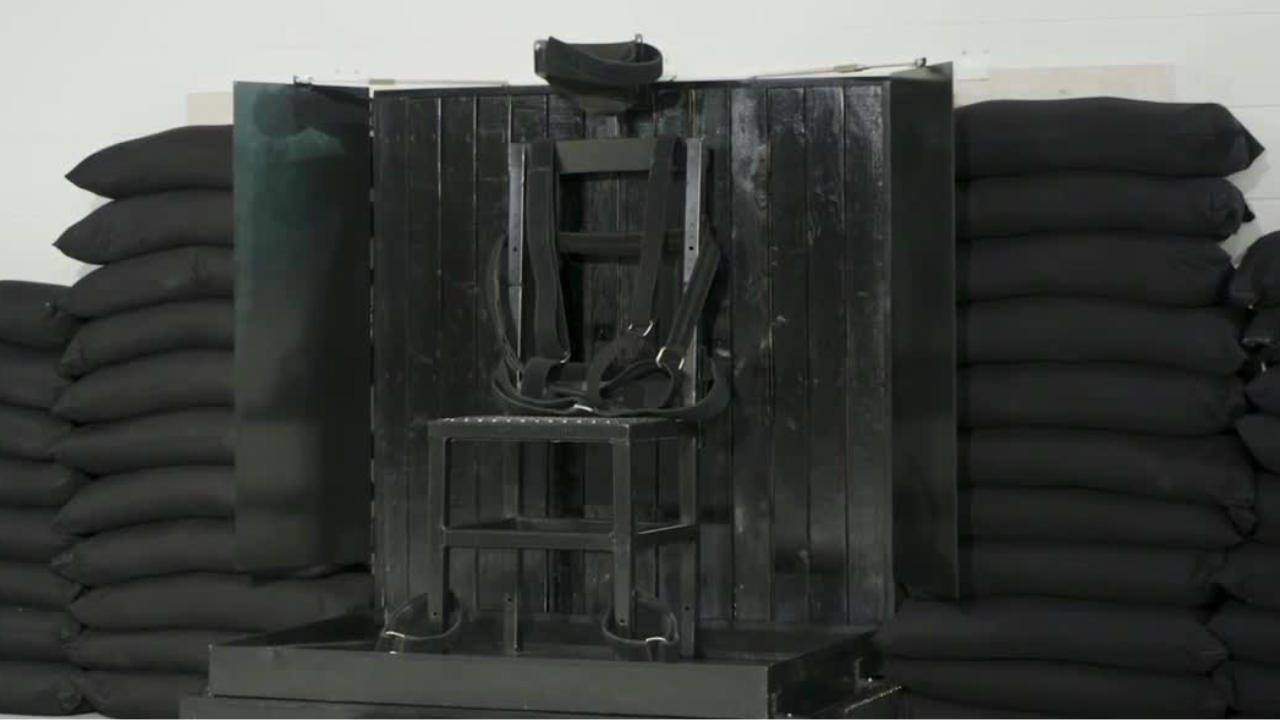


SALT LAKE CITY — A bill that would speed up Utah's death penalty process is advancing in the state legislature.
On Thursday, the House Law Enforcement & Criminal Justice Committee heard House Bill 495 that would accelerate appeals processes for capital cases. Attorneys who work on such cases expressed alarm.
"This is a radical and significant rewrite of Utah’s death penalty scheme," said Mark Moffat with the Utah Defense Lawyers Association.
House Majority Whip Candice Pierucci, R-Herriman, said she is running the bill after seeing death row inmates spend decades waiting to be executed. She pointed out to the committee the average time from sentence to execution is now 33 years.
"When you look at how much money it is costing us to have indefinite appeals and no deadlines and how long you can stay on death row," she told FOX 13 News. "I also think you owe it to the victims and the process to actually follow through with what we say we’re going to do."
Utah's controversial gas tax bill is unveiled after spat with Idaho:
The bill was inspired by the case of Ralph Leroy Menzies, who was condemned to die for the 1986 kidnapping and murder of Maurine Hunsaker. After years of appeals and questions about his mental competency due to dementia, he died last year of natural before the state could execute him.
Utah currently has three death row inmates — Michael Anthony Archuleta, Von Lester Taylor and Troy Kell. Each are still in some form of appeals. Two others, Douglas Stewart Carter and Doug Lovell, have had new trials and new court proceedings, which have taken them off death row.
HB495 would require a "pre-screening" for intellectual disability to immediately address some competency questions. Automatic review processes are sped up under the legislation, so are "expedited" appeals in the judiciary (still about 450 days). Defense attorneys who specialize in capital case appeals would also seen an increase in funding.
"It’s a pretty comprehensive rewrite of something in an area I would suggest there’s not much of a problem," said Richard Mauro, a criminal defense attorney who works on death penalty cases.
He argued the inmates who are the subject of this bill were convicted in the 1980s, when standards for attorneys at trial were different. Concerns were also raised about the bill violating U.S. Supreme Court rulings on executing people with intellectual disabilities and the Eight Amendment right against cruel and unusual punishment.
"The concern that we have with respect to this is the process right now is going to be accelerated and accelerated in a way that’s going to put Utah at risk for adverse outcomes," Moffat said.
But prosecutors — including some who have sent men to death row — pushed back hard. Scott Burns, the Piute County Attorney, who prosecuted Joseph Mitchell Parsons, Taberon Honie and Michael Anthony Archuleta, spoke on behalf of their respective victims' families, describing their gruesome crimes and the agony the families have had waiting decades for justice.
"At some point enough is enough for the families," he told the committee. "Enough is enough for the victims."
Chris Hall, the head of the Statewide Association of Prosecutors, said some death penalty cases don't go forward because of the length of time it would take to execute them.
HB495 passed out of committee 8-2 and heads to the House of Representatives. Rep. Pierucci insisted the accelerated timeline would still not mean a speedy death sentence.
"Do you think going from 36 years to 20 years on death row is accelerating the process?" she said. "I think most people think 20 years is a long time. This bill is not cutting it down to five years even, which is more in line with where I'd like to see it. This bill still allows them to go through the full appeals process."