

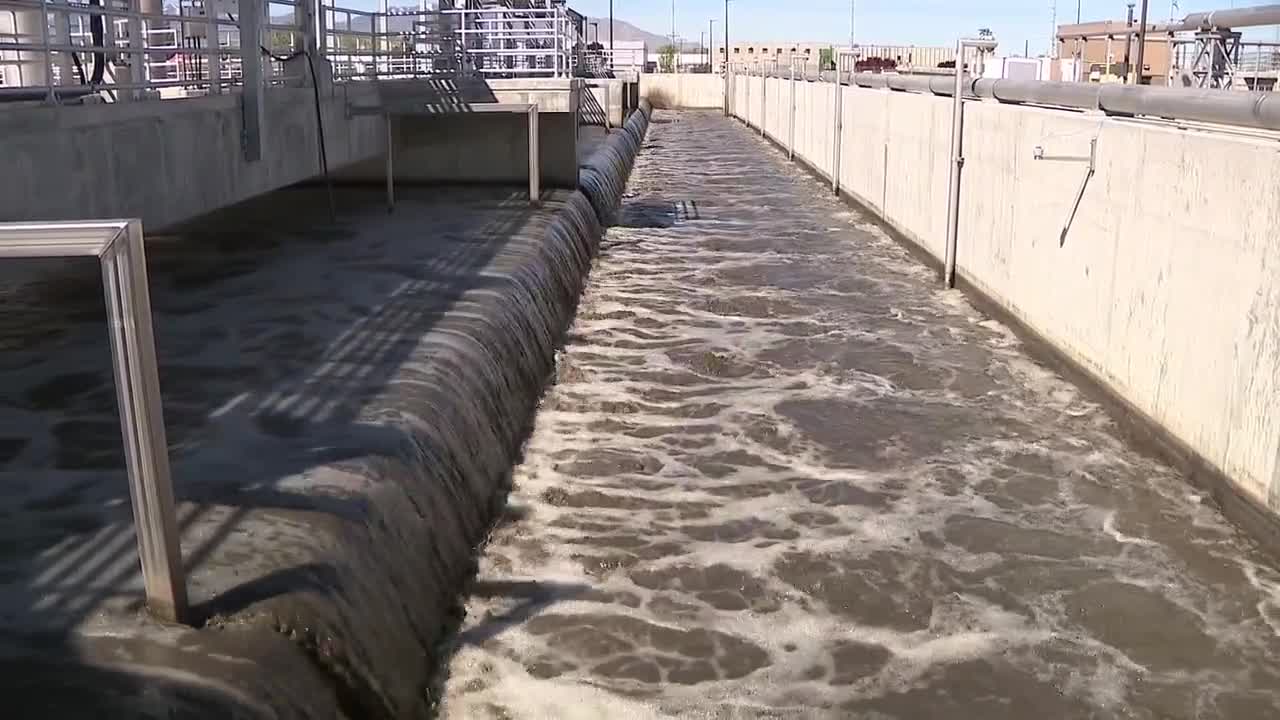


SOUTH SALT LAKE, Utah — Proposed environmental regulations could force Utahns' sewer bills to skyrocket, the managers of water reclamation facilities across the Wasatch Front are warning.
The U.S. Environmental Protection Agency has been considering regulations demanding the treatment of PFAS, which are often referred to as "forever chemicals." The EPA describes them as chemicals that are widely used, long-lasting and break down slowly over time. Because of their widespread use, they are found in people and animals all over the world and linked to harmful health effects.
But the water reclamation facilities warn that they are not equipped to treat them and to be forced to do so? Could come at great expense. For example, the Central Valley Water Reclamation Facility in South Salt Lake fears it would have to build a new facility that could cost as much as $1 billion. That cost would likely be passed on to residents on their sewer bill.
"It’s between $30 and $60 a month is what people are paying depending on where they live," said Phillip Heck, the general manager of Central Valley Water Reclamation. "For bio-solids? It would add about $50 to $100 a month to the bill. For the wastewater itself? You’d add another $100 a month."
More water is going to Great Salt Lake as a result of your conservation efforts:
So far, the EPA has taken no action to force any new regulations on wastewater treatment plants. But water reclamation facility managers are complaining to Utah's Division of Water Quality, which would enforce any new regulation. Candice Hasenyager, the division's director, said the state of Utah does have an interest in ensuring water quality while keeping rates low.
"It is possible to try to do both things," she told FOX 13 News on Tuesday. "It does put us in a tricky situation when we’re trying to make sure Utah’s waters are swimmable, fishable and clean to use."
Heck acknowledged that people should have clean water, but said it could be an increased financial burden for Utahns.
"At a certain level, they should be regulated," he said of PFAS. "The problem with it is, we’re not designed to remove them and it’s a great expense. We advocate they regulated upstream from us. Maybe they quit making them."
