

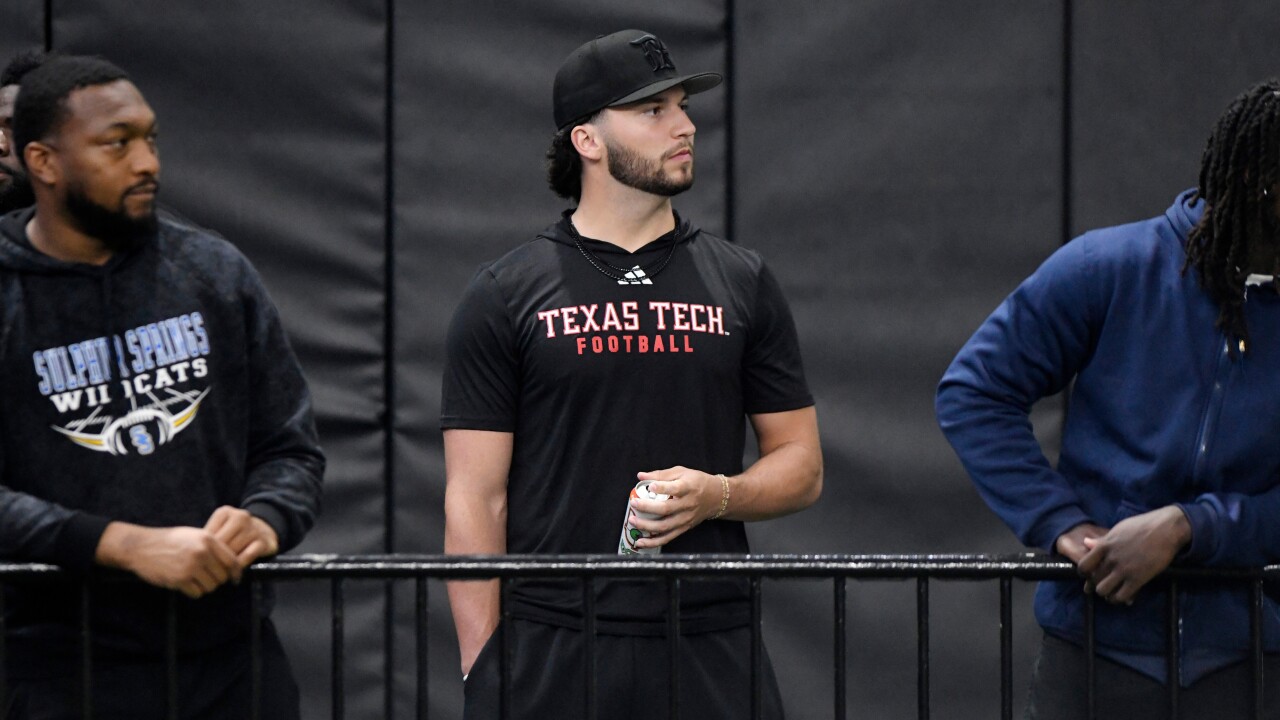

SALT LAKE CITY — Saying the University of Utah and BYU deserve "honest competition," Utah Governor Spencer Cox and Attorney General Derek Brown shared their support for the Big 12 Conference's legal battle connected to the eligibility of Texas Tech quarterback Brendan Sorsby.
In a joint statement, the Utah leaders backed a lawsuit filed by the conference in federal court Monday that would allow the league to punish Texas Tech for allowing Sorsby to play despite his admitting to placing thousands of bets, including on games in which teams he was a member participated.
However, the outrage shared by Utah's leaders appeared to become moot on Monday evening when multiple reports claimed Sorsby would forego his remaining collegiate eligibility and enter the NFL's supplemental draft.
A district judge ruled two weeks ago that Sorsby could play for the Red Raiders even though his gambling was an NCAA violation.
Cox and Brown referenced the rise of monetary opportunities for student-athletes through NIL and its "growing intersection" of legalized online gambling in their statement.
"As the commercial stakes of college athletics have risen, so has the temptation - and the opportunity - for athletes to exploit their insider knowledge through gambling," the leaders wrote. "This is precisely why rules and integrity matter more now, not less."
The governor and attorney general said the conference's ability to exert its authority, which was questioned by Texas Tech leadership and Texas political leaders, was a "necessary and legitimate safeguard for an era in which the line between athlete and commercial participant has never been thinner."
According to Cox and Brown, Sorsby's conduct in wagering $90,000 would have been illegal in Utah, as one of two states with constitutional laws that prohibit gambling because it "corrupts fair competition and erodes public trust."
As with the majority of those who oppose Sorsby's return to the field, Cox and Brown acknowledged that they support the quarterback's efforts to overcome his gambling addiction, but believe that would best happen by not playing.
Since the judge's ruling, Texas Tech officials have vigorously defended Sorsby's eligibility to play despite near-unanimous blowback from fellow Big 12 Conference coaches and school presidents, as well as the sporting world in general.
By allowing Sorsby to play, Cox and Brown accused Texas Tech officials of putting the "integrity of the Conference itself at risk."