

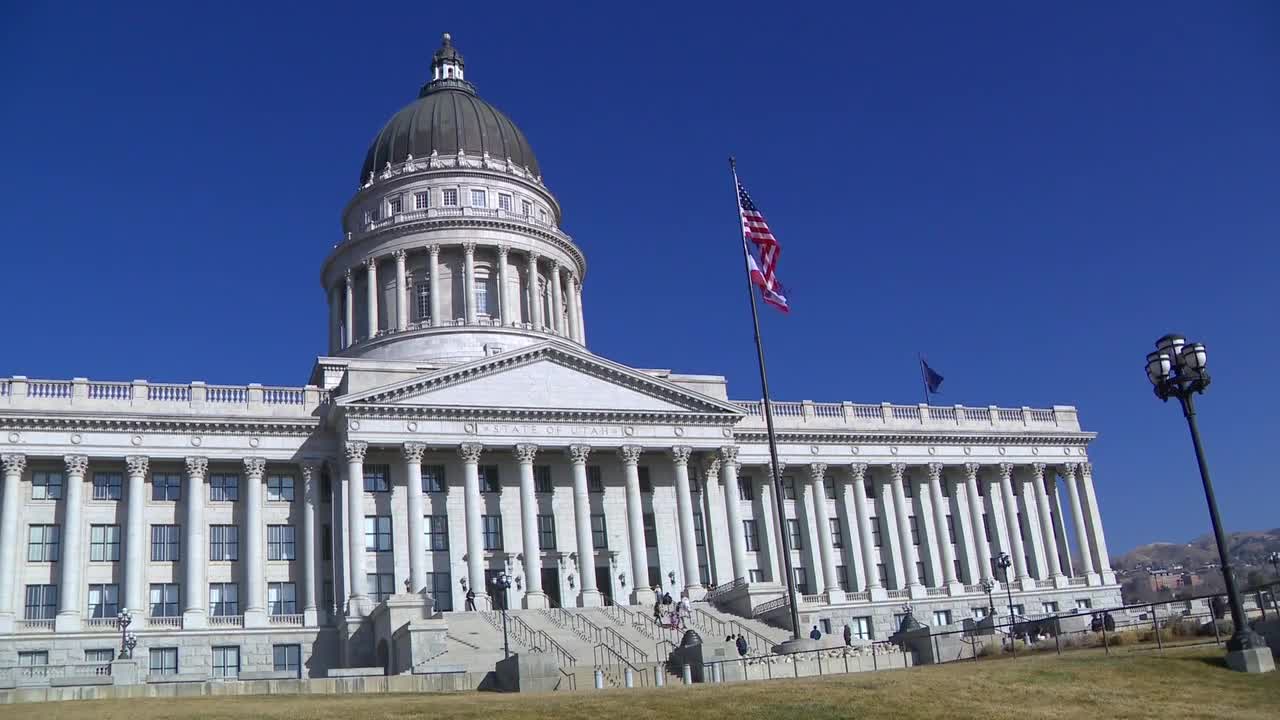


SALT LAKE CITY — Over the next 45 days, the Utah State Legislature will meet and consider hundreds of bills that will impact your life in one way or another.
Odds are you have feelings on those bills.
"Opting out isn’t an option if you want to be able to gripe about what’s going on up here," joked Rep. Sahara Hayes, D-Millcreek.
FOX 13 News talked to some lawmakers and advocates who frequent Utah's Capitol Hill for some tips and tricks to get involved when you've got other things going on in your life.
Here's a curated Q & A on how you can talk to your lawmaker.
How do I get involved?
Tricia Bunderson, director of the Utah Civics Project: I want people to go visit the legislative website, so go to le.utah.gov you can put in your address and find your legislators. So who represents you? Everyone has one senator and one house representative that represents their area, and it will give you email addresses even text cell phone numbers where they can text your legislators, and you can just drop them a quick note about any bills that you might want to give them feedback on.
I have feelings on a bill so how do I weigh in?
Corinne Johnson, president of Utah Parents United: Starting with your lawmaker is great, but working with the bill sponsor is also a great way to get engaged on a specific bill. Every single bill has a House sponsor, if it's in the Senate [it has a Senate sponsor]. When you look at a bill, it will say HB, and then a number like HB, 273, is a really great bill this session, that House bill sponsor is a person you can contact and ask them about their bill. And if they don't respond to you, always find out who their intern is. And you can get an intern list right from the Hill. You can go up to the Hill, they're posted in doors and windows, find out who their intern is, and go through their intern to try and get an appointment to sit down and meet with that lawmaker on their bill. If it's a Senate bill, then the number is going to be SB 123, for example and then you're going to look for the Senate sponsor for that bill.
Do social media posts tagging a lawmaker count?
Rep. Sahara Hayes, D-Millcreek: I am glad that people have opinions and that they want to express them. However, that's not an official channel for us, right? We're not necessarily monitoring that during session, and that's not necessarily identified as constituent communication. So what is the best way for me? Personally, I love it if you email me, and I love it if you email me in a way that is concise and that tells your story. We get a lot of form emails where people will copy paste the same thing and then send it out. And when I get hundreds of those in my inbox, they don't really have the same impact as if one person says to me, "Hey, this really matters. Here is why."
Should I email my lawmaker, other lawmakers?
Johnson: Big, mass emails to all the legislators typically don't work the best. We find that they get flagged as spam and often come back, or they'll just think that it's a group that's behind the message. So we always encourage people who care about an issue, to send a specific email to each person on that committee that where it's going to be heard, or each representative individually. And if you're not their constituent, you might want to even put in there and say, "Hey, I'm not your constituent. But this issue was very important to me, and I would really like to speak with you." Sometimes they'll even reject messages that don't come from their constituents. So you want to make it clear that even though you're not their constituent, they're going to hear this bill in education committee, or they're going to hear this bill in the Taxation Committee, and you want to have a participation in that and let them know you care.
Hayes: If somebody is my constituent, they're going to have a higher level of importance to me in my inbox, just because I am responsible for them. I am responsible for my constituents. That being said, if you have a reason to reach out about a bill or to reach out to a legislator? Do it. And that can be they're sponsoring the bill and you have expertise in that area. That can be, you are on the committee that is hearing it, and you have a story that you think is relevant, I would just make sure that you are tying your communication to a reason. If you're just saying hey, blanket all 104 of us, here's my mass email to you, that's not going to have the same impact as if you're reaching out with a really specific purpose in mind.
Bunderson: You can do both, depending on where the bill is in the process. So your legislator represents you, they vote on all of the bills, but sometimes those bills are heard in committee first, and you would reach out to those specific committee members for that bill.
What should I say in the email or text message?
Hayes: If you are a constituent, if you can identify where you live, if you have a really strong reason, if you have a story, if you work in an area, I have a constituent, and I called him on the House floor because we had a bill on solar coming up, and I didn't know what it did, and I knew he would, and so I called him on the House floor, and I was able to rely on him for his expertise. So if expertise. So if people can be proactive in that way and sharing their expertise, that is so helpful.
Listen, I got one that had 15 really detailed spelled out bullet points, and I really appreciate the research that that person did. But also we are running around so fast, we've got just a few minutes to really get the message and to read these correspondences and that isn't necessarily the most effective way of communicating.
Bunderson: You always want to be respectful. It's great to share personal stories. You know, we can throw lots of data at them and papers and all these things, but if you have a personal story of how a bill will impact you, people that you care about? That's a great way to impact a bill.
Johnson: That personal message is important and a really clear headline. So in your subject, say, support this bill and then put the bill number right there in the headline of the text. And that actually does catch their attention. We know reps that will actually have their interns tally up their emails and they'll count, yeah, this this may support this many oppose, to kind of get a feel of where the public is or where their constituents are on that issue.
What about town halls?
Hayes: Oh my gosh, please go to town halls because that's a really good way to build personal relationships with the people who are representing you. I have an example: I have a constituent who went to one of my town halls and afterwards, she knew I worked on some gun violence prevention bills and she said, "I just don't want my kids to die at school." Her name is Alicia, I now recognize her right? If her name shows up in my inbox, I know who she is. I know what she cares about. I know her story. Whereas if we never had that face-to-face connection, we wouldn't have had that. And so I think going to town halls is one of the best things that you can possibly do to build those relationships and to be more effective with your lawmakers.
What about showing up on Capitol Hill?
Johnson: My number one piece of advice is to show up. When you show up on the Hill, at a committee meeting, at a hearing, pulling someone off the floor to talk to them about a piece of legislation? That is when it's going to make the most impact. And I know it takes time and effort to do that, but that time and effort is actually what demonstrates that this issue matters to you.
Bunderson: Is it worth it to come up here? Definitely. This is the People's House. It is a big, beautiful building. Sometimes it is intimidating, but just come up. You can go sit in committee meetings. You can talk with legislators. It's just a great place to be.
How do you get a bill to move?
Bunderson: Every bill has to go through a process. It goes through both the House and the Senate every single time. But yeah, talk to your individual legislator. Get into those committee meetings. Just keep making noise. Keep making noise.
Johnson: If you are trying to pass a bill for the third time through the Senate, there is going to be a clear hang-up. There is something they're not willing to do, and you've got to figure out what that compromise is. Usually the best way to do that is talking to someone in leadership or talking to leadership staff, because they can pull up the bill. They can look at the legislation and say, "Yeah, these two things are good, but this is a deal-breaker for the Senate." And then start working on that compromise. When we pass legislation, oftentimes when both sides have a problem with the bill? That means you've actually gotten to the right position. And I've never passed a bill through the Senate that was in the exact same form it was the first day we released a bill draft, there's always compromise that's required. If you're unwilling to do that, then you're going to find yourself never passing a bill through the Senate.
What if things don't go your way?
Hayes: First of all, I sympathize, because I feel that all the time. I would say keep trying to build those inroads and remember that all change moves slowly, right? So even if something because it's happening in 45 days, we're in this pressure cooker and so some things feel like the end of the worl, and I know that some things that we do do harm people and that that is hard to live with. However, there's always change. There's always pushback to change and to keep trying to build those connections, and to if you think that change needs to be happening in the other direction, you need to be willing to advocate for it. So put yourself out there, be willing to share your story to the extent that you're comfortable, even if it's with somebody who disagrees with you.
Bunderson: I think the most important thing is don't disengage. Sometimes it can be depressing. Something doesn't go your way a certain time, but don't disengage. Just keep plugging through. We've seen throughout history that sometimes change or impact you want to make takes a long time.
Johnson: We try again and again. We figure out what was the sticking point to why this policy wasn't going to work for the people of Utah and how can we make it better, so that it actually is something that will improve people's lives.