

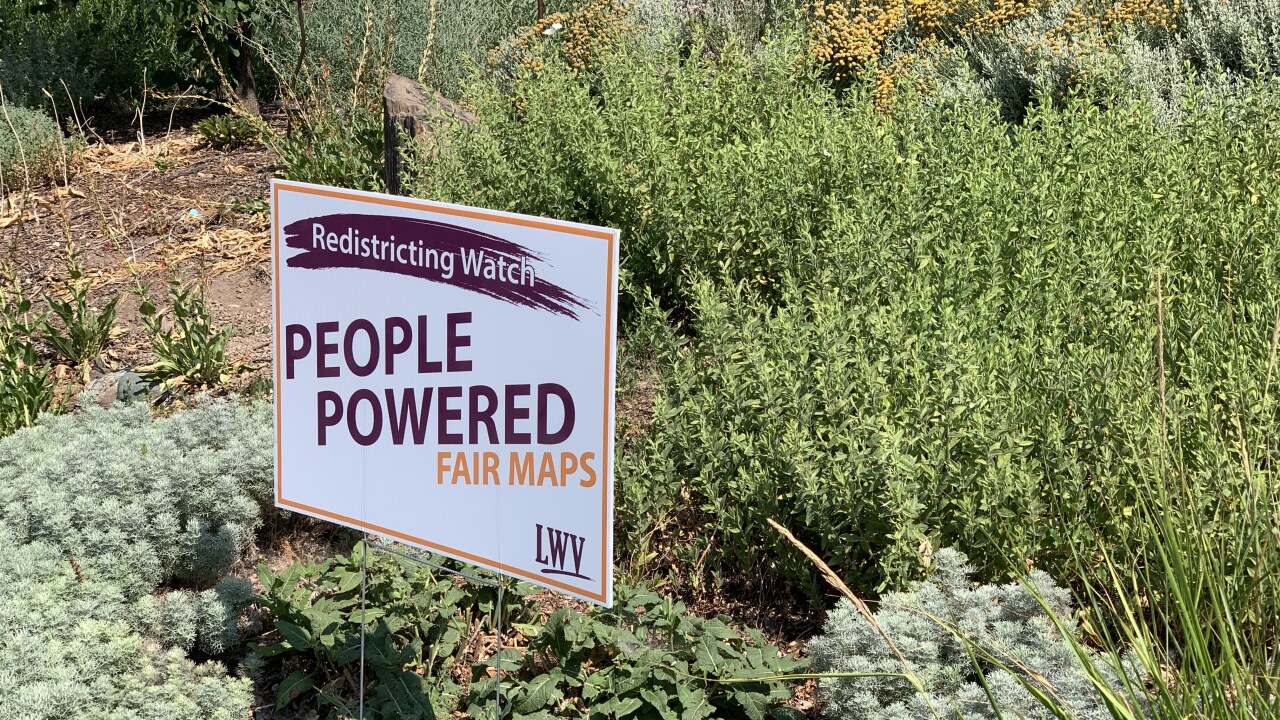


SALT LAKE CITY — The League of Women Voters of Utah and Mormon Women for Ethical Government are going back to court, asking the judge overseeing their lawsuit against the Utah State Legislature to block a new law that just went into effect.
"Plaintiffs are entitled to a preliminary injunction because H.B. 392 and its accompanying S.J.R. 5 create imminent risk of Plaintiffs’ lawsuit being transferred to an unconstitutionally composed district court," their attorneys wrote in a motion for an injunction filed Saturday in Salt Lake City's 3rd District Court.
The law, passed by the Utah State Legislature and signed by Gov. Spencer Cox on Feb. 13, has gone into effect. It allows for a special three-judge panel to hear cases where a law passed by the legislature is being sued over. The bill, sponsored by Rep. Matt MacPherson, R-West Valley City, originally created a special "constitutional court" for such challenges. As it went through the legislative process, it was amended to make a request for such a panel optional. The bill also lets the Utah Attorney General's Office intervene and streamlines cases to the Utah Supreme Court.
Attorneys for the League and MWEG raised concerns the new law will upset their case before it's fully litigated or any appeals are heard.
"H.B. 392 empowers state litigants to decide, after a 45-day observational period, whether to keep the assigned single district judge or to convene a three-judge panel. That power is not tethered to any factor premised on state litigants being differently situated from private litigants," they wrote.
"The power does not arise based upon the subject matter of the lawsuit, whether it involves constitutional challenges to state laws, or whether it is a matter of public importance. Rather, there are no standards whatsoever; state litigants have unfettered power to make the determination. They can merely watch the proceedings unfold for 45 days and then decide to keep the assigned judge or demand a new three-judge panel based on their assessment of the assigned judge’s favorability to their position in the case."
The injunction request was filed in the League and MWEG's original lawsuit against the Utah State Legislature over Proposition 4, the citizen ballot initiative for independent redistricting. They allege the legislature improperly overrode Prop. 4, which created an independent commission to draw maps for congress and inserted their own map — splitting Salt Lake County into four parts — that they claim was gerrymandered to favor Republicans. Judge Dianna Gibson sided with the plaintiffs and struck down Utah's congressional map, ordering lawmakers to draw another one.
She then rejected their new map, ruling it did not abide by the tenets of Prop. 4 and chose one submitted by the plaintiffs that created a more competitive Salt Lake County-centric district that Democrats have rushed to run in. Republican lawmakers on Utah's Capitol Hill have long insisted that it is the legislature that has the sole constitutional power to redsistrict.
On Friday, the Utah Supreme Court refused to grant the legislature's latest request to halt the new map from being implemented, ruling on a technicality that the case in the lower courts has yet to be fully litigated. A three-judge panel of federal judges is considering a separate lawsuit to block the new congressional map from being implemented.
A ruling on that could come as soon as Monday.
