

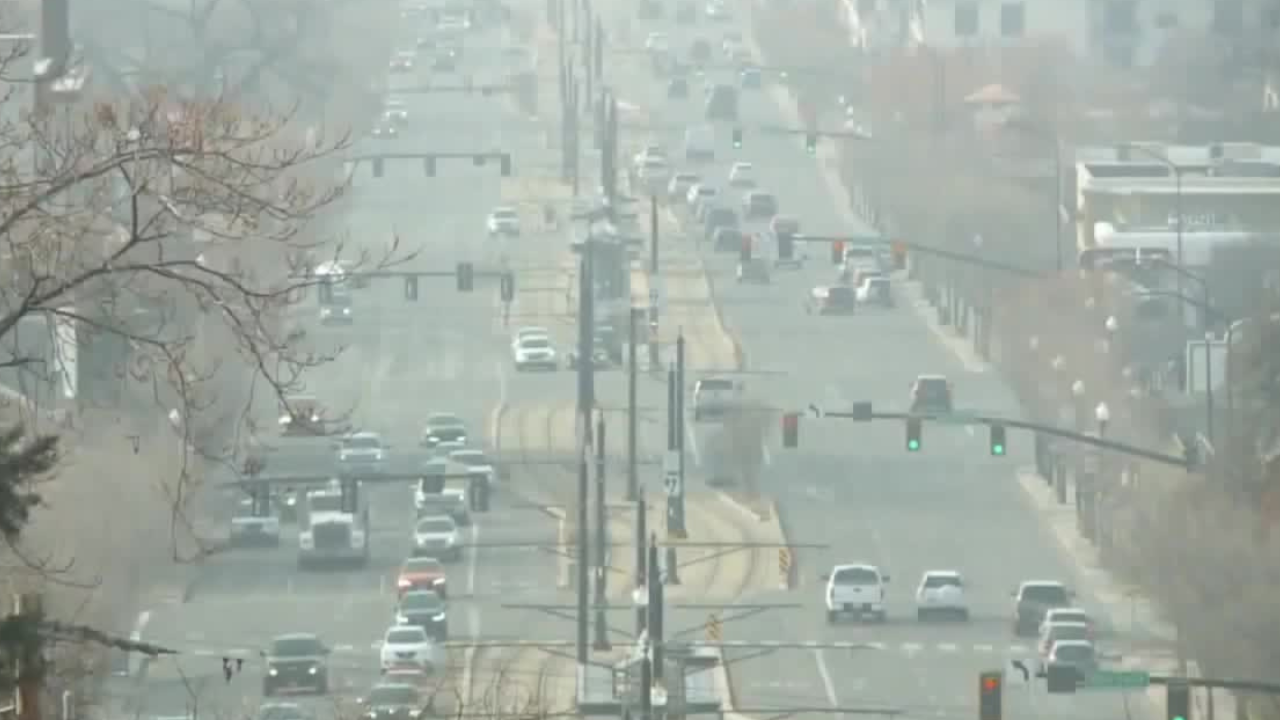


SALT LAKE CITY — The Trump administration has decided to roll back a prior decision that northern Utah is not in attainment for ozone pollution standards, no longer holding the state accountable for pollution that comes in from outside sources.
The decision announced Tuesday would repeal a Biden administration finding that the Wasatch Front, including the Salt Lake City metro area, is in "serious" nonattainment for national ozone standards. If it goes through? Northern Utah would then be in "moderate" nonattainment.
"Utah now stands to potentially benefit from this action," Environmental Protection Agency Administrator Lee Zeldin said in a statement. "The Trump EPA remains steadfast in its commitment to ensuring clean air for every American. Through cooperative federalism, we will continue partnering with states to advance both economic growth and environmental protection."
Utah leaders have long complained that when it comes to air pollution, the state is being unfairly punished for sources it cannot control.
"What it allows us to do is focus on the things we can control, which is the 17% of ozone emissions that come from Utah," Tim Davis, the executive director of the Utah Department of Environmental Protection, told FOX 13 News. "Those are the only things we can control. It doesn’t mean we don’t have to comply with the Clean Air Act. We have made significant progress on air quality and ozone over time. But we have to continue to make progress."
Utah agrees to massive water release from Flaming Gorge to prop up Colorado River system:
Environmental groups fumed at the announcement. Utah Physicians for a Healthy Environment said the EPA now "considers life-saving, health protecting cleaner air a 'punishment' and a 'burden,' and that the Wasatch Front will benefit from dirtier air" and called the agency the "Polluters Protection Agency." They vowed to fight it in the public comment period that will get under way.
"Yet again, the EPA is proposing to let local polluters off the hook, downplaying emissions that dirty the air we breathe and worsen ozone pollution that threatens public health. Utahns are being told to get comfortable with our bad air days and heavy inversions, but shifting blame to foreign emissions won’t change the reality that most of our air pollution comes from transportation and local industry," said Luis Miranda, an organizer with the Sierra Club Utah Chapter.
"Foreign pollution doesn’t negate the major emissions produced locally. Allowing coal plants and other local sources to continue polluting unchecked only makes the problem worse. We need EPA to strengthen regulations on emissions that we can control – not scapegoat them. What’s the point of having an Environmental Protection Agency that won’t protect us?"
Others praised the move. Sen. John Curtis said it was a good decision.
"For too long, Utah has faced the prospect of being penalized for air pollution we did not create and cannot control," he said in a statement. "Today’s proposal shows that the EPA is listening to Utah and correctly understands how ozone exceedances should be evaluated in the Northern Wasatch Front. This is how good environmental policy should work—grounded in science, responsive to states, and focused on practical outcomes."