

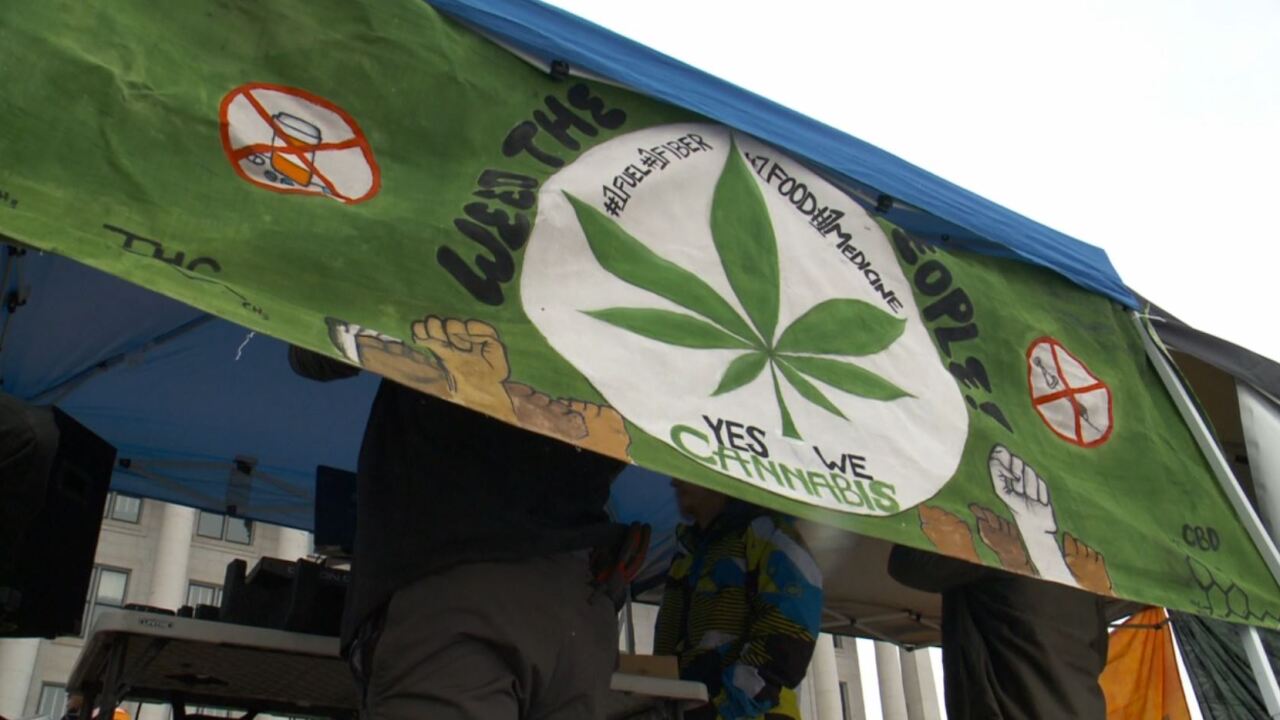


BOUNTIFUL, Utah — Advocates for medical cannabis in Utah are thrilled with the Trump administration's order moving state-regulated products to a Schedule 3 drug, putting it on par with a lot of prescription medications.
"Today, the federal government is acknowledging what patients have long known: cannabis is medicine. This is real progress. After decades of stigma and being told they were wrong, patients who turned to cannabis to manage their conditions are finally being validated—they weren’t wrong; they found a medicine that worked. They were simply ahead of the policy," Desiree Hennessy, the executive director of the Utah Patients Coalition, told FOX 13 News.
"Utah has built a medical cannabis program ahead of the federal government, and we will continue to treat cannabis as a medication. With federal changes reducing unnecessary tax burdens, we expect to see savings passed on to patients, alongside expanded research, greater provider participation, and continued progress toward safer, more accessible care for those who need it most."
What does a move to reclassify marijuana as 'Schedule III' really mean for Utahns?
The move by the Trump administration is unlikely to immediately impact Utah's medical cannabis program, which was approved by voters when Proposition 2 passed in 2018. At that time, Utah's legislature replaced the citizen initiative with a highly-regulated program.
House Minority Whip Jennifer Dailey-Provost, D-Salt Lake City, who works on cannabis legislation, told FOX 13 News she was "ambivalent" about the announcement. She believed it would have broader benefits for cannabis companies in the form of federal tax breaks, but warned it remains a Schedule 1 drug and taxed at the state level — unless the federal government orders states to reschedule it.
But it could now allow for more research on dosage and efficacy of cannabis to treat medical conditions. Some of that research is already being carried out at the University of Utah.
And people like Nanette Berezhnyy, who serves on a Utah medical cannabis board as a patient advocate, say the news is validating.
"For 55 years, the U.S. government said medical cannabis had no medicinal value whatsoever. Today, they changed that. That’s huge," she told FOX 13 News.
Berezhnyy is the mother of an 8-year-old son who uses cannabis to treat autism that had him nonverbal, self-harming, and unable to sleep. She said the daily dose her child receives has changed his life in ways that other therapies and medications could not.
"Since cannabis? He has developed language skills, communication, he sleeps through the night, he knows his emotions, he has a much better quality of life. He’s in a neurotypical second-grade classroom," she said.
Berezhnyy hoped the news would mean lower prices for patients and an expansion of who qualifies to use medical cannabis.
Social conservatives like Gayle Ruzicka, the president of the Utah Eagle Forum, called the announcement "terrible news."
"Today’s announcement from the White House regarding the rescheduling of marijuana raises serious concerns about the direction of federal drug policy and the message it sends to the public, especially to young people. This policy ignores a growing body of research linking marijuana use to negative mental health outcomes, addiction, impaired cognitive development, and increased risk for youth," she said. "Reclassification should not be mistaken for a declaration of safety."
"At a time when communities across the country are working to combat substance abuse and protect families, we should be cautious about policies that could normalize or downplay the real risks associated with marijuana use. Public policy must be grounded in science, not trends or political pressure."
The news hit as a public opinion poll found 66% of Utahns surveyed wanted the state's tightly-regulated medical cannabis program expanded. The poll, paid for by Keep Utah Medical and conducted by Noble Predictive Insights, signaled that Utahns surveyed wanted easier renewals, lower fees and more providers willing to recommend cannabis.

The poll also found that 52% of Utahns now support legalizing recreational marijuana, though Keep Utah Medical has resisted that.
"Our real advocacy is let’s allow patients to access medical cannabis and let’s ease some of those restrictions," said Alex Iorg, who worked on the Prop. 2 campaign and now works for Wholesome Co., a medical cannabis provider.
The question has typically been asked to signal to politicians that extreme regulations could lead to a citizen ballot initiative, though there are currently no plans for it.

"Our theory is the more restrictions they put on access to medical cannabis? The more support for adult use in the state," Iorg told FOX 13 News on Thursday.
While more than 112,000 card-carrying medical cannabis patients are in Utah, Iorg said they estimate two-thirds of the total patients who would qualify go out of state or to the black market for lower prices and broader access. It's why his group keeps pushing for expansion of Utah's program, citing product safety and testing for quality.
Berezhnyy said she supports a more robust medical cannabis program in Utah.
"I would love to see a broadly expanded medical program. I would hate to see us move into a recreational state because that’s where dangers lie with medical programs," she said. "There’s a concern there. I would really, really love to see this movement help us broaden our medical program in Utah."
