

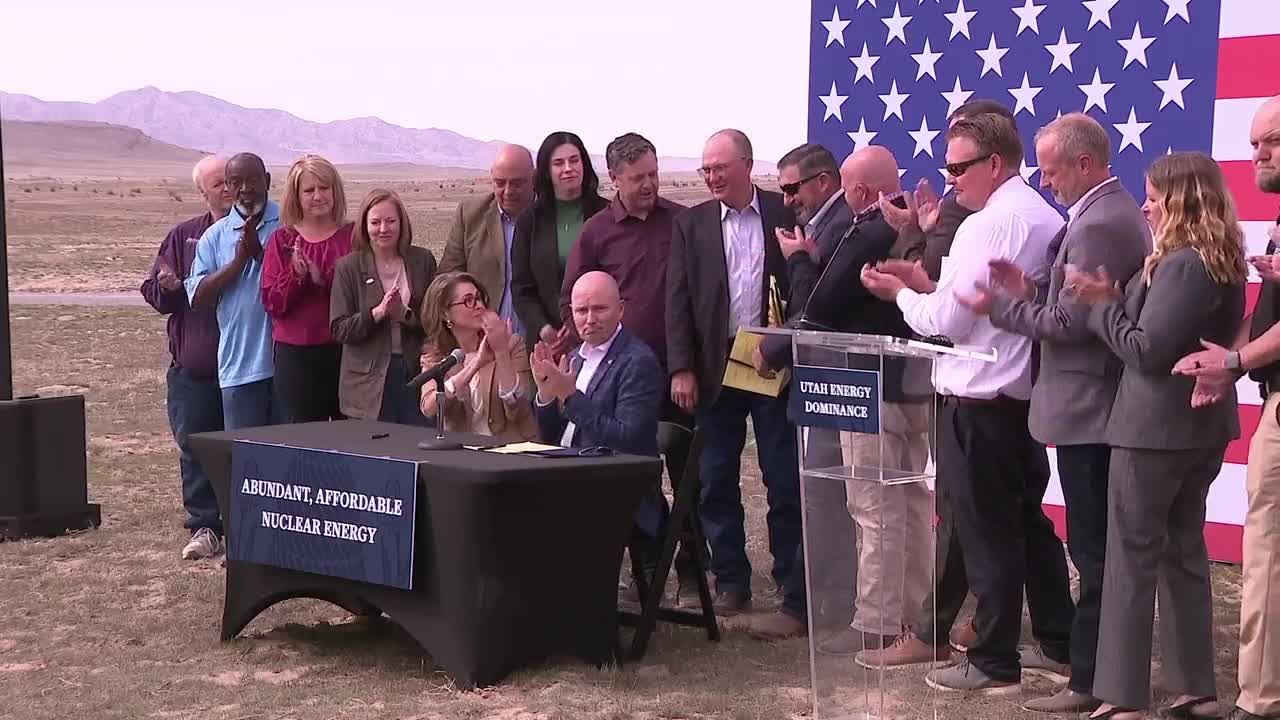


SALT LAKE CITY — The U.S. Department of Energy has picked Utah to be one of the sites for a "nuclear lifecycle campus" that will handle everything from fuel enrichment to waste disposal.
Governor Spencer Cox signed a memorandum of understanding on Tuesday with the agency, which will explore development of the facility in Tooele County. Out of 26 states, Utah is among five selected, U.S. Energy Secretary Chris Wright said in a statement.
"These campuses will be massive generators of economic growth, create thousands of high-paying jobs, and be crucial to unleashing America’s nuclear renaissance. The innovative concept is a direct result of President Trump’s leadership and ambitious directives to restore the domestic nuclear fuel cycle and get America’s nuclear industry growing again," he said.
The facility will be a significant development in Utah leaders' ongoing push to bring nuclear power to the state to meet growing energy demands. Gov. Cox announced "Operation Gigawatt" in 2024, which expands energy development in the state, including small-scale nuclear reactors. The state has allowed some experimentation. Recently, Valar Atomics announced it had achieved an important milestone in power generation at the San Rafael Lab in Orangeville.
"America’s future depends on affordable, abundant energy," Gov. Cox said in a statement. "Utah seeks to build a complete energy ecosystem, from fuel production and processing to advanced reactors and the technologies they power — creating new opportunities for innovation, investment, and good-paying jobs. We’re doing it through responsible stewardship of the land and resources we’ve been entrusted with."
The MOU is just the beginning. There will need to be further analysis of the site in Tooele County's West Desert. Environmental groups have raised significant concerns about the facility, not only for what it would do and the potential for nuclear waste but its proximity to the Great Salt Lake.
