

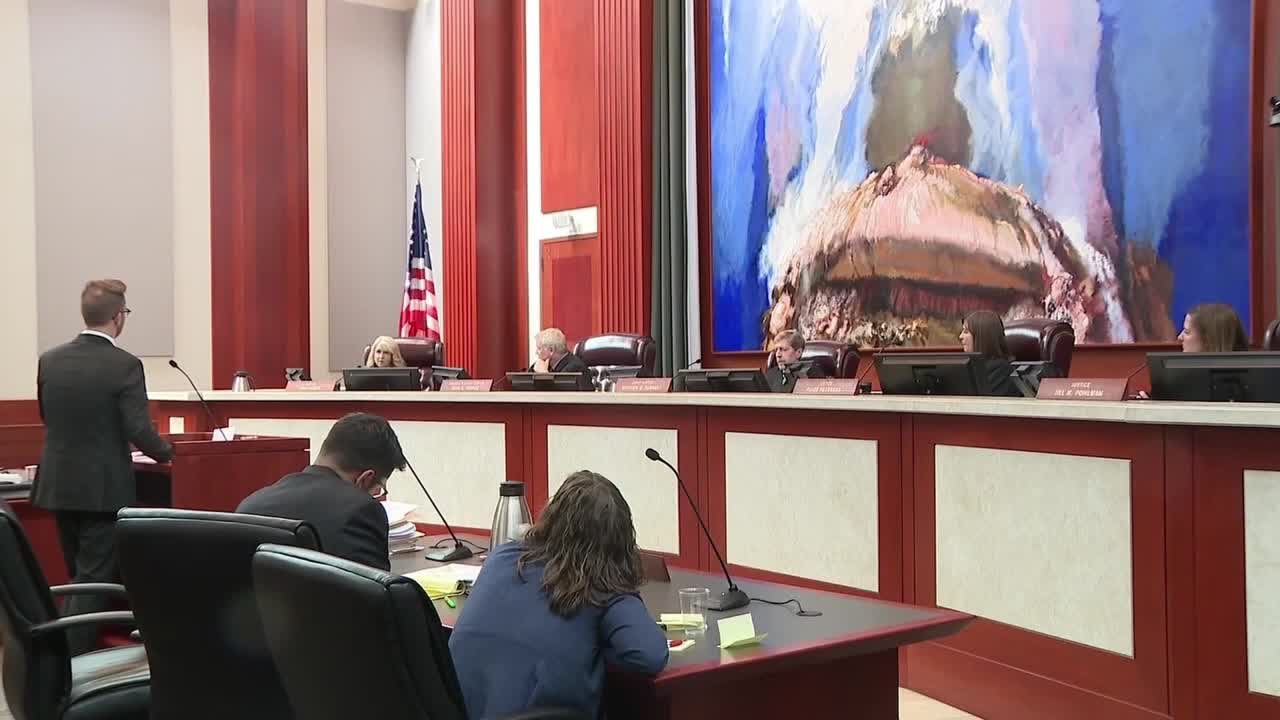


This year's ballot includes a long list of judges up for retention elections, giving Utah voters power to decide whether to keep judges on the bench or remove those they believe are performing poorly. In a retention election, voters are the judge's boss.
The Utah Judicial Performance Evaluation Commission (JPEC) evaluates judges based on their conduct rather than outcomes of individual cases.
"And that's why we, when we evaluate a judge, we look at the qualities and behaviors that make a good judge rather than a specific case outcome," Mary-Margaret Pingree, JPEC Executive Director, said.
Super PACs fuel record midterm spending, pouring nearly $3M into Utah network TV ads this election:
This year, the legislature took issue with some specific outcomes, such as the overturning of voting maps and a delay in the implementation of anti-abortion laws. In response, lawmakers added seats to the state Supreme Court and created a new kind of court, called a "Constitutional Court," just to hear their own cases.
With all the hoopla, it's easy to forget judges usually have the straightforward job of applying the law. They are constantly evaluated for that work by attorneys, court employees, and volunteer observers, and Utah has one of the most robust evaluation systems in the country.
Voters can find detailed information about the judges on their ballot online.
"You can search your county, and then the judges that will be on your ballot will pull up. You'll see some summary information about each judge, and then you're able to dig in deeper if you want to and find out more detailed information about each judge in different categories. You can go as deep as you want," Pingree said.
That information is available HERE.
The commission does not tell voters how to vote, and most judges do meet minimum performance standards.
"We actually don't tell you how to vote, and most judges do meet minimum performance standards. So then you look at all. The other information that we give you, I look at judge evaluations similar to an evaluation in an organization where you have just a range of performance, and so we try to show you that range and most of the judges will meet the minimum standard, but there's still a range above that," Pingree said.
That range can be subtle. One judge may average a 4.1 out of 5 rating on a specific quality, while another gets a 4.8. Voters decide how much weight to put on one kind of evaluation or another.
"We want to give them information that makes them feel confident in how they're voting," Pingree said.
Voters will often not see a judge receive a negative recommendation. One reason is that judges are given these evaluations months before they are made public. Often, a judge will see a negative rating and decide not to run.