

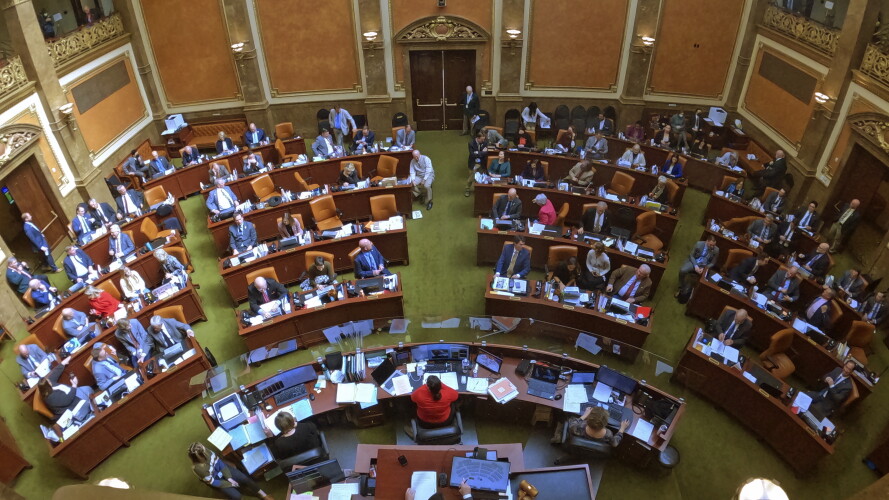


SALT LAKE CITY — Utah Democrats are about to double their presence in the state House of Representatives, taking power from the legislative majority and shifting it to the governor and towards the minority.
Democrats are poised to win 28 seats — a dramatic jump from the 14 seats they won in 2024. That number doesn't count two unaffiliated candidates who are currently leading and could push the caucus as high as 30.
The stakes are significant. Republicans need more than 50 seats to block a governor's veto. Without that supermajority, Republicans can't override a veto on their own, meaning they'll need Gov. Spencer Cox with them, or they'll need to persuade Democrats to join their cause. The result gives Cox more leverage in negotiations with the Legislature.
Cox didn't anticipate extent of 'historic defeat' suffered by Republicans on Election Day:
When I combined all the votes cast in every state House election across the last two cycles, a clearer picture emerged of what's driving the change.
In 2024, Democrats drew about 372,000 votes, compared with nearly 945,000 for Republicans — a wide gap. In 2026, Democrats climbed to 433,000 votes, while Republicans slipped to roughly 515,000.
That means more people cast ballots for Democrats, but the growth in Democratic votes doesn't fully account for the far larger drop in Republican votes. More people showed up to vote for Democrats, but fewer people showed up overall — a reminder that midterm and presidential election years behave differently.
The number of competitive races also surged.
In 2024, there were seven seats decided by 10 percentage points or less. Democrats won three of them, and Republicans won four.
This year, Democrats appear to be winning 10 seats within a margin of 10 points, while Republicans are winning six — 16 close races in all. That's more than double the number of tight contests from the year before.
The House district map tells the story visually. The current map reflects the legislators seated after the 2024 election, when Democratic representation amounted to a small blue cluster around the Salt Lake area. Starting this coming January, Democrats will represent the majority of residents in northern Utah — a much larger swath of the state.