

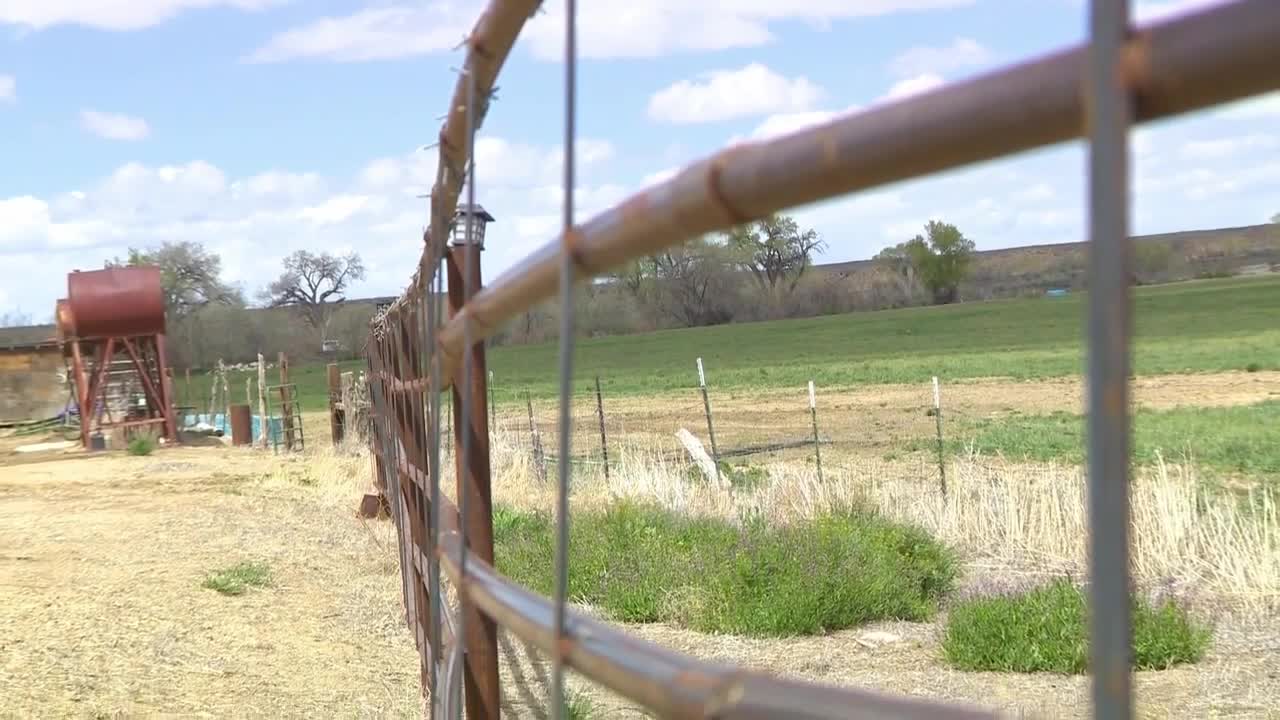


SALT LAKE CITY — As drought conditions continue to grip Central Utah, many farmers and ranchers say the concern is no longer just about this season — it’s about the future of agriculture itself.
After another winter with disappointing snowpack and minimal spring runoff, producers across the region are questioning whether the dry pattern that has dominated much of the last two decades may be here to stay.
“Twenty years ago, we kept saying the next wet year is right around the corner,” said Emery County rancher Bill Butcher. “And now… maybe this is the new normal.”
That uncertainty is forcing difficult decisions for families who depend on farming and ranching for their livelihood.
Joel Hatch-Jensen understands the pressure from multiple angles.
“I am a farmer-rancher, and I am a banker,” Hatch-Jensen said.
And after years of working closely with agricultural producers, Hatch-Jensen says conditions this year stand out.
“I don't remember it being any worse than this,” Hatch-Jensen said. “This is as bad as it's been as far as I remember.”
Drought maps include state borders, but drought doesn't care:
When water becomes scarce, the impacts stretch far beyond dry fields.
Many ranchers are forced to sell portions of their herds just to keep operations financially afloat. But those short-term decisions can create long-term setbacks.
“They’ll have their money to make their payments this year,” Hatch-Jensen explained. “But they’re going to be down 50 head, which cuts into cash flow.”
Rebuilding those herds can take years.
“If you had to sell 50 or 100 head, it takes you 3 to 5 years to get back to your original numbers,” Hatch-Jensen said.
Unlike many industries with regular paychecks, farmers often rely on one or two major income periods each year — usually after harvest season or livestock sales.
“Most farmers, their biggest payment will come in the fall or early winter,” Hatch-Jensen said. “That’s when the vast majority of their income comes in.”
At the same time, producers say nearly every operating cost continues to rise.
“The price of grain, seed, fuel, fertilizer — everything has gone up,” Hatch-Jensen said. “So it’s not like we’re making bank.”
Hatch-Jensen also addressed criticism surrounding water use in agriculture, particularly the amount of water used to grow alfalfa.
“I know a lot of people on the Wasatch Front think that we use all of the water and that we need to reduce our water usage on our alfalfa,” Hatch-Jensen said.
But producers argue Central Utah’s climate creates some of the highest-quality alfalfa in the region — a crop critical for raising livestock and supporting the food supply.
“That protein content is so good, and it raises really good beef,” Hatch-Jensen said. “If we don’t have the feed, you don’t have the food.”
Farmers say they have already made efforts to conserve water where possible.
“We’ve converted most of our acres from flood irrigation to sprinklers,” Butcher said.
Despite the difficult outlook, many producers say they are determined to keep going.
“We’ve had droughts like this before,” Hatch-Jensen said. “We will survive. It just makes it painful.”
With months of summer heat still ahead, farmers and ranchers across Central Utah say they are hoping for meaningful rainfall — while preparing for the possibility that dry conditions could continue well into the future.
This story was reported on-air by a journalist and has been converted to this platform with the assistance of AI. Our editorial team verifies all reporting on all platforms for fairness and accuracy.