

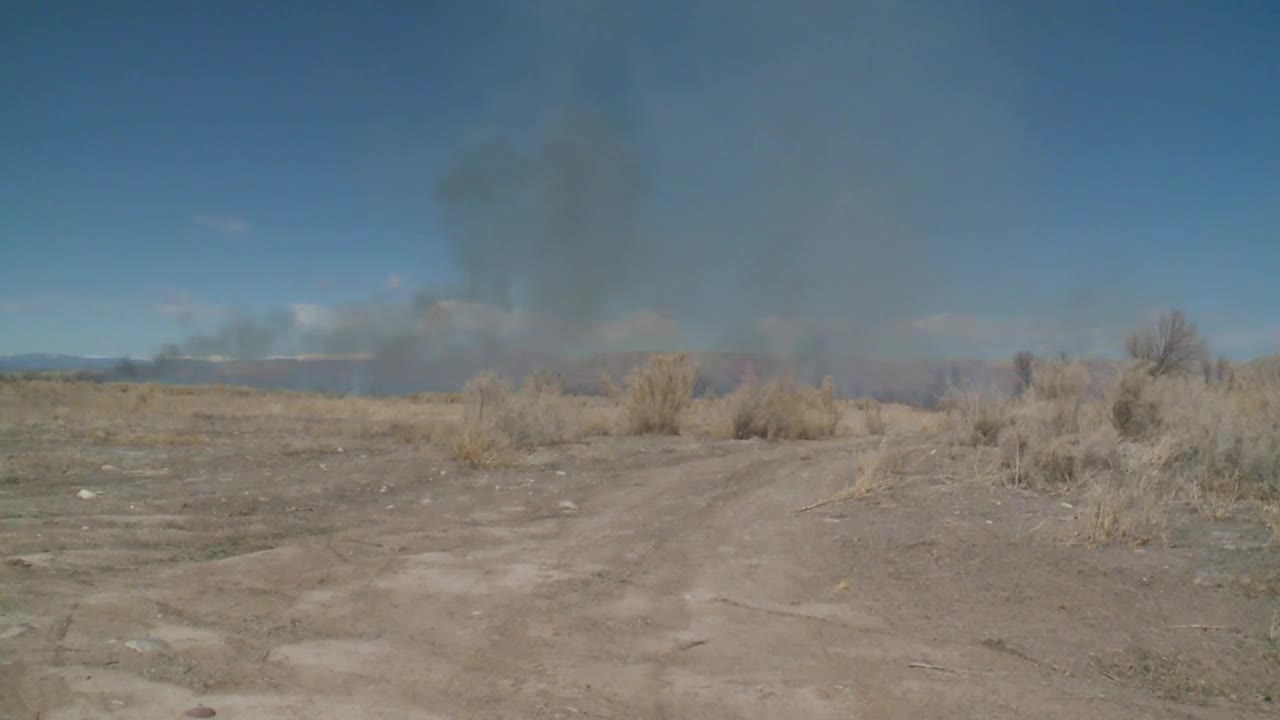


As fire danger increases across Utah, experts say concerns about summer air quality are growing right along with it.
A growing wildfire in central Utah, combined with strong south winds and critical fire weather conditions across parts of the state, is offering an early glimpse into what could become another challenging wildfire smoke season.
WATCH: Recent fires spark concerns over target shooting near Saratoga Springs
Dr. Derek Mallia, a research professor at the University of Utah who studies wildfire smoke and air quality, said light haze has already become noticeable along parts of the Wasatch Front.
“You can definitely tell that things just look a little bit more hazy,” Mallia said.
Smoke from the growing Tower Fire in central Utah has been drifting north at times, aided by gusty southerly winds. Red flag warnings also remain in place across parts of western and southern Utah because of hot, dry, and windy conditions that can rapidly spread fires.
“With the southerly winds, we could be seeing smoke from those as well,” Mallia said.
While current smoke impacts remain relatively minor, Mallia said Utah is entering a weather pattern that becomes increasingly favorable for wildfire activity through June and July.
“Going forward, we’re going to be having more wildfires with how dry it’s been for really the past year at this point,” Mallia said. “We’re kind of primed unfortunately for some fire activity and as we head into June and July, things are only going to get hotter, drier, and more conducive for fires.”
Mallia explained that summertime air quality issues differ from Utah’s more familiar winter inversion problems. During the summer, fewer storm systems move through the region, allowing dry conditions and wildfire smoke to become more persistent.
“As we transition to the summer, we get less of those frontal passages, but things really start drying out as a result of that, and that’s typically when we start seeing more bad air quality issues associated with wildfire smoke,” he said.
Researchers also say climate change is contributing to longer and more intense wildfire seasons across the western United States.
“Due to the effects of climate change, we’re seeing a hotter, drier climate, and that’s resulting in more intense wildfire seasons,” Mallia said.
The Tower Fire is currently burning mostly grass and brush, which typically produces less smoke than large forest fires. However, Mallia warned that larger fires later this summer could create more widespread smoke impacts across Utah.
“This really might be the last decent break that we get before things really start ramping up as we head into the thick of fire season,” Mallia said.
________
This story was reported on-air by a journalist and has been converted to this platform with the assistance of AI. Our editorial team verifies all reporting on all platforms for fairness and accuracy.