

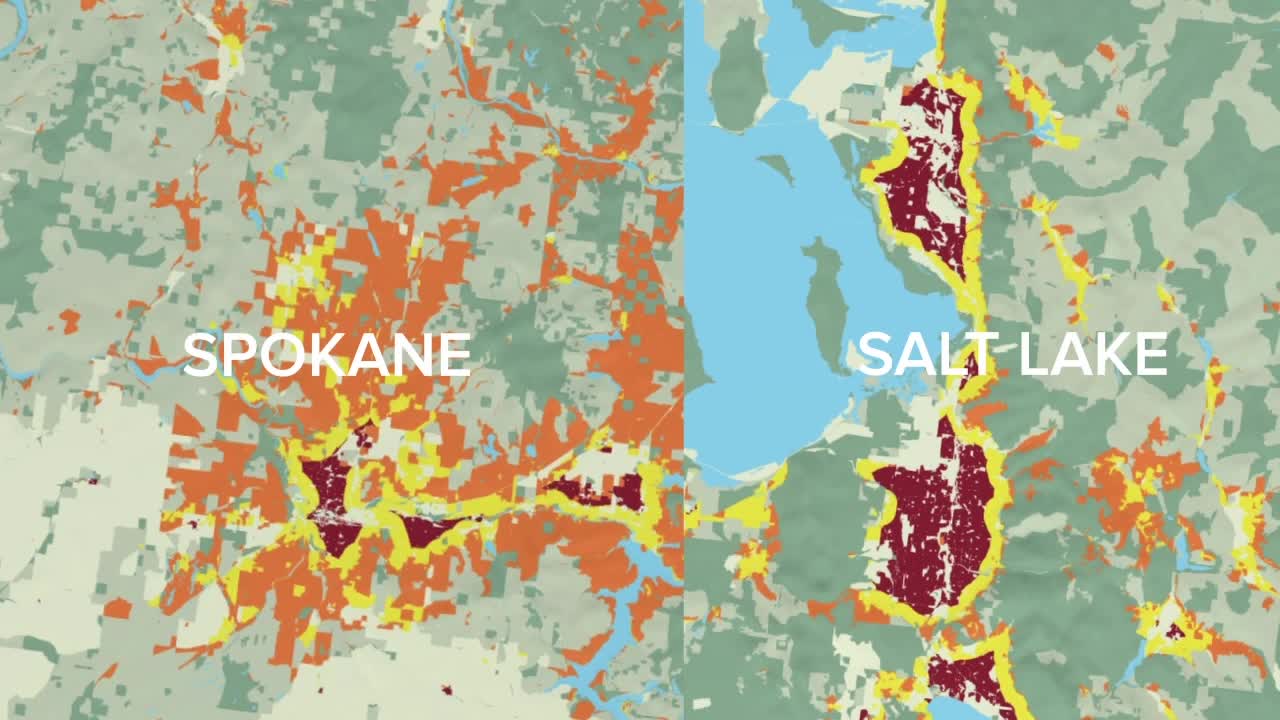


SALT LAKE CITY — A comparatively small wildfire in Spokane, Washington, can destroy more homes than a much larger fire in Utah. The reason comes down to where people live — and why they live there.
The answer starts with public land. Much of the American West is federally owned, most notably Utah and Nevada. That pattern traces back to 1905, when President Theodore Roosevelt's administration created the Forest Service and, the following year, passed the Antiquities Act. The government began holding and protecting land rather than selling or distributing it.
The public lands on today's maps are nearly identical to the unpopulated areas of 1905 — not simply because the West was less settled then, but because geography made much of it difficult to settle at all. The Rocky Mountains and the Great Basin define the least accessible places in the lower 48 states, creating livable corridors between imposing mountains and forbidding deserts. Those corridors define where communities in Utah exist today.
That geography leads to an unintended consequence — one explained by the difference between two terms: wildland urban interface and wildland urban intermix.
Wildland urban interface is a line of homes bordering wildlands. Wildland urban intermix is something different: houses built in the middle of wildlands.
In Spokane, development follows an intermix pattern. When a wildfire ignites there, it burns among the houses. In Salt Lake City and throughout much of Utah, the natural default is an interface where the landscape creates open land between islands of mountain and desert.
That distinction — shaped by landscape, history, and federal land policy — helps explain why the size of a fire doesn't determine its destructiveness from a human perspective.
WATCH: As Widemouth 2 Fire grows, officials already thinking about what's next for local towns