

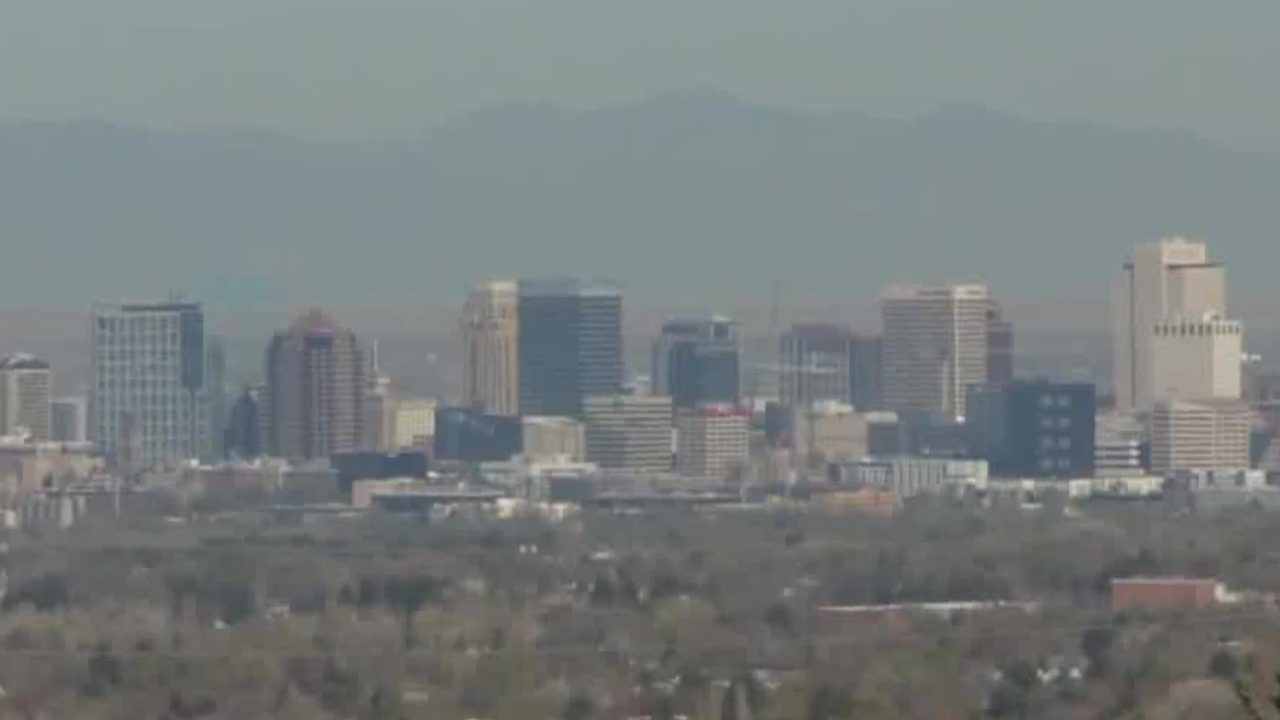


Wildfire smoke is more dangerous than other forms of air pollution — but knowing when air is unsafe and taking a few precautions can make a significant difference for your family's health.
Know when the air is unsafe
Checking the air quality number every morning is just as easy — and just as important — as checking the weather.
"Wildfire smoke is really a lot more toxic to our bodies than some other forms of pollution, and the summer is the season for wildfire smoke," Dr. Mike Woodruff, executive medical director of Regence BlueCross BlueShield of Utah said. "Wildfire smoke has really tiny particles that get down deep in our lungs and causes a lot of inflammation and long-term damage."
A network of monitors continuously measures levels of pollutants in the air, producing the Air Quality Index, which runs from 0 to 500. When it hits 100 or above, it's time to be careful — though there is no "safe" level of wildfire smoke. Children, older adults, and people with asthma feel the effects first and fastest.
Make your home a clean air safe zone
Your home can be your family's best protection with just a few easy steps.
"The first step is keep your doors and windows closed if it's a really bad air day," Dr. Woodruff said. "If you've got a furnace or an air conditioner system, make sure the filters on that are really high quality because that can eliminate about 85% of the pollution that's outside from getting into your home."
A standalone air purifier is another option. Dr. Woodruff recommends a portable HEPA filter placed in the room where your family spends the most time.
"Maybe it's your kitchen, maybe it's your living room, and that can be really effective as well," Woodruff said.
Take precautions when heading outside
Not everyone can stay inside on bad air days.
"I see people outside running on really bad air days and I'm like, you are smoking cigarettes right now," he said. "Move it inside if you can."
Many gyms have high-quality air filtration systems. A treadmill at home is another option or consider taking the day off as a rest day. There are also times of day when air quality tends to be better.
"Early in the morning, ozone levels tend to be lower. Late in the afternoon it tends to be worse air quality, so think about that," he said.
If you do have to be outside, an N95 or KN95 mask is very effective at keeping smoke particles out of your lungs. The mask needs to fit tightly over the bridge of your nose and under your chin.
Listen to your body — and know when to call your doctor
Wildfire smoke contains tiny particles called PM2.5 — so small they go deep into your lungs and into your bloodstream, causing inflammation.
"We often think of it as risky for people with chronic conditions like asthma or lung conditions like emphysema, but actually there's no known safe level of wildfire smoke and air pollution," Dr. Woodruff said.
Symptoms like headaches, fatigue, and poor concentration can all be signs that smoke is affecting your health.
"If you're having difficulty breathing, wheezing, maybe it's just congestion, it's OK to call your doctor and ask them, hey, do I need to do something differently?" he said. "But certainly, if you're feeling short of breath, getting dizzy, that's the time you need to get seen."
This story was reported on-air by a journalist and has been converted to this platform with the assistance of AI. Our editorial team verifies all reporting on all platforms for fairness and accuracy.