



SALT LAKE CITY, Utah — Utah is starting a new water year with reservoirs well below normal, despite precipitation finishing the previous water year close to average.
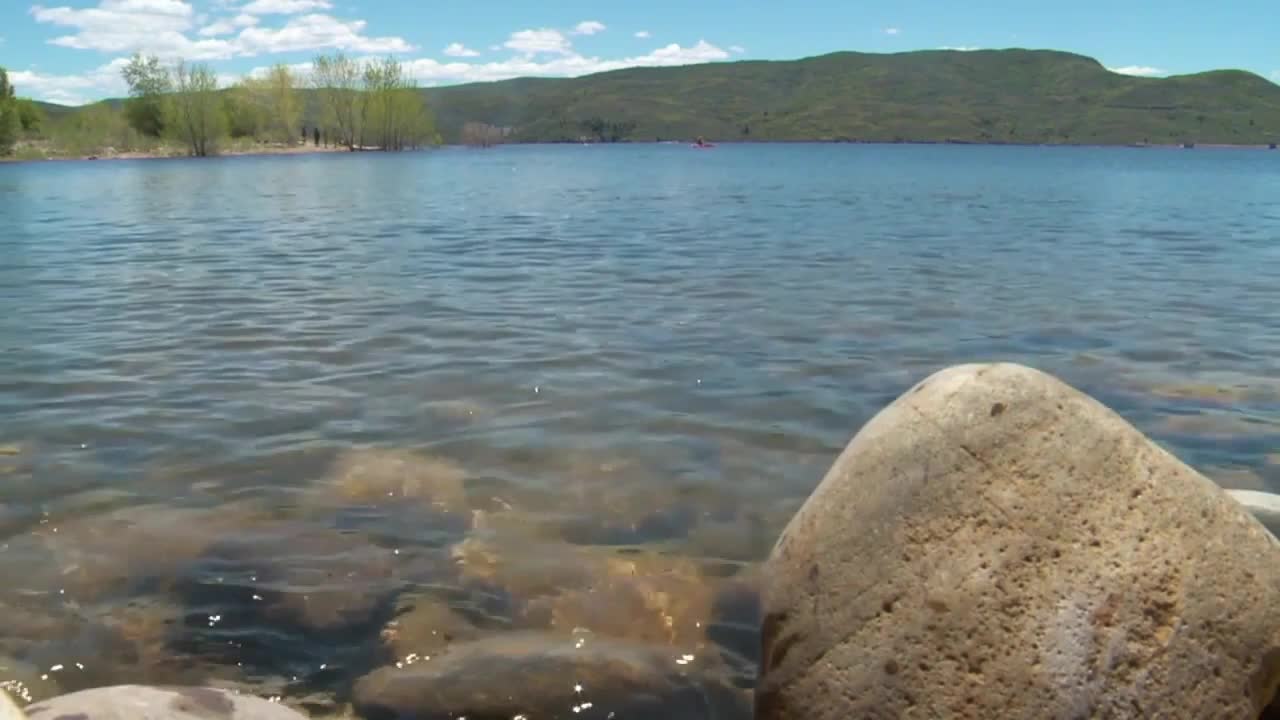
Statewide reservoir storage ended the 2026 water year at about 45% of capacity, according to the latest Utah water availability report.
For the Utah Snow Survey, the biggest problem was not necessarily how much precipitation Utah received but when that precipitation fell and how much of it came as snow.
“Unfortunately, it led to some record-breaking poor runoff,” Jordan Clayton with the Utah Snow Survey said.
Clayton said about half of the state's forecast sites recorded either their worst or second-worst runoff on record from April through July.
Reservoir conditions are especially concerning in parts of southern Utah, where some supplies are only 5% to 10% of capacity.
The situation is surprising considering Utah's mountain precipitation finished the water year at about 96% of normal.
Clayton said precipitation was highly variable throughout the year. October was exceptionally wet, but much of the state was then dry from November through June.
That timing matters because winter snowpack acts as Utah's natural water storage system. When that snow melts in spring and early summer, it provides a much-needed boost to reservoirs.
Now, the hope is for a much stronger snowpack during the new water year.
“We're really hopeful, from a snowpack perspective, that we get some really high volume snowmelt runoff and we replenish those reservoir supplies,” Clayton said.
There are no guarantees, however. An El Niño pattern is developing, but Clayton said current forecast models aren't providing enough confidence to know exactly what kind of winter Utah will have.
He points to the winter of 1982-83 as an example of how an El Niño winter can still produce excellent conditions for the state.
“We might, we just don't know,” Clayton said.
For now, the focus turns to the mountains. How much snow Utah receives this winter and how much water that snow ultimately produces will be critical for rebuilding reservoir supplies in 2027.
This story was reported on-air by a journalist and has been converted to this platform with the assistance of AI. Our editorial team verifies all reporting on all platforms for fairness and accuracy.