



SALT LAKE CITY — When trees and brush are removed to reduce wildfire risk, all that leftover material has to go somewhere.
Traditionally, much of it is burned in piles. But a Utah company is trying a different approach: turning that debris into something that can benefit the environment.
It's called biochar, and the process is being used in Park City's Thaynes Canyon as part of a forest-thinning project.
Circle Forestry owner Al Spadafora said he saw an opportunity to make traditional forest-management practices more efficient, cleaner and safer.
“Anybody who lives in the mountain communities is familiar with pile burning. But I just saw an opportunity to, where possible, do it a little bit better, more efficient, a little cleaner, a little safer,” Spadafora said.
What is biochar?
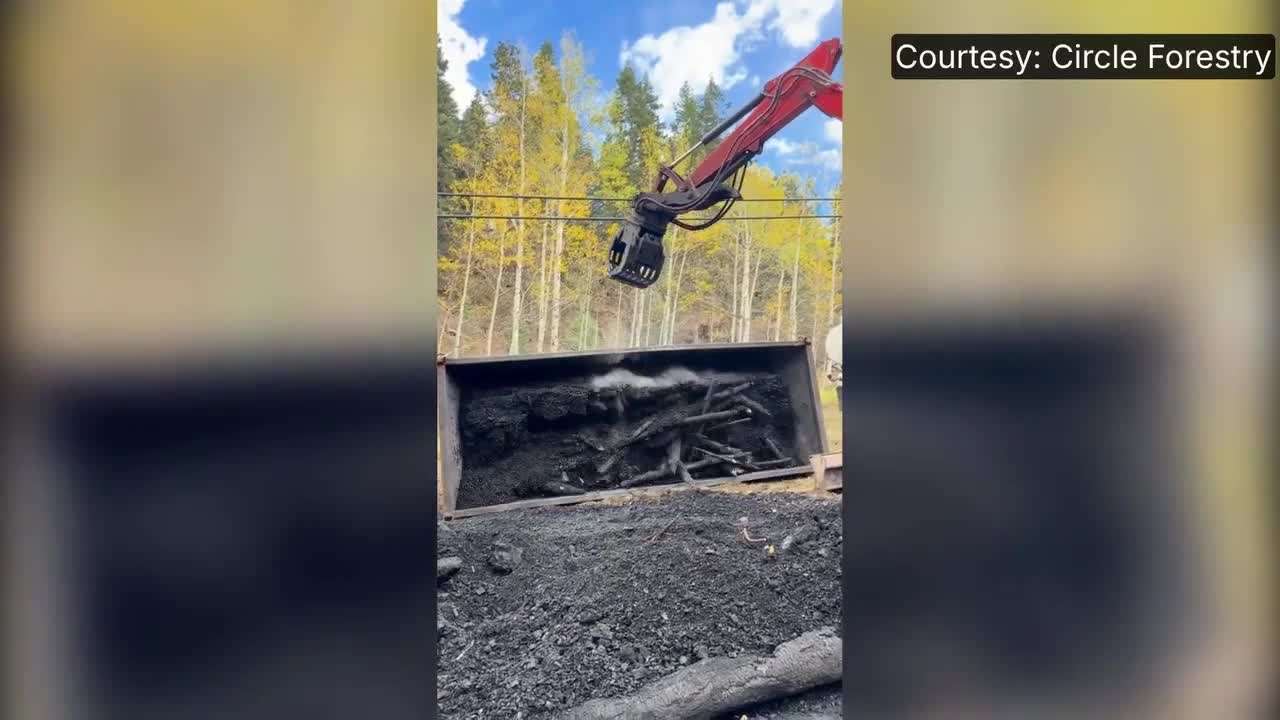
Biochar is a carbon-rich material made by heating wood and other organic material in a specialized kiln. The process uses a controlled flame cap to burn off combustibles and smoke while leaving behind char instead of turning all the material into ash.
Darren McAvoy, an associate professor of forestry with Utah State University Extension, said the kilns are loaded with branches, logs and other forest debris, then lit from the top.
A flame cap forms over the kiln, helping consume the smoke as it rises through the column.
Rather than releasing all the material's carbon back into the atmosphere through traditional pile burning, some of that carbon remains stored in the biochar.
McAvoy said the finished product can also provide benefits when added to soil.
“It's like putting a million little sponges in your soil,” McAvoy said. “It increases water-holding capacity of soils, which is important in Utah.”
He said biochar can also provide a place for beneficial microbes to live and multiply.
A local example in Park City
The process was put to work in Park City's Thaynes Canyon, where Circle Forestry said it converted material from about 10 acres of the larger forest-treatment area into biochar.
Spadafora said that section was a good fit because crews could access the area with their equipment and kilns, and had a water tender available on site.
The city plans to use the finished material for a variety of projects, including tree plantings, landscaping and other disturbed areas.
Biochar isn't a solution for every forest or every project. The terrain, access to equipment and water availability all play a role in whether the process makes sense.
But the goal is to find another use for forest debris that might otherwise be burned or left to break down.
Work expected to resume in the spring
Work in Thaynes Canyon is paused for the season, with Circle Forestry hoping to return after the snow melts.
Spadafora said crews still have about half of the slash piles left to process.
The approach offers another option for managing forest debris while potentially keeping more carbon in the soil and creating a useful product from material that would otherwise be discarded.