



Dr. Brett Parkinson spent 33 years helping patients navigate breast cancer. Then a prostate cancer diagnosis put him on the other side of that experience.
His medical knowledge helped him understand what was ahead. But becoming a patient brought lessons he had not learned as a physician.
“I learned that I was vulnerable. I learned that I was going to have to undergo what could be at times unpleasant treatment,” Parkinson said. “I know a prostatectomy, even in the best of hands, is not a walk in the park for the patient.”
A prostatectomy is surgery to remove the prostate gland. Advances in robotic technology can allow some patients to return home the same day.
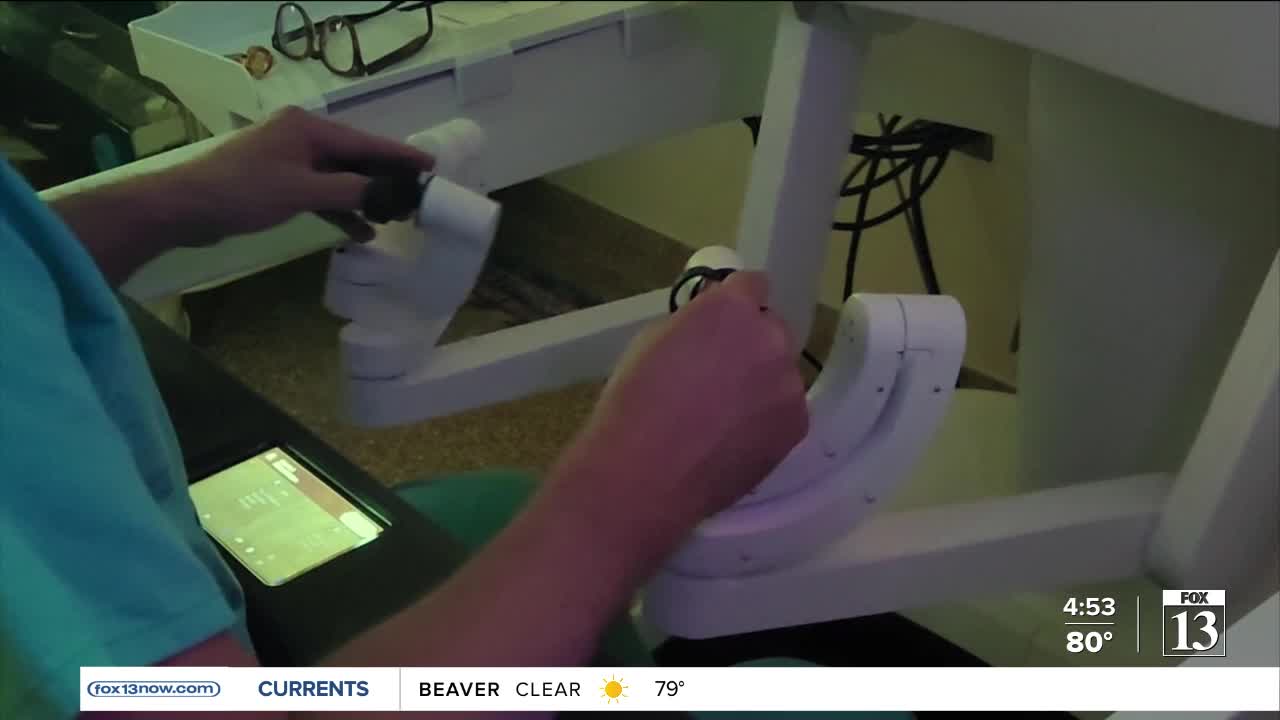
Dr. Richard Matern, a urologist with Intermountain Health, uses robotic technology to help make surgical movements more precise. The equipment gives surgeons a magnified view and smaller instruments to work with.
“We have 10x magnification with the robots so we can see better. We have finer instruments, and the benefits were, you know, decreased length of stay in the hospital, decreased blood loss, decreased narcotic usage, smaller incisions, decreased wound infections,” Matern said.
For Parkinson, the experience also reinforced the importance of understanding the steps involved in diagnosing prostate cancer.
A blood test measures prostate-specific antigen, or PSA. An abnormal result may lead to additional testing.
“The PSA is simply a number, but what we can do after that is we can do imaging with MRI,” Parkinson said.
“And if the MRI is negative, that tells us something. If it's positive, it tells us something. And then we can do a biopsy. The biopsy is minimally invasive, and having gone through it, I can tell you it's not that bad.”
Early prostate cancer usually causes no symptoms, according to the American Cancer Society. Men should discuss the potential benefits and risks of screening with their health care provider.
“Men ought to get screened because there aren't symptoms with prostate cancer typically until things are, you know, pretty far down the path,” Matern said.
The American Cancer Society estimates that about 36,320 men in the United States will die of prostate cancer in 2026.
For men facing an abnormal test result or a new diagnosis, Parkinson offers reassurance drawn from his own experience.
“For any men who are beginning this journey that may have had an abnormal PSA or a positive biopsy, it's OK. You can get through it, and now the treatment is better than it has ever been.”