



Sometimes, a complicated medical term can make a condition seem harder to understand than it really is. Take dysautonomia, for example.
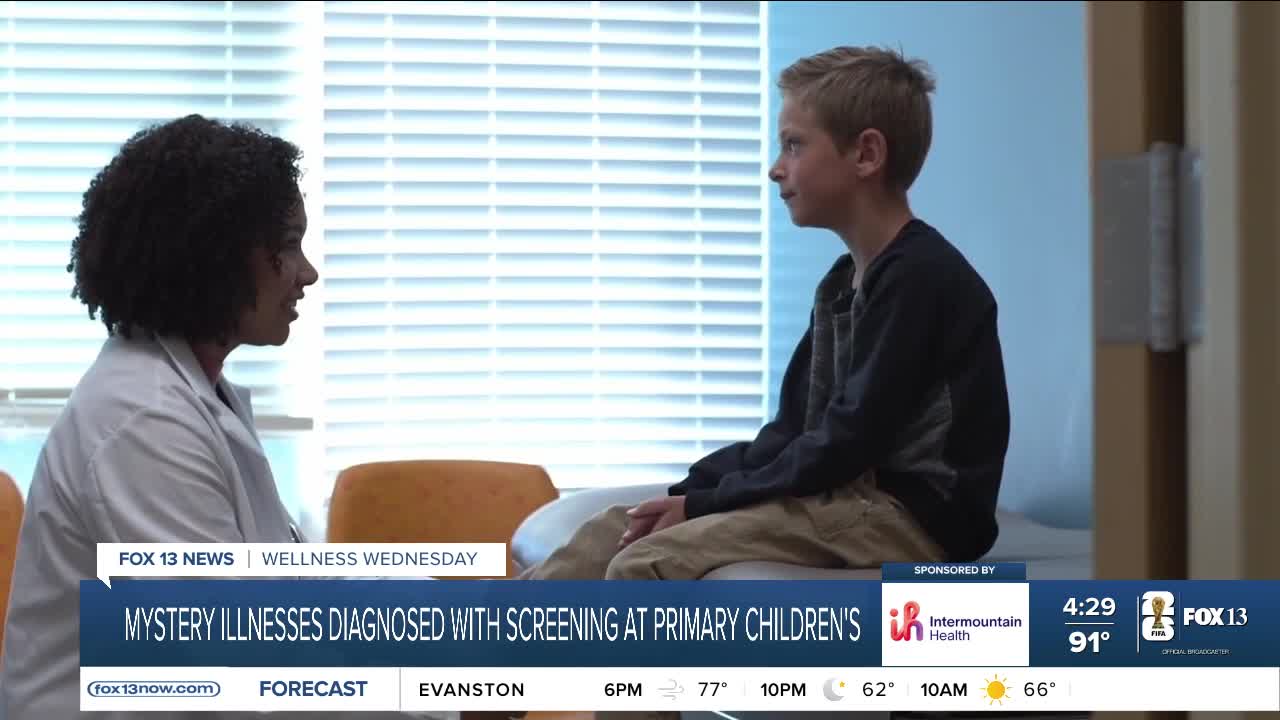
Dr. Luke Heiliger, a pediatric specialist at Intermountain Health, helps children with disorders affecting the autonomic nervous system, which controls many of the body's automatic functions.
"So I focus on disorders of the autonomic nervous system," Heiliger said.
For many people, that explanation raises another question: What exactly is the autonomic nervous system?
"The autonomic nervous system is the unconscious part of the nervous system," Heiliger said. "It does all the things that we don't actually have to think about during the day. It controls heart rate, blood pressure, sweating and temperature regulation, digestion. If there's a process that happens just automatically in the body, the autonomic nervous system probably has its fingers in there somewhere."
Dysautonomia occurs when those automatic processes stop working as they should.
One common form is postural orthostatic tachycardia syndrome, or POTS, which can cause a person's heart rate to increase dramatically when standing. Another is vasovagal syncope, a condition that can cause blood pressure and heart rate to drop suddenly, leading to fainting.
For some patients, symptoms can be life-altering.
"One of the first questions that I often ask people is when's the last time you remember feeling normal or the last time that you remember feeling well," Heiliger said. "Some people are able to nail it down to, 'Hey, this is the specific day and time,' and then others I've gotten the answer of, 'I don't ever remember feeling normal.'"
Some people also develop dysautonomia-related symptoms following illnesses such as COVID-19, with symptoms including fatigue, dizziness and brain fog that persist long after recovery.
A major challenge is that many people do not realize their symptoms may be connected to an underlying condition.
"It helps to know that, 'Oh, that thing that always happens to me when I stand up. You mean that's not normal?'" Heiliger said. "Because I have absolutely had this conversation with so many people."
Intermountain Health uses an autonomic reflex screen, a specialized test designed to identify specific forms of dysautonomia. Primary Children's Hospital is one of only a handful of hospitals offering the screening for children.
Heiliger's interest in the field began after encountering patients whose symptoms did not fit neatly into a diagnosis.
"I started seeing patients that kind of fall into this category of just this nebulous, unwell. 'I pass out every time I stand up,'" he said.
Later, after attending a medical presentation on the topic, everything clicked.
"There's a name for it," Heiliger recalled thinking. "Yeah, yeah, and we can do something about it. Sign me up."
He encourages anyone experiencing persistent symptoms, or parents concerned about a child's unexplained health issues, to talk with their doctor. Identifying the problem is often the first step toward finding relief and improving quality of life.