



John F. Kennedy was president when the federal government developed the formula we still use to decide who is poor in America.
I'm talking about federal poverty guidelines, which are still based on a formula established in 1963. Students whose families earn 130% of the federal poverty level or less qualify for free lunch, and those with incomes at or below 185% of the poverty level qualify for reduced-price lunches.
The concept makes sense: determine who gets help by who needs it. The problem? The definition of need is based on a different time in history.
Researchers in 1963 noticed families spent about a third of their income on food, so they took the cost of a basic grocery budget and multiplied it by three.
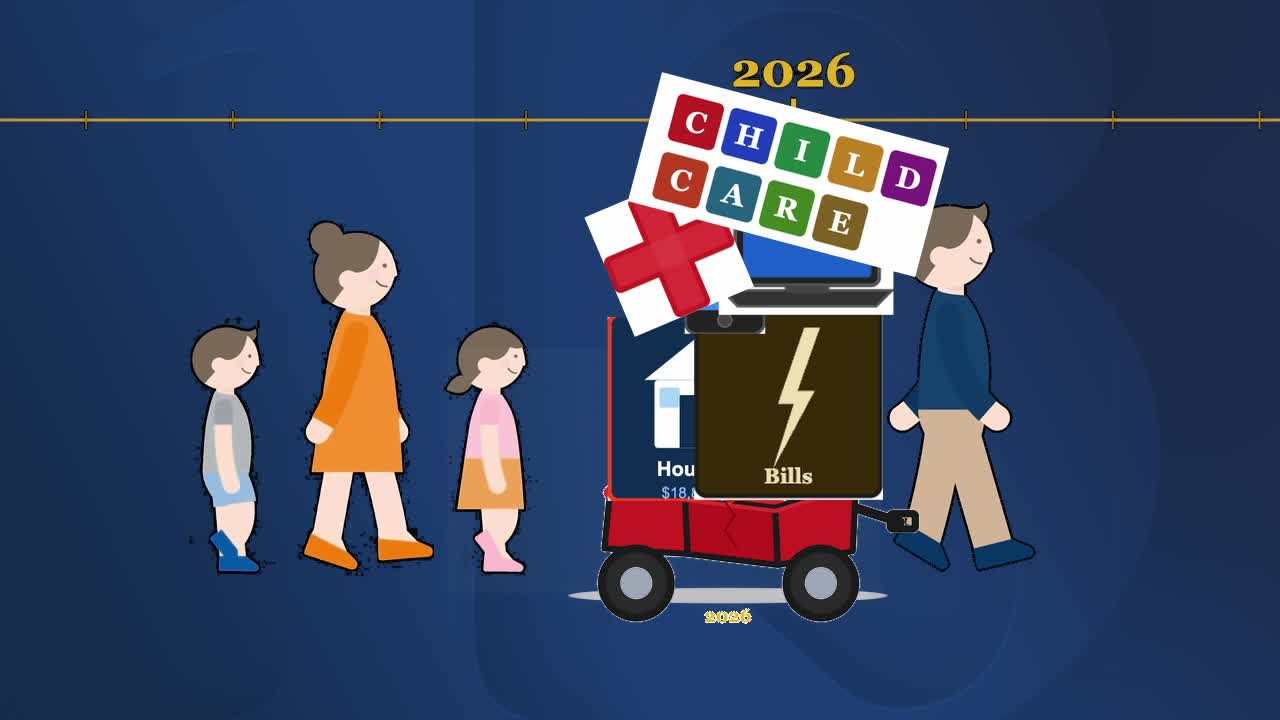
It helps me to think of income like a wagon that, in a perfect world, can carry everything a family needs. In 1963, that wagon had room for food times three, and that was enough room for rent, utilities, and a little extra for savings.

It was a reasonable fit.
Today, poverty guidelines give families exactly the same wagon. For a family of four, that's about $32,000 a year — roughly the cost of the USDA's Thrifty Food Plan of about $1,000 a month, multiplied by three.
That's the same wagon in a far different world.
Rent is now easily double that food budget. Utilities now assume mobile phones, internet, and cable or streaming — things that didn't exist before. Healthcare is more expensive and is covered less completely by employer plans. And childcare now rivals or exceeds the cost of rent.

In 2010, the Census Bureau created a Supplemental Poverty Measure (SPM) specifically so researchers would have a more realistic measure of poverty — one that includes new technological expectations, transportation, and childcare. In 2024, the difference between the official poverty line and the SPM was $7,600.
The Census Bureau is explicit about the reason they publish their own guidelines: the SPM exists so researchers can be accurate. It's not for policy. In other words, the U.S. Census Bureau wants to be accurate, but it can't force the same from the Department of Health and Human Services or the Department of Agriculture.
There's another measure that may be more realistic in the twenty-first century, and it paints a picture of unacknowledged needs in the world's richest economy. MIT publishes an annual living wage that starts from what they figure it actually costs a family of four to cover all their needs in Utah without public assistance or going into debt. The most recent estimate is $117,000 a year — and that's with no savings or vacation built in.