



Dozens of vulnerable older adults have been sexually assaulted or made allegations of sexual abuse inside Utah’s nursing homes in recent years, according to a FOX 13 News review of thousands of pages of federal inspection reports and court documents.
Many of the cases, which experts agree often go undetected and underreported, involve residents with dementia or other cognitive deficits, who sometimes can't report. In other cases, they aren’t believed when they do.
“The only appropriate number of sexual assaults in a facility is zero,” argues Nate Crippes, an attorney with Utah’s nonprofit Disability Law Center.
In some instances, the assaults FOX 13 News identified were perpetrated by fellow residents with similar cognitive deficits. For example, administrators at one facility determined that a resident found naked from the waist down on top of a nonverbal woman thought “the victim was his wife.”
But in other cases, the perpetrators — whether staff or other residents — seemed fully aware of what they were doing and sometimes even explicitly targeted residents with cognitive deficits. Among them was an employee who assaulted two women with dementia and later told investigators he believed he could get away with it “because they can’t do much about it.”
These cases are “not all created equal,” noted Lori Smetanka, executive director of the National Consumer Voice for Quality Long-Term Care, which advocates for better conditions in nursing homes across the country.
“It’s exceptionally complicated,” she added.
The FOX 13 Investigates team found nursing homes across the state have been cited at least 25 times since 2019 for failing to protect residents from sexual abuse. Federal regulators also cited some facilities for failing to "respond appropriately" to the allegations.
The National Center for Elder Abuse says injuries in these cases can be severe, “resulting in long-term health consequences, including physical trauma, sexually transmitted infections, and psychological concerns.”
They can also have a profound impact on families who never thought to worry that their loved one might be sexually assaulted in a facility entrusted with their care.
“It should never happen,” said Brandon Harris, whose mother was sexually assaulted by another nursing home resident in Roy in 2024."It shouldn’t be a sexual assault, a broken bone, anything like that for our elderly people.”
Experts say improved staffing, training and awareness can help reduce and in some cases prevent incidents of sexual abuse within facilities.
The Utah Health Care Association – which represents the state’s long-term care industry – said in a statement that facilities are “committed to ensuring the safety and well-being of residents,” preventing incidents of abuse and “ensuring that each resident is able to live with dignity and respect.”
But Allison Spangler, the group’s president and CEO, also wrote that “not all situations are preventable.” It’s possible, she noted, for residents “to become aggressive during their time in a long-term care facility with no previous indications of this behavior.”
“We support proper and consistent training to enable staff to properly address any situations that do arise,” she added, “knowing that training alone cannot prevent all incidents from occurring."
'RIDICULOUS THAT IT COULD EVEN HAPPEN’
Because sexual abuse allegations are commonly underreported, it’s difficult to understand the true prevalence of these cases in nursing homes and assisted living facilities across the country.
One study estimates that about 2% of residents in long-term care facilities have experienced sexual abuse, about double that in the community at large. And the National Long-Term Care Ombudsman Resource Center said it was involved in resolving more than 16,000 sexual abuse complaints in nursing homes between 2000 and 2017.
Yet experts agree these estimates are likely “vastly understated.”
"Sexual assault is the most under-reported type of abuse,” Smetanka noted.
One reason is nondisclosure by older adults, since elder sexual abuse is “often shrouded in silence and shame,” according to a research brief from the National Center on Elder Abuse. Issues related to aging – including “poor physical health, cognitive deficits, frailty, and functional impairment, such as vision and hearing loss” – can hinder reporting, too.
Ageist beliefs that older people are “unattractive, asexual, and therefore impossible targets of sexual abuse” can also compound under-reporting, under-detection and “inadequate provider responses,” according to the report.
Because sexual abuse in facilities is not often discussed or expected, some families are left blindsided when they find out their loved ones have been victimized.
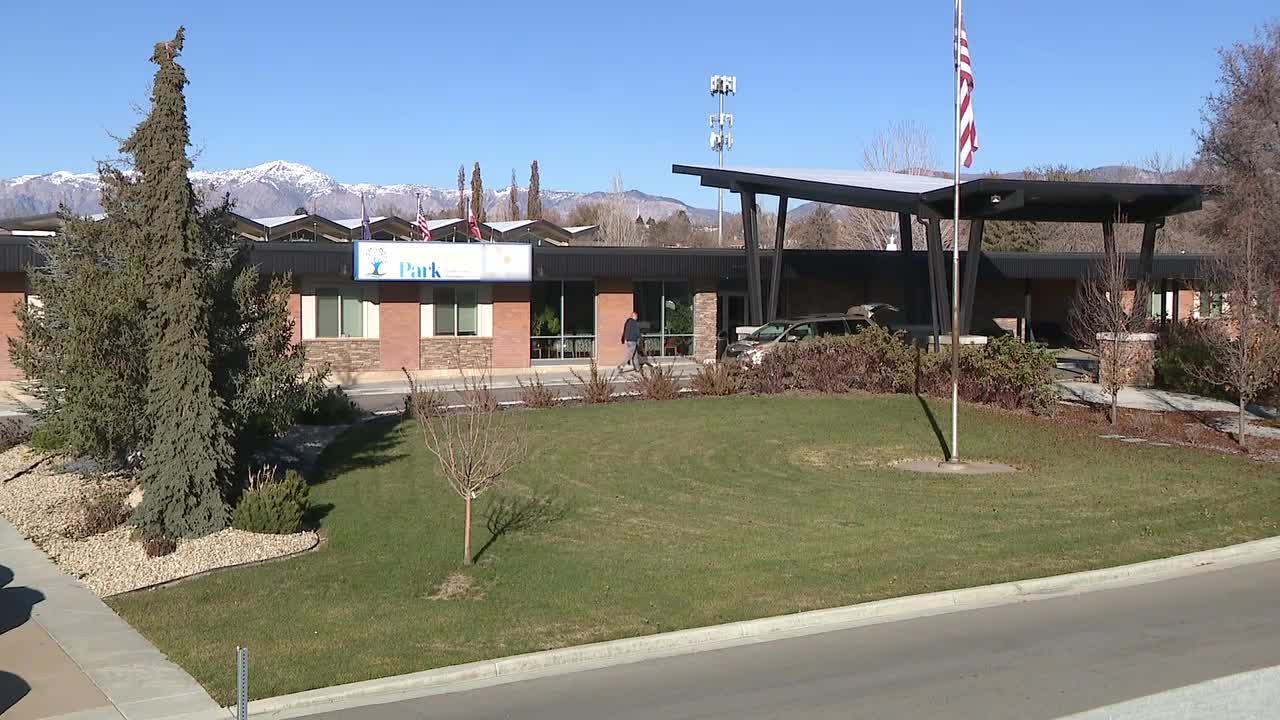
Harris and his wife, Kandy Sousis, understood his mother was vulnerable after she suffered a stroke in 2023 and was discharged from the hospital to Heritage Park Healthcare and Rehabilitation in Roy.
“She is, I would say, about 100% relying on the staff there,” said Sousis, noting that her mother-in-law needs help with everything from eating to getting out of bed.
But the couple said they never thought to worry that Nancy – who Harris describes as a “stereotypical grandma” who spoiled the children in her life and began preparations for Christmas in January – might be sexually assaulted.
“I thought the only worry I should have is, like, being there to comfort her – not worrying about her personal wellbeing in a hospital facility,” Harris said in an interview.
One morning in March 2024, while Nancy was in the dining hall for breakfast, police documents show a male resident approached and groped her. Nancy was unable to defend herself, Harris said, and an employee physically pulled the other resident off her, according to an account shared with the Roy Police Department.
“She might be able to say ‘no’ on a good day,” Harris said of his mother. “A 2-year-old would have more power than her.”
The responding officer wrote that the man had previously lived in a different part of the nursing home. But the facility moved him because he was “sexually assaulting other residents,” according to the police report. This was, the officer noted, the first time the facility had contacted police about the male resident’s behavior.
“You would think – just anybody with logical thinking would – if you have someone that’s predatorial to other women, you’re not going to just expose them to other women,” Harris said. “It’s kind of ridiculous that it could even happen in the first place.”
A July 2024 inspection report shows Nancy was one of three female residents who were sexually abused by two male residents at the facility around the same time.
The couple said the incident – along with other issues – has diminished their trust in the facility. They worry about Nancy’s safety and well-being at Heritage Park constantly but said they have few other options to provide for her care.
“It eats at us,” Sousis said.
Russell Tialavea, an administrator at Heritage Park, said in an email that he couldn’t speak to the particulars of this incident due to confidentiality laws but stressed that “the health, safety and well-being of each resident we have the privilege to serve is our priority.”
He added that the clinical team assesses each resident upon admission and regularly thereafter to identify existing needs and account for changes in a resident’s condition.
“We have great confidence in our clinical staff and their ability to perform this important function, which is so important to the health of the affected resident and the safety of others in the resident community,” he wrote. “We appreciate the importance of delivering quality care in a setting consistent with health and rehabilitation, and are grateful daily to the residents and their families/loved ones who trust us with the provision of that care.”
'RAISE SOME RED FLAGS'
After an elderly woman was sexually abused by a care worker at Spring Gardens Senior Living in Heber, staff allegedly found her “hiding under the bed,” said Jeffrey Eisenberg, an attorney with the Elder Care Injury Group.
“And you could imagine that if an elderly person is being sexually assaulted, the terror that that person’s going to have if they’re going under the bed,” he added in an interview.
For older adults who are confused or can’t speak up for themselves, experts say it’s important for staff and their families to be aware of the possibility of sexual assault in a facility – and to keep an eye out for warning signs like these.
The National Consumer Voice for Quality Long-Term Care and the National Center on Elder Abuse say families should look for physical signals, like bruising around the thighs, genitals or breasts; unexplained genital infections; and unexplained vaginal or anal bleeding.
Important social indicators of abuse can include extreme agitation, panic attacks and unusual behavior between a victim and alleged perpetrator.
“That's not to say that they're definitive, definitive examples that abuse has happened,” Smetanka said in an interview. “But it should raise some red flags and require some additional investigation.”
Lori Smetanka, executive director of The National Consumer Voice for Quality Long-Term Care, explains the warning signs of sexual abuse that families should look out for:
A civil lawsuit filed against Spring Gardens last year alleges those steps didn't happen in this case.
After the victim’s behavior changed, “that was not well communicated to family,” said Eisenberg. “And that didn’t result in a robust investigation right then and there."
In the end, the lawsuit alleges, it was police – not the facility – who uncovered the abuse and referred the case to the Attorney General’s Office.
During an interview with the Office’s Medicaid Fraud and Patient Abuse Division, a pretrial detention request shows Jayden Sever, the employee, admitted to assaulting two women in the facility’s memory care unit in early 2024. Both were in their 80s and in the “last, severe stages of dementia.”
Sever told investigators he had been struggling with “lust” for several years and eventually followed through on those impulses, believing “he could easily sexually assault a resident and get away with it because they can’t do much about it,” according to the pretrial detention request.
He was sentenced last year to no fewer than five years in prison for attempted rape and object rape, first-degree felonies.
The civil lawsuit alleges Spring Gardens should never have employed Sever. It contends he wasn’t credentialed as a Certified Nurse Assistant and also tested positive for marijuana – both “obvious” disqualifiers.
An attorney for Spring Gardens did not respond to requests for comment related to the lawsuit, which is ongoing. The facility has not yet responded to the complaint, instead filing a motion to dismiss the case. A judge recently denied that motion.
A 'DUTY TO PROTECT’
Because abuse often goes undetected by those who miss important warning signs, Smetanka and other experts believe there’s a need for more robust training for staff and investigators to recognize signs of assault.
And because residents are so often not believed, Alianne Sipes, the program manager for the state of Utah’s Long-Term Care Ombudsman Office, said she's working to educate facilities in the state “on how to take every allegation of abuse seriously, regardless of diagnosis.”
In one recent case, several Utah residents with dementia said they had been sexually abused in a facility but weren’t taken seriously “until it was caught on camera,” Sipes noted in an interview.
“They had voiced their concerns,” she said. “They had said that this had happened. But because of their diagnosis, they weren’t believed.”
At the same time, Sipes said it’s important to account for the complexity of these cases.
“Dementia changes your brain,” she noted. “So you can relive trauma that happened 20 years ago. And you can see an aide coming in to help you change, but instead of seeing the aide, you’re seeing the perpetrator of the abuse — again, from 20 years ago. So it can be very hard to figure out, ‘Is this a new trauma? Is this an old trauma?’ And how do you investigate that?”
Alianne Sipes, program manager for the state’s Long-Term Care Ombudsman program, explains rules around cameras in facilities:
Spangler, with the Utah Health Care Association, said each facility has its own approach to ensuring resident welfare. Those include “safety and health training for caregivers, goals, and objectives for preventing incidents from occurring.”
She also noted that federal regulations require facilities to report and investigate allegations of mistreatment and that all providers are required to background check each employee.
But many experts see improved staffing as the most important prevention tool.
"The more eyes that are available in a nursing home to monitor, to check in on residents, can ensure that residents are protected,” Smetanka said. “And that’s really an important piece of what we need to be focused on.”
Sousis, a licensed nurse, agrees. She believes her mother-in-law’s case “would not have happened if [the facility] had the staffing in the dining room.”
After the assault, when Sousis went to the nursing home to talk to police, the same man who’d groped her mother-in-law “smacked my bottom just right there in front of everybody,” she recalled. A police report corroborates Sousis' description.
Sousis told police she wanted him gone. But when an officer tried to form a safety plan for the residents, the facility “basically told us that they cannot guarantee that this won’t happen again,” Harris said.
A police report says the male resident was ultimately moved out of the nursing home. The county attorney’s office declined to press charges, telling the family “he wasn’t mentally fit,” Harris recounted.
He agreed with that decision, saying he doesn’t believe the man was cognitively aware enough to understand his actions.
“I hold the nursing home responsible,” Harris said, “because it’s their duty to protect my mom and take care of her.”
Read more from FOX 13’s ongoing coverage of Utah’s elder care systems here:
- Why FOX 13 News is reporting in-depth on gaps in Utah’s elder care systems
- Consensual sex between residents, employees in long-term care raises concerns
- Q&A: Utah’s Long-Term Care Ombudsman is ready to advocate for you and your loved ones
- Utah’s Adult Protective Services is substantiating few cases of elder abuse
- What you should know before choosing a nursing home
- Older adults are wandering away from Utah care facilities, sometimes with tragic outcomes
- Critics say taxpayer dollars for nursing homes should be spent on care, not new buildings
- Nursing homes receiving millions in extra taxpayer funds face allegations of poor patient care
Editor’s note: If you believe a vulnerable adult is being abused, neglected or exploited, Utah law requires you to immediately notify Adult Protective Services or law enforcement. You can file a complaint with APS online or call 1-800-371-7897.