



SALT LAKE CITY — Scientists from the University of Utah recently published a study detailing a freshwater "reservoir" beneath the Great Salt Lake's Farmington Bay, but it is not a viable solution to the state's long-term water issues.
While headlines and the scholarly study use the word "reservoir," I admit I tend to picture a cool, giant cave with a lake. But that is not at all what we are talking about. In this case, "reservoir" simply means a place where water is stored. The water under the Great Salt Lake is actually held in wet rocks and sand.
WATCH: University of Utah scientists have made a discovery that could help battle Great Salt Lake dust
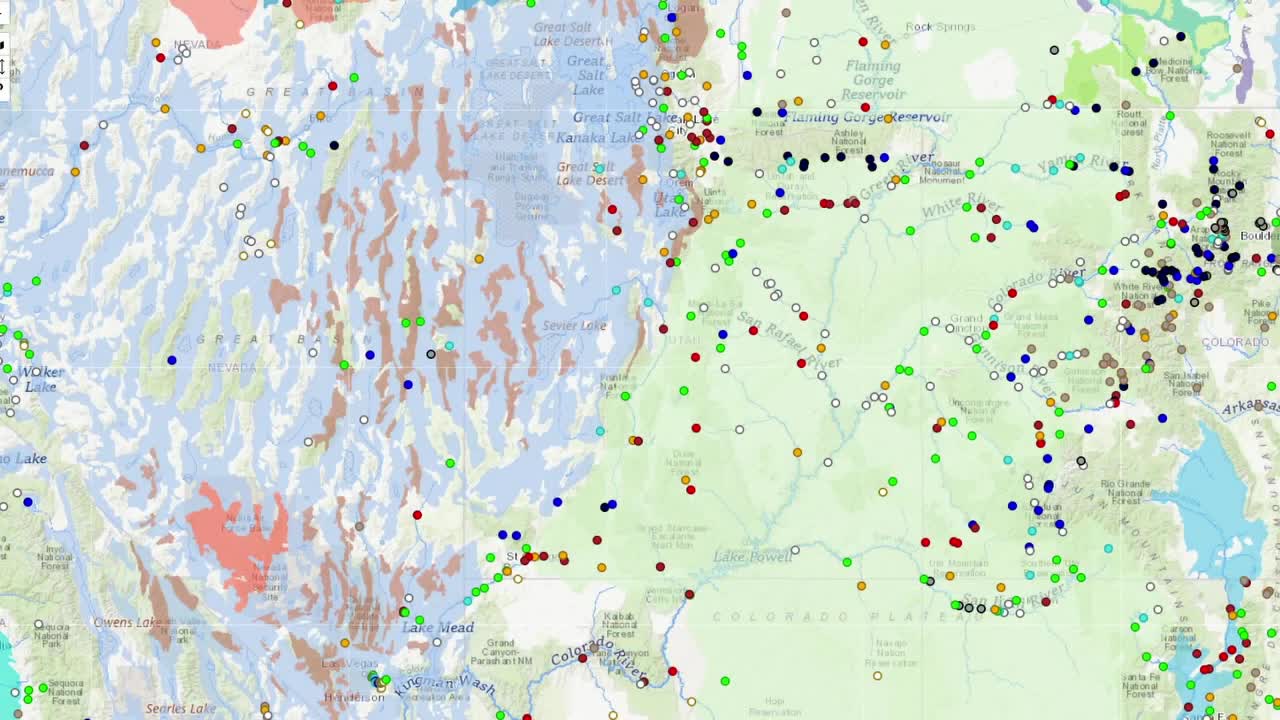
The National Water Dashboard from the U.S. Geological Survey shows that most of western Utah is underlain with "unconsolidated and semi-consolidated sand and gravel aquifers." That initially went over my head, but a little research showed that means sand and gravel are under the lake where the water is stored, rather than a rock bed.
This means the water under the Great Salt Lake is not a big tub you can pump out at volume. However, it does pump itself out. The weight above the water applies pressure, so when you drill into it, that pressure pushes the water out while leaving the heavier sediment behind.
According to the university's published paper and an article from our partners at The Salt Lake Tribune from July 2025, we know there is fresh water under Farmington Bay. Researchers have not mapped the water beyond that area yet.
The pressurized flow of this water could soak the dry, exposed lakebed, which suppresses dust not just by making it damp, but by allowing it to consolidate into a hard, salty surface like the salt flats. Despite this benefit, the nature of the aquifer means it is not a viable solution to Utah's larger, long-term water issues.
We still do not know the full extent of this water. Researchers note that it may be vast in depth and breadth, but their initial observations show their hand-drilled wells did not recharge quickly. Groundwater fills on a geologic timeline, or at least over a longer time than we humans find helpful. It doesn't just flow in and out like a river. Because of this, we do not know the consequences or risks of tapping it fully, making large-scale extraction a major question mark.
This article is published through the Great Salt Lake Collaborative, a solutions journalism initiative that partners news, education and media organizations to help inform people about the plight of the Great Salt Lake—and what can be done to make a difference before it is too late. Read all of our stories at greatsaltlakenews.org.