

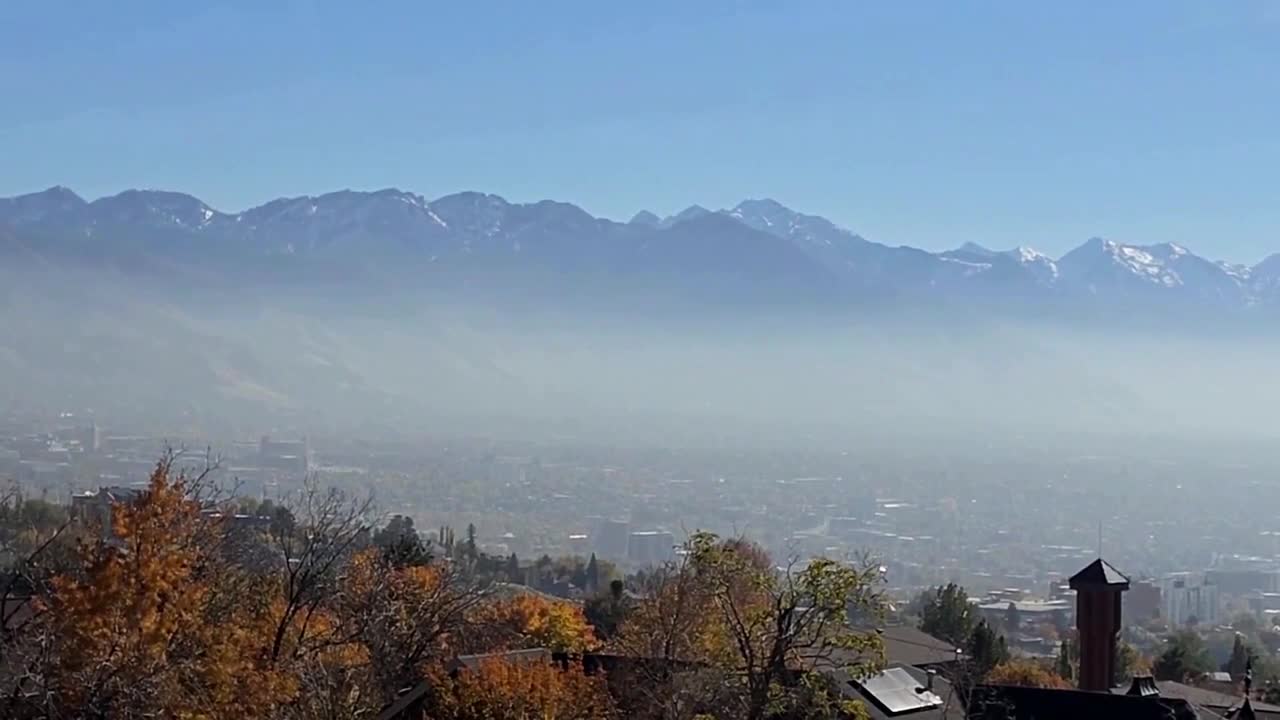


SALT LAKE CITY — A new report has been released to the governor's office and the Utah State Legislature, offering a wide-ranging view on the state of the environment in Utah.
Utah State University's Janet Quinney Lawson Institute for Land, Water & Air compiled it, using the work of dozens of scientists, researchers and experts. It is presented in an easy-to-read format to get the attention of policymakers and advocates on Utah's Capitol Hill.
"Hot takes, quick takes on what’s going on in research and current events in land, water and air," said Anna McEntire, the institute's executive director.
Arizona water agency yanks money from Utah cloud seeding project:
It was a rough year for Utah, environmentally speaking.
"Lots of it is due to the ‘no-pack’ that we had this Spring," McEntire said in an interview with FOX 13 News on Thursday ahead of the report's unveiling.
The drought had a cascading effect on the state. Agriculture producers suffered and Utah's 2026 wildfire season, researchers found, was three times the norm. The Great Salt Lake and Colorado River systems continue to be stressed. There were some recommendations, including funding shifts to help the state's water situation. Some research also found that forest reduction, which has been a hot topic of discussion in the Utah State Legislature, does not reliably add water to Utah's streams and may even reduce water in dry areas.
Lynn de Freitas, the head of Friends of Great Salt Lake, said the USU report is helpful in pushing policy.
"This is a critical time; we have a lot of heavy lifting to do on behalf of the lake," she told FOX 13 News.
Not everything is doom and gloom, either. The report noted that Utah's air quality continues to improve.
"People continually think that air quality is getting worse. Although we have work to do, if we look at over time at where particulate matter has been? It’s going down. It’s getting better," said McEntire.
One section offered potential solutions on energy storage and found that Utahns can save money with efficient, all-electric homes. There is even a section in the USU report that highlighted research that found one-third of America's bee species live in Utah.
This year, USU also dived into artificial intelligence and data center controversies. Research presented in the report found that data centers have paid an estimated $190 million to local governments over the past five years, but every deal is negotiated town-by-town.
"There is an opportunity for a state to create regional goals for what they want to see as far as how energy and water are used and that can create dual wins," McEntire said.
There is a section on public opinion on data centers, finding that three out of every four Utahns oppose them. But the survey research by USU also found that different aspects of a data center project can change public opinion to support — things like recycled water, renewable power, the size of a data center and if residents can have a say in the decisions. AI can also be helpful in providing data analysis on environmental research, the report highlighted.
Lt. Governor Deidre Henderson, who accepted the report at a luncheon Thursday, said it will give policymakers good information to make decisions.
"We can protect and preserve our natural resources for the future while also implementing reasonable and scientifically driven policies that will help Utahns right now," she said.
Read the report here:
This article is published through the Great Salt Lake Collaborative, a solutions journalism initiative that partners news, education and media organizations to help inform people about the plight of the Great Salt Lake—and what can be done to make a difference before it is too late. Read all of our stories at greatsaltlakenews.org.