

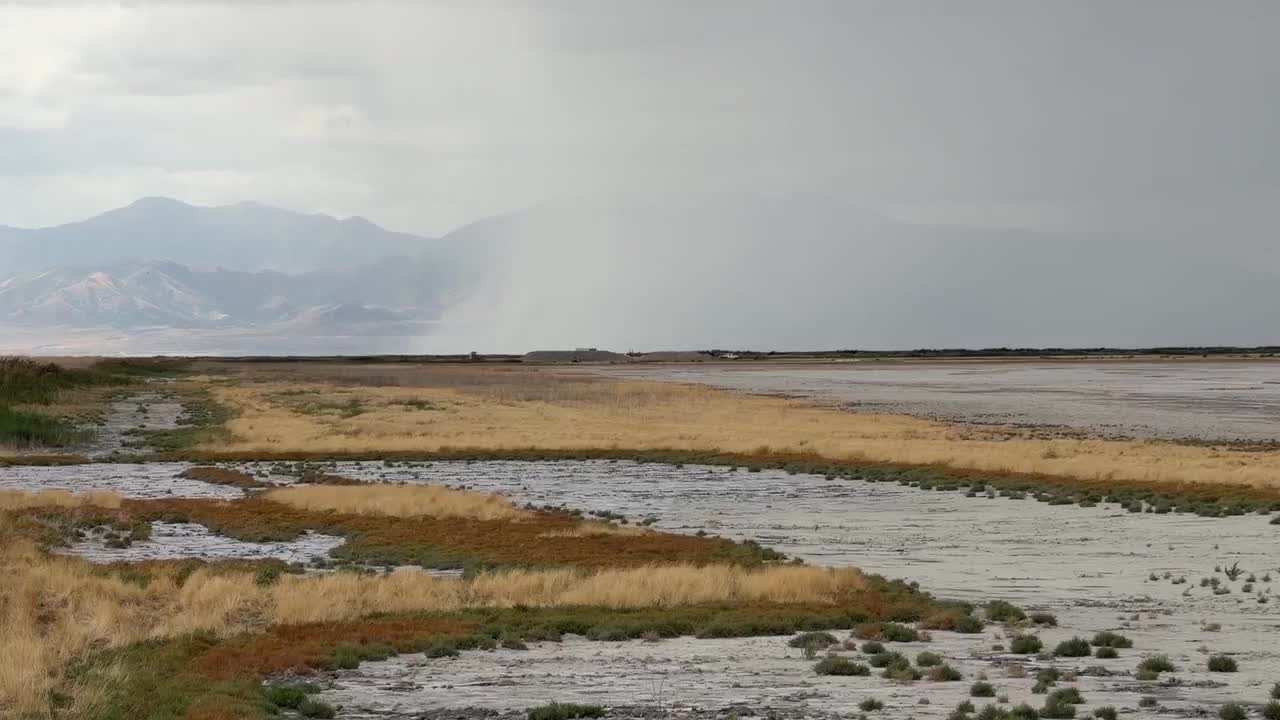


SALT LAKE CITY — Utah will receive $60 million for Great Salt Lake recovery after settling a decades-long dispute with the federal government over more than 22,000 acres at the Bear River Migratory Bird Refuge.
The federal government will take title to the land, and Utah has agreed to use all of the settlement money for lake recovery efforts. The refuge will remain a refuge.
Ben Stireman of the Utah Division of Forestry, Fire and State Lands said the agreement resolves a long-standing conflict over who owned the acreage at the northern end of the Great Salt Lake.
"The agreement is to settle what was a longtime standing dispute over land ownership at the Bear River Migratory Bird Refuge," Stireman said.
Great Salt Lake's health tied to national security, legislative commission is told:
The state does not yet have a specific project identified for the funds. Officials say spending will be guided by the Great Salt Lake Commissioner's strategic plan, with the primary focus on getting more water to the lake.
"This could be water transactions, leasing, habitat improvements. I mean, you can kind of look at the laundry list of things the state has been doing to benefit the Great Salt Lake, and we'll continue and ramp up our efforts," Stireman said.
Stireman said there is no single approach to increasing water delivery. The state could work with farmers, cities or industry to redirect water that might otherwise be used elsewhere. That means the $60 million is not necessarily tied to one large project, but rather adds to the pool of resources the state can draw from.
"Getting rid of phragmites helps facilitate the delivery of water to the lake. There's also acquisition of water rights, whether it be through leasing, donations, you know, and otherwise," Stireman said.
The impact of the settlement extends beyond water levels. Marcelle Shoop of the National Audubon Society said healthier water and wetlands support habitat for migratory birds and the brine shrimp they depend on.
"60 million dollars will be substantial, important input into helping us solve the problem. Obviously, it'll take much more money than that over the long term," Shoop said.
Shoop said the organization wants to ensure the money is spent effectively.
"We want to make sure that it's spent on projects that actually deliver water to the lake, protect habitat, and help the lake provide the services to all Utahns and the surrounding states that the lake provides historically," Shoop said.
The first installment should come in the next few weeks, with the remaining being paid over the next 26 months.
Officials say water delivery and wetland protection are priorities for how the funds will be used.
This story was reported on-air by a journalist and has been converted to this platform with the assistance of AI. Our editorial team verifies all reporting on all platforms for fairness and accuracy.
This article is published through the Great Salt Lake Collaborative, a solutions journalism initiative that partners news, education and media organizations to help inform people about the plight of the Great Salt Lake—and what can be done to make a difference before it is too late. Read all of our stories at greatsaltlakenews.org.